DNA Sequencing
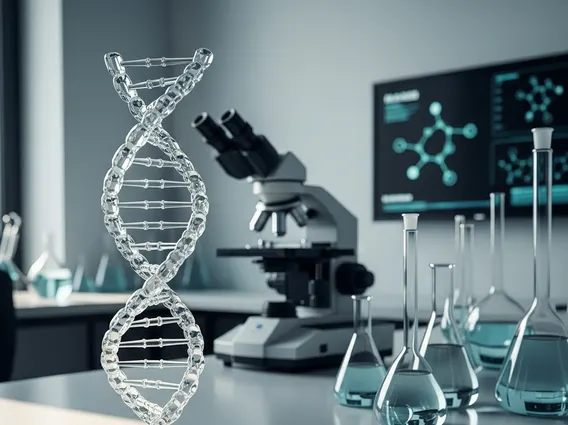
DNA Sequencing is a pivotal technology in modern medicine and biological research, enabling scientists and clinicians to decipher the intricate genetic code of living organisms. This process reveals the precise order of nucleotides within a DNA molecule, providing fundamental insights into health, disease, and evolution.
Key Takeaways
- DNA Sequencing determines the exact order of adenine, guanine, cytosine, and thymine bases in a DNA strand.
- It is essential for understanding an individual’s genetic makeup, identifying genetic variations, and diagnosing inherited conditions.
- Early methods like Sanger sequencing have evolved into high-throughput **Next-Generation Sequencing (NGS)** technologies.
- The primary **applications of DNA Sequencing** include diagnosing genetic diseases, guiding personalized medicine, and advancing cancer research.
- This technology significantly contributes to public health by tracking pathogens and understanding disease outbreaks.
What is DNA Sequencing?
DNA Sequencing refers to the process of determining the precise order of nucleotides—adenine (A), guanine (G), cytosine (C), and thymine (T)—within a DNA molecule. This order constitutes an organism’s genetic code, carrying all the instructions for its development, functioning, and reproduction. Understanding this sequence is fundamental to unraveling the mysteries of life, identifying genetic variations, and diagnosing a wide array of medical conditions.
By mapping out the genetic blueprint, DNA Sequencing allows researchers and clinicians to identify mutations, predict disease susceptibility, and understand the biological mechanisms underlying various health issues. It provides an unparalleled level of detail about an individual’s genetic makeup, paving the way for more targeted and effective medical interventions.
How DNA Sequencing Works: Methods and Technologies
The fundamental principle behind DNA Sequencing involves reading the sequence of nucleotide bases in a DNA strand. Over time, the technology has evolved significantly, moving from labor-intensive manual methods to highly automated, high-throughput platforms. The initial breakthrough was Sanger sequencing, which laid the groundwork for subsequent advancements.
Modern approaches, primarily **Next-Generation Sequencing (NGS)**, also known as Massively Parallel Sequencing (MPS), have revolutionized the field by enabling the simultaneous sequencing of millions of DNA fragments. These advanced **types of DNA Sequencing methods** offer unparalleled speed, cost-effectiveness, and data output, making large-scale genomic studies feasible. While the specific biochemical reactions vary between platforms, they generally involve fragmenting DNA, attaching adapters, amplifying the fragments, and then detecting the sequence of bases as they are synthesized or ligated.
Key technologies and methods include:
- Sanger Sequencing: The first widely adopted method, based on chain-termination, still used for sequencing individual genes or validating results from NGS due to its high accuracy over shorter reads.
- Illumina Sequencing: A dominant NGS platform that uses sequencing by synthesis, where fluorescently labeled nucleotides are incorporated one by one, and images are captured at each cycle to determine the sequence.
- Ion Torrent Sequencing: Another NGS method that detects changes in pH caused by the release of a hydrogen ion when a nucleotide is incorporated into a growing DNA strand.
- PacBio (Pacific Biosciences) Sequencing: A long-read sequencing technology that allows for the sequencing of much longer DNA fragments in real-time, beneficial for resolving complex genomic regions.
- Oxford Nanopore Technologies: Utilizes nanopores through which DNA strands pass, detecting changes in electrical current as different bases move through the pore, also enabling long-read sequencing.
Applications of DNA Sequencing in Medicine and Research
The **applications of DNA Sequencing** are vast and continue to expand, transforming both medical practice and scientific discovery. In clinical medicine, it is indispensable for diagnosing genetic disorders, identifying predispositions to diseases, and guiding treatment strategies. For instance, it can pinpoint specific mutations responsible for rare inherited conditions, offering clarity to patients and their families.
In oncology, DNA Sequencing plays a critical role in personalized cancer treatment. By analyzing tumor DNA, clinicians can identify specific genetic alterations that drive cancer growth, allowing for the selection of targeted therapies that are more likely to be effective while minimizing harm to healthy cells. This approach, known as pharmacogenomics, is also used to predict an individual’s response to certain medications based on their genetic profile, optimizing drug dosages and reducing adverse reactions.
Beyond individual patient care, DNA Sequencing is a cornerstone of biomedical research. It facilitates the study of human genetic variation, helping to understand the genetic basis of common diseases like diabetes and heart disease. It is also crucial for tracking infectious disease outbreaks, such as COVID-19, by sequencing pathogen genomes to monitor mutations, identify transmission routes, and inform vaccine development. According to the World Health Organization (WHO), genomic sequencing has been vital in the global response to pandemics, enabling rapid identification and characterization of new variants. Furthermore, it contributes to evolutionary biology, forensics, and agricultural science, demonstrating its broad impact across diverse fields.