Cytotoxic T Cell
A Cytotoxic T Cell is a specialized type of white blood cell that plays a crucial role in the body’s immune system, primarily responsible for identifying and eliminating cells infected with viruses or transformed into cancer cells. These powerful immune cells are essential for maintaining health and preventing the spread of disease by targeting and destroying compromised cells with remarkable precision.
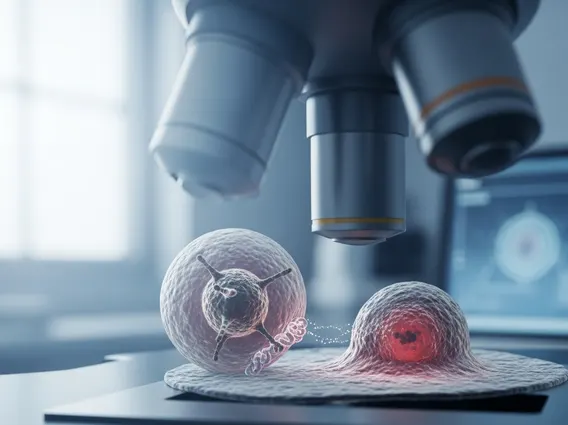
Key Takeaways
- Cytotoxic T cells (CTLs) are immune cells that directly kill target cells, such as those infected with viruses or cancerous cells.
- They are a vital component of the adaptive immune system, providing highly targeted defense against intracellular threats.
- CTLs recognize specific antigens presented on the surface of abnormal cells via their T cell receptors, in conjunction with MHC class I molecules.
- Their primary mechanism of action involves releasing cytotoxic granules containing perforin and granzymes to induce programmed cell death (apoptosis) in target cells.
- The activation and precise function of CTLs are critical for effective immune surveillance, preventing disease progression, and are increasingly leveraged in immunotherapies.
What is a Cytotoxic T Cell (CTL)?
A Cytotoxic T Cell (CTL) is a type of T lymphocyte, a white blood cell that belongs to the adaptive immune system. These cells are often referred to as killer T cells because their primary function is to directly kill other cells that are compromised. This includes cells infected with intracellular pathogens, such as viruses or certain bacteria, and cancerous cells that display abnormal proteins on their surface. Unlike B cells, which produce antibodies, CTLs engage in direct cell-to-cell combat, making them indispensable for cellular immunity.
The development of CTLs begins in the bone marrow, where hematopoietic stem cells give rise to T cell precursors. These precursors then migrate to the thymus, a specialized lymphoid organ, where they undergo a rigorous maturation process. During this process, T cells are “educated” to recognize foreign antigens while tolerating the body’s own healthy cells, a critical step to prevent autoimmune reactions. Mature CTLs express a specific T cell receptor (TCR) on their surface, along with a co-receptor called CD8. This CD8 molecule is crucial as it enables CTLs to bind specifically to Major Histocompatibility Complex (MHC) class I molecules, which are found on nearly all nucleated cells in the body and present fragments of proteins from within the cell.
Function and Mechanism of Cytotoxic T Cells
The primary cytotoxic t cell function is to eliminate target cells that pose a threat to the host. This critical role ensures the body’s defense against a wide range of intracellular threats, from viral infections to the emergence of tumor cells. The cytotoxic t lymphocyte role is highly specific; each CTL is programmed to recognize a particular antigen. When a CTL encounters a cell presenting its specific antigen on an MHC class I molecule, it forms a tight immunological synapse, initiating a precise killing mechanism that targets only the compromised cell.
The process by which cytotoxic T cells work involves several key steps, leading to the programmed cell death (apoptosis) of the target cell. This targeted destruction minimizes collateral damage to healthy surrounding tissues and is a hallmark of adaptive immunity. The mechanism is highly efficient and precise:
- Recognition and Binding: A CTL uses its T cell receptor (TCR) and CD8 co-receptor to specifically bind to a foreign or abnormal antigen presented by an MHC class I molecule on the surface of an infected or cancerous cell.
- Activation: Upon stable binding and receiving necessary co-stimulatory signals, the CTL becomes fully activated and polarizes its internal machinery towards the target cell.
- Granule Release: The activated CTL reorients its cytotoxic granules, which contain proteins like perforin and granzymes, and releases them into the immunological synapse, directly facing the target cell.
- Apoptosis Induction: Perforin creates pores in the target cell’s membrane, allowing granzymes to enter the cell. Once inside, granzymes initiate a cascade of enzymatic reactions that lead to apoptosis, or programmed cell death, in the target cell.
- Detachment and Recycling: After inducing apoptosis, the CTL detaches from the dying cell and can move on to find and eliminate other compromised cells, demonstrating its remarkable efficiency and capacity for serial killing in immune surveillance.
This highly regulated killing process is crucial for controlling viral infections and preventing the proliferation of cancerous cells. For instance, the National Cancer Institute highlights that T cells, including CTLs, are central to the body’s immune response against tumors, with various immunotherapies leveraging their power to fight cancer effectively. Their ability to specifically identify and destroy diseased cells without harming healthy ones makes them indispensable guardians of human health.