Dermoid Cyst
Dermoid cysts are common, non-cancerous growths that are present from birth, forming when skin cells and other tissues become trapped during fetal development. These cysts can appear in various parts of the body and contain a range of tissues, including skin, hair, and sometimes more complex structures.
Key Takeaways
- Dermoid cysts are congenital, benign growths that contain tissues like skin, hair, and glands.
- They originate from trapped embryonic tissues during early fetal development.
- Symptoms vary significantly based on the cyst’s location but often include a noticeable lump or pain if infected.
- Diagnosis typically involves a physical examination and imaging techniques such as ultrasound or MRI.
- Surgical removal is the primary and most effective treatment to prevent complications and recurrence.
What is a Dermoid Cyst?
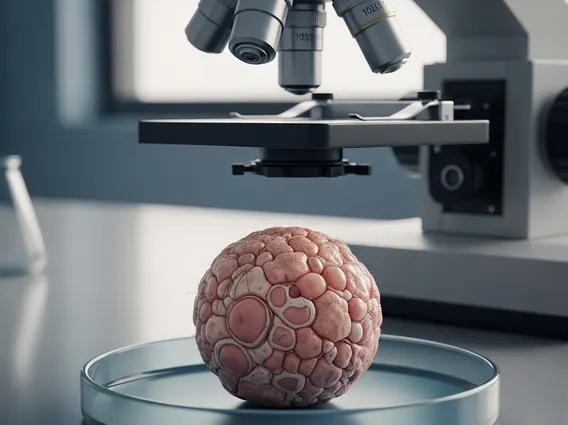
A Dermoid Cyst is a type of congenital cyst that forms during fetal development. These cysts are sac-like growths filled with various tissues normally found on the outer layers of the body, such as skin, hair follicles, sweat glands, and sometimes even teeth, cartilage, or nerve tissue. They are considered benign (non-cancerous) and are present at birth, though they may not become noticeable until later in life. Dermoid cysts develop when skin and skin structures become trapped during the fusion of embryonic tissues. They can occur anywhere in the body but are most commonly found on the head and neck, especially around the eyes, nose, or scalp, as well as in the ovaries or along the spine. While exact prevalence varies by location and population, dermoid cysts are among the most common types of benign cysts; for instance, head and neck dermoids account for approximately 7% of all congenital cysts in this region (Source: American Academy of Otolaryngology—Head and Neck Surgery Foundation).
Dermoid Cyst Symptoms and Causes
The presence of dermoid cyst symptoms largely depends on the cyst’s location and size. Many small dermoid cysts may remain asymptomatic for years, only becoming apparent when they grow large enough to cause a visible lump or pressure on surrounding structures. Common symptoms can include:
- A soft, movable lump under the skin, often painless.
- Pain or tenderness if the cyst becomes infected or ruptures.
- Vision problems if located near the eye, affecting the eyelid or orbit.
- Neurological symptoms (e.g., weakness, numbness) if a spinal dermoid cyst compresses nerves.
- Abdominal pain or discomfort if an ovarian dermoid cyst grows large or twists.
The primary causes of dermoid cysts are developmental errors during embryogenesis. They are not inherited in most cases, nor are they caused by lifestyle factors or environmental exposures. Instead, they arise when ectodermal tissues (which form skin, hair, nails, and the nervous system) become enclosed within deeper body structures during the early stages of fetal development, typically between the third and eighth weeks of gestation. This entrapment leads to the formation of a sac that continues to grow and accumulate the tissues it contains.
Dermoid Cyst Treatment Options
When considering dermoid cyst treatment options, surgical removal is almost always the recommended course of action. This is primarily because dermoid cysts do not resolve on their own and have the potential to grow, cause symptoms, become infected, or, in rare cases, rupture and lead to inflammation or other complications. The specific surgical approach depends on the cyst’s size, location, and proximity to vital structures. For superficial cysts on the skin, removal is often a straightforward outpatient procedure. For internal cysts, such as those in the ovaries or spine, more complex surgical techniques may be required, sometimes involving minimally invasive laparoscopic methods. The goal of surgery is complete excision of the cyst to prevent recurrence. After successful removal, the prognosis is generally excellent, as these cysts are benign.