Dermis
The Dermis is a vital layer of the skin, situated beneath the epidermis and above the hypodermis. It is a complex connective tissue that provides strength, flexibility, and essential functions to the skin, playing a crucial role in overall body protection and sensation.
Key Takeaways
- The Dermis is the middle layer of the skin, providing structural support and elasticity.
- It is primarily composed of collagen and elastin fibers, along with various cells, blood vessels, nerves, and glands.
- The Dermis has two main layers: the papillary layer and the reticular layer, each with distinct characteristics.
- Key functions include sensation, temperature regulation, nutrient supply to the epidermis, and protection against mechanical stress.
- Its intricate structure is essential for maintaining skin integrity and responsiveness to the environment.
What is Dermis?
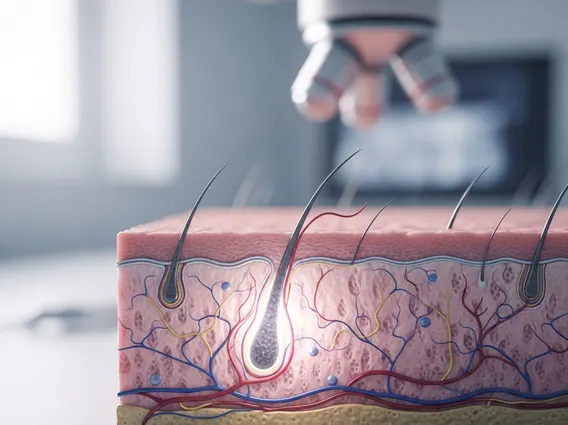
The Dermis refers to the thick, fibrous connective tissue layer that forms the bulk of the skin, positioned directly underneath the epidermis. This critical layer is responsible for the skin’s strength and elasticity, acting as a supportive matrix for various structures. It is richly supplied with blood vessels, nerves, lymphatic vessels, hair follicles, and glands, all of which contribute to the skin’s diverse functions.
As the primary supportive tissue of the skin, the dermis layer is crucial for anchoring the epidermis and connecting it to the underlying subcutaneous tissue. Its robust composition helps protect the body from physical trauma, regulate temperature, and facilitate sensory perception. Without the dermis, the skin would lack its characteristic resilience and ability to perform its protective and regulatory roles effectively.
Dermis Structure: Layers and Functions
The dermis structure and purpose are intricate, designed to provide both mechanical support and a wide array of physiological functions. It is broadly divided into two distinct layers, each contributing uniquely to the overall integrity and performance of the skin. These layers are the papillary dermis and the reticular dermis, and together they ensure the skin’s resilience and responsiveness.
The layers of the dermis explained include:
- Papillary Layer: This is the thinner, superficial layer of the dermis, directly adjacent to the epidermis. It is characterized by dermal papillae, which are finger-like projections that extend into the epidermis. These papillae increase the surface area for nutrient exchange and firmly interlock the dermis with the epidermis, preventing separation. The papillary layer contains fine collagen and elastic fibers, as well as capillaries that provide oxygen and nutrients to the avascular epidermis. It also houses touch receptors (Meissner’s corpuscles).
- Reticular Layer: Forming the deeper and thicker part of the dermis, the reticular layer is composed of dense irregular connective tissue. It is rich in thick bundles of collagen fibers, which provide tensile strength, and elastic fibers, which confer elasticity. This layer also contains fibroblasts, mast cells, and macrophages. Within the reticular dermis are hair follicles, sebaceous glands, sweat glands, larger blood vessels, and nerve endings responsible for pressure, pain, and temperature sensation (Pacinian corpuscles, Ruffini endings).
The comprehensive dermis skin function encompasses several vital roles for the body. These include providing structural integrity through its collagen and elastin networks, allowing the skin to stretch and recoil without tearing. It is also critical for sensory perception, housing numerous nerve endings that detect touch, pressure, pain, and temperature, enabling the body to respond to environmental stimuli. Furthermore, the dermis plays a key role in thermoregulation through its extensive blood vessel network, which can constrict or dilate to conserve or release heat. It also supports the epidermis by supplying it with essential nutrients and oxygen via diffusion from its capillaries, as the epidermis itself lacks a direct blood supply. Finally, the glands within the dermis, such as sebaceous and sweat glands, contribute to skin lubrication and cooling, respectively.