Dexa Scan
A Dexa Scan is a crucial diagnostic tool used to measure bone mineral density and body composition. This non-invasive procedure plays a vital role in assessing bone health and identifying conditions like osteoporosis.
Key Takeaways
- A Dexa Scan is a quick, low-radiation imaging test primarily used for bone mineral density assessment.
- It is essential for diagnosing osteoporosis and evaluating an individual’s risk of fractures.
- The procedure is painless, non-invasive, and typically completed within 10 to 20 minutes.
- Key benefits include early detection, accurate monitoring of bone health, and minimal risks, mainly very low radiation exposure.
- Preparation is minimal, usually involving avoiding calcium supplements before the test.
What is a Dexa Scan?
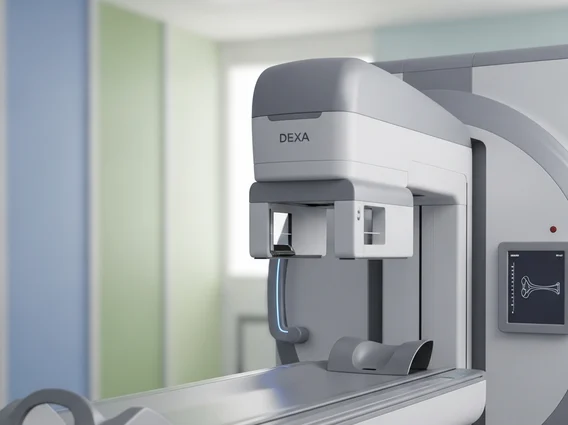
Dexa Scan refers to Dual-energy X-ray Absorptiometry, a sophisticated imaging technique that uses two different X-ray beams to estimate bone density. It is the most widely used and most accurate method for measuring bone mineral density (BMD). This scan helps healthcare providers diagnose osteoporosis, a condition characterized by weak and brittle bones, and assess an individual’s risk of fractures. Beyond bone health, some advanced Dexa scans can also provide detailed body composition analysis, differentiating between lean mass, fat mass, and bone mass. According to the International Osteoporosis Foundation, osteoporosis affects an estimated 200 million women worldwide, highlighting the importance of early detection tools like Dexa scans.
How a Dexa Scan Works and What to Expect
A Dexa Scan operates by directing two distinct X-ray energies at the bones being examined, typically the hip and spine, as these areas are most indicative of overall bone health and fracture risk. The difference in how these two energies are absorbed by the bone and soft tissue allows the machine to calculate the bone mineral density. The procedure itself is straightforward and non-invasive.
Here is what to expect during a Dexa scan:
- Preparation: You will typically be asked to avoid taking calcium supplements or multivitamins containing calcium for at least 24 hours before the scan. You should also wear loose, comfortable clothing without metal zippers, buttons, or buckles, as these can interfere with the X-ray images.
- During the Scan: You will lie flat on a padded table. A scanner arm will slowly pass over your body, emitting a low-dose X-ray beam. The process is painless, and you simply need to remain still. You might be asked to hold your breath for a few seconds at certain points.
- Duration: The entire scan usually takes between 10 to 20 minutes, depending on the areas being examined.
- After the Scan: There are no special post-scan instructions, and you can resume your normal activities immediately. The images are then analyzed by a radiologist, and the results are typically sent to your referring physician.
The results of your Dexa Scan are often reported as T-scores and Z-scores, which compare your bone density to that of a healthy young adult or individuals of your age, sex, and ethnicity, respectively.
Benefits and Risks of Dexa Scans
The primary Dexa scan benefits and risks make it a valuable tool in bone health management. The benefits largely outweigh the minimal risks, especially for individuals at risk of osteoporosis.
Benefits include:
- Early Detection: Dexa scans can detect bone loss at an early stage, often before a fracture occurs, allowing for timely intervention and treatment.
- Accuracy: It is considered the gold standard for measuring bone mineral density, providing precise and reliable results.
- Monitoring: The scan can monitor the effectiveness of osteoporosis treatments over time, showing whether bone density is improving, stabilizing, or declining.
- Non-invasive and Quick: The procedure is painless, requires no injections, and is completed relatively quickly.
- Low Radiation Exposure: The amount of radiation used in a Dexa scan is very low, comparable to the natural background radiation received in a few days, making it safe for repeated use when medically indicated.
Risks are minimal:
- Radiation Exposure: While very low, there is still a small amount of ionizing radiation involved. Pregnant women should inform their doctor, as X-ray procedures are generally avoided during pregnancy to protect the fetus.
- Claustrophobia (Rare): Although the machine is open, some individuals might feel uncomfortable lying still on the table for the duration of the scan.
The information provided here is for educational purposes only and does not substitute for professional medical advice. Always consult with a qualified healthcare provider for diagnosis and treatment.