Neuroglia
Neuroglia, often referred to simply as glia, are non-neuronal cells that play a crucial supportive role in the nervous system. These cells are essential for maintaining the health and function of neurons, which are responsible for transmitting electrical and chemical signals.
Key Takeaways
- Neuroglia are vital support cells in the nervous system, outnumbering neurons.
- They perform diverse functions, including structural support, nutrient supply, waste removal, and myelin formation.
- Key types include astrocytes, oligodendrocytes, microglia, ependymal cells in the CNS, and Schwann cells and satellite cells in the PNS.
- Unlike neurons, neuroglia do not transmit electrical impulses but are crucial for neuronal survival and optimal function.
What is Neuroglia?
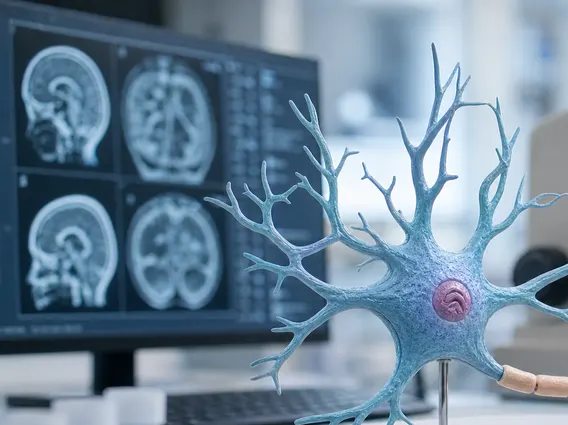
Neuroglia refers to the diverse group of non-neuronal cells found in the central nervous system (CNS) and the peripheral nervous system (PNS). These cells are fundamental to the structural integrity and functional efficiency of the nervous system, providing a supportive framework for neurons. While neurons are responsible for transmitting information, neuroglia are the unsung heroes that ensure neurons can perform their complex tasks effectively.
These cells are far more numerous than neurons, often outnumbering them by a significant margin, particularly in the brain. Their collective functions include maintaining homeostasis, forming myelin, providing structural support, supplying nutrients, and participating in immune responses within the nervous system. Without the intricate support provided by neuroglia, neurons would be unable to survive or function optimally, highlighting their indispensable role in neurological health.
Types and Functions of Neuroglia Cells
The nervous system relies on various types of neuroglia and their roles to maintain its complex environment. These cells are broadly categorized based on their location within either the central nervous system (brain and spinal cord) or the peripheral nervous system (nerves outside the brain and spinal cord). Each type performs specific functions of neuroglia in brain and body, contributing to overall neurological health.
In the CNS, the primary types of neuroglia include:
- Astrocytes: These star-shaped cells are the most abundant glia in the CNS. They provide structural support, regulate the chemical environment around neurons, supply nutrients, help form the blood-brain barrier, and play a role in neurotransmitter reuptake.
- Oligodendrocytes: Responsible for producing the myelin sheath that insulates axons in the CNS. Myelin increases the speed and efficiency of electrical signal transmission along neurons.
- Microglia: These are the immune cells of the CNS. They act as phagocytes, engulfing cellular debris, pathogens, and dead neurons, thus protecting the brain from infection and injury.
- Ependymal Cells: Lining the ventricles of the brain and the central canal of the spinal cord, ependymal cells produce and circulate cerebrospinal fluid (CSF), which cushions the brain and spinal cord.
In the PNS, the main types of neuroglia are:
- Schwann Cells: Similar to oligodendrocytes, Schwann cells form the myelin sheath around axons in the PNS. They also aid in the regeneration of damaged peripheral nerve fibers.
- Satellite Cells: These cells surround neuron cell bodies in the PNS ganglia, providing structural support and regulating the external chemical environment, much like astrocytes in the CNS.
Together, these diverse what are neuroglia cells work in concert to create an optimal environment for neuronal activity, ensuring the nervous system can effectively process and transmit information.
Neuroglia vs. Neurons: Key Differences
Understanding the fundamental neuroglia vs neurons differences is crucial for comprehending the intricate workings of the nervous system. While both are essential components, they have distinct structures and functions. Neurons are the primary signaling units, specialized for transmitting electrical and chemical signals throughout the body. In contrast, neuroglia are primarily supportive cells that do not generate or transmit nerve impulses themselves but are indispensable for neuronal survival and function.
A key distinction lies in their ability to divide. Most mature neurons lose their capacity for cell division, which is why neuronal damage can be so devastating. Neuroglia, however, retain the ability to divide and proliferate, which is important for repair processes and can sometimes lead to glial tumors. The following table summarizes their main differences:
| Feature | Neurons | Neuroglia |
|---|---|---|
| Primary Function | Transmit electrical and chemical signals | Support, protect, and nourish neurons |
| Signal Transmission | Generate and propagate action potentials | Do not generate or propagate action potentials |
| Cell Division | Generally lose ability to divide in maturity | Retain ability to divide throughout life |
| Structure | Dendrites, cell body, axon, synaptic terminals | Varied shapes (e.g., star-shaped, small, elongated) |
| Abundance | Fewer in number compared to glia | More numerous than neurons (e.g., glia-to-neuron ratio in human cerebral cortex is approximately 1:1, but varies significantly across brain regions and species, with some estimates suggesting glia outnumber neurons globally) |
This clear division of labor ensures that the nervous system operates efficiently, with neurons handling information processing and transmission, while neuroglia provide the necessary environment and maintenance for these critical functions.