Renal Collecting Tubule
The renal collecting tubule is a vital component of the kidney’s intricate filtration system, playing a crucial role in the final processing of urine. It is essential for maintaining the body’s fluid, electrolyte, and acid-base balance.
Key Takeaways
- The renal collecting tubule is the final segment of the nephron responsible for urine concentration.
- It consists of principal cells and intercalated cells, each with distinct functions.
- Its primary roles include reabsorbing water, sodium, and urea, and secreting potassium and hydrogen ions.
- Hormones like ADH and aldosterone heavily regulate its activity, influencing the body’s hydration and electrolyte balance.
- Dysfunction in the collecting tubule can lead to significant imbalances in fluid and electrolytes.
What is the Renal Collecting Tubule?
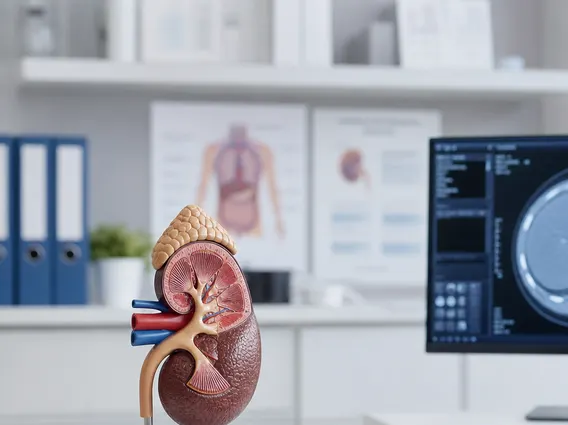
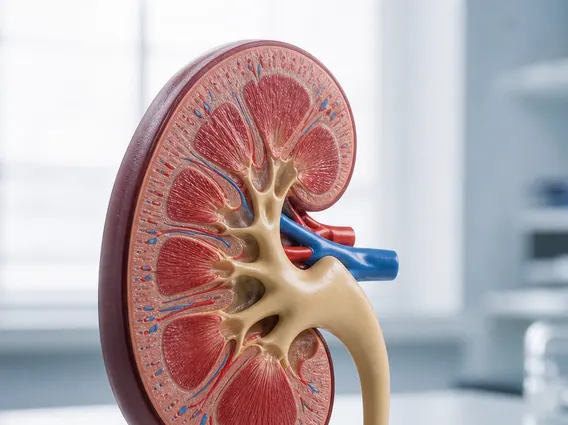
The Renal Collecting Tubule is the terminal segment of the nephron, the functional unit of the kidney, responsible for fine-tuning the composition of urine. It collects filtrate from several nephrons and transports it towards the renal papilla. This tubule is a critical part of the larger collecting duct system kidney, which extends from the renal cortex deep into the medulla, playing a pivotal role in the body’s ability to conserve water and concentrate urine.
Its primary function involves the reabsorption of water, sodium, and urea, as well as the secretion of potassium and hydrogen ions. This precise regulation ensures that the body maintains homeostasis, adapting to varying hydration levels and dietary intakes. Without the efficient operation of the renal collecting tubule, the body would rapidly lose essential fluids and electrolytes, leading to severe dehydration and metabolic disturbances.
Anatomy of the Renal Collecting Tubule
The anatomy of renal collecting tubule reveals a complex structure designed for its specialized functions. It begins in the renal cortex as cortical collecting tubules, which then descend into the renal medulla, becoming medullary collecting tubules. These tubules merge to form larger collecting ducts, eventually emptying into the renal papilla.
The walls of the renal collecting tubule are composed of two main cell types:
- Principal cells: These are the more abundant cells and are primarily involved in sodium reabsorption and potassium secretion. They possess aquaporin channels, whose insertion into the cell membrane is regulated by antidiuretic hormone (ADH), controlling water permeability.
- Intercalated cells: These cells are crucial for acid-base balance. Type A intercalated cells secrete hydrogen ions and reabsorb bicarbonate, while Type B intercalated cells secrete bicarbonate and reabsorb hydrogen ions, depending on the body’s pH needs.
The precise arrangement and cellular composition allow the collecting tubule to respond dynamically to hormonal signals, making it a key regulator of the final urine volume and concentration.
Functions of the Renal Collecting Tubule
The multifaceted renal collecting tubule function is indispensable for maintaining physiological balance. Its main roles include:
One of its most critical functions is water reabsorption. Under the influence of antidiuretic hormone (ADH), the principal cells become permeable to water, allowing water to move out of the tubule and into the hypertonic medullary interstitium. This process is vital for producing concentrated urine and preventing excessive water loss, especially during dehydration. Conversely, in the absence of ADH, the tubule remains impermeable to water, leading to the excretion of dilute urine.
Furthermore, the collecting tubule is instrumental in electrolyte balance. Principal cells reabsorb sodium and secrete potassium, a process largely regulated by aldosterone. This hormone increases the number of sodium channels and Na+/K+-ATPases, enhancing sodium retention and potassium excretion. Intercalated cells, as mentioned, are central to acid-base homeostasis by precisely regulating the secretion or reabsorption of hydrogen and bicarbonate ions. This fine-tuning ensures that the blood pH remains within a narrow, healthy range. The collecting tubule also contributes to urea reabsorption, which helps establish the medullary osmotic gradient necessary for water reabsorption.