
Stage Iib Non Small Cell Lung Cancer
Stage IIB Non-Small Cell Lung Cancer (NSCLC) represents a specific classification within the broader spectrum of lung cancer, indicating a tumor that has grown larger or spread to nearby lymph nodes but remains localized within the chest. Understanding this stage is crucial for patients and their families to navigate diagnosis and treatment effectively.
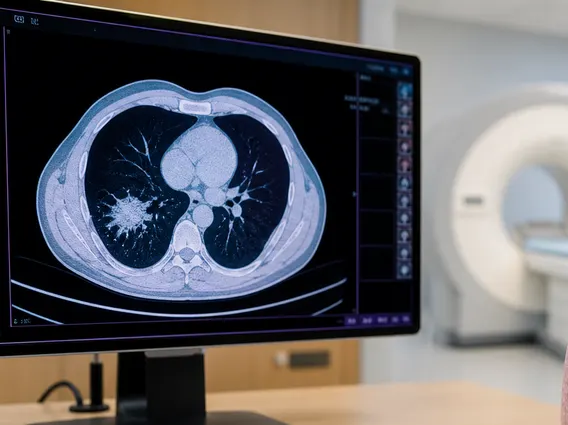
Key Takeaways
- Stage IIB Non-Small Cell Lung Cancer is an early, yet locally advanced, form of lung cancer characterized by tumor size or lymph node involvement.
- Common indicators include a persistent cough, chest pain, and unexplained weight loss, prompting medical evaluation.
- Treatment strategies often combine surgery, chemotherapy, and radiation therapy, tailored to individual patient needs.
- The prognosis for Stage IIB lung cancer is influenced by factors such as tumor characteristics, overall health, and response to treatment.
What is Stage IIB Non-Small Cell Lung Cancer (NSCLC)?
Stage IIB Non-Small Cell Lung Cancer is a classification used to describe lung cancer that has grown to a certain size or has spread to nearby lymph nodes on the same side of the chest as the primary tumor, but has not metastasized to distant parts of the body. This stage is part of the TNM (Tumor, Node, Metastasis) staging system, which is universally used to classify cancer based on the size of the primary tumor (T), the involvement of nearby lymph nodes (N), and the presence of distant metastasis (M). In Stage IIB, the tumor might be larger (e.g., greater than 5 cm but not exceeding 7 cm) without lymph node involvement, or it could be smaller with spread to hilar lymph nodes (N1), or it might involve the chest wall or diaphragm.
Non-Small Cell Lung Cancer (NSCLC) itself is the most common type of lung cancer, accounting for about 85% of all lung cancer diagnoses. It encompasses several subtypes, including adenocarcinoma, squamous cell carcinoma, and large cell carcinoma. Identifying the specific stage, such as Stage IIB, is vital as it directly influences the recommended treatment plan and helps predict the patient’s outlook.
Recognizing Symptoms of Stage IIB NSCLC
The presence of Stage IIB non small cell lung cancer symptoms often prompts individuals to seek medical attention. These symptoms can be subtle in early stages but tend to become more pronounced as the disease progresses. It is important to note that many of these symptoms can also be indicative of less serious conditions, but persistent or worsening symptoms warrant a thorough medical evaluation.
Common symptoms associated with Stage IIB NSCLC include:
- A persistent cough that does not go away or worsens over time.
- Chest pain that is often worse with deep breathing, coughing, or laughing.
- Shortness of breath, especially during physical activity.
- Hoarseness or changes in voice.
- Unexplained weight loss and loss of appetite.
- Fatigue and weakness.
- Recurrent infections such as bronchitis or pneumonia.
These symptoms arise as the tumor grows and potentially irritates surrounding tissues, obstructs airways, or affects the body’s overall metabolism. Early recognition and diagnosis significantly improve treatment outcomes.
Treatment Options and Prognosis for Stage IIB NSCLC
For individuals diagnosed with Stage IIB non small cell lung cancer treatment options are typically multimodal, meaning they involve a combination of therapies. The primary goal is to remove or destroy the cancer cells and prevent recurrence. The specific approach is personalized based on factors such as the tumor’s exact characteristics, the patient’s overall health, and their preferences.
Common treatment modalities include:
- Surgery: Often the cornerstone of treatment for resectable Stage IIB NSCLC, involving the removal of the cancerous lobe of the lung (lobectomy) or, less commonly, the entire lung (pneumonectomy). Lymph nodes in the chest are also typically removed to check for cancer spread.
- Chemotherapy: May be given before surgery (neoadjuvant) to shrink the tumor, or after surgery (adjuvant) to eliminate any remaining cancer cells and reduce the risk of recurrence.
- Radiation Therapy: Uses high-energy rays to kill cancer cells. It can be used before or after surgery, or as the primary treatment if surgery is not an option.
- Targeted Therapy and Immunotherapy: While more commonly used in advanced stages, these therapies may be considered in specific cases for Stage IIB, particularly if certain genetic mutations or biomarkers are present.
The Prognosis for Stage IIB lung cancer varies significantly among individuals. Factors influencing the prognosis include the exact size and location of the tumor, the extent of lymph node involvement, the patient’s overall health status, and how well the cancer responds to treatment. According to the American Cancer Society, the 5-year relative survival rate for localized NSCLC (which includes Stage IIB) is approximately 65% (Source: American Cancer Society, 2024). It is important to discuss individual prognosis with an oncology team, as these statistics represent averages and cannot predict individual outcomes.



















