
Stage Ii Esophageal Squamous Cell Carcinoma
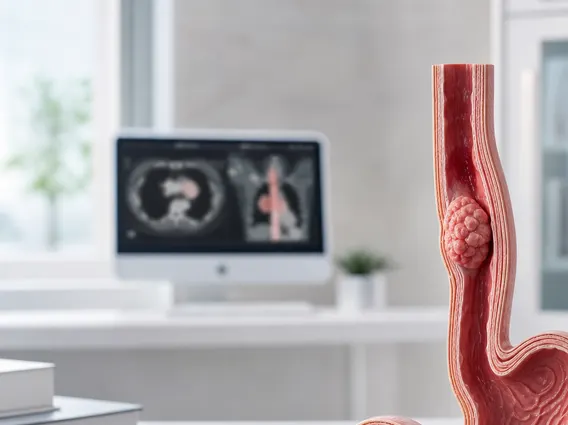
Stage II Esophageal Squamous Cell Carcinoma represents an advanced stage of cancer originating in the squamous cells lining the esophagus. Understanding this diagnosis is crucial for patients and their families as it guides treatment decisions and expectations.
Key Takeaways
- Stage II Esophageal Squamous Cell Carcinoma involves cancer that has grown into deeper layers of the esophageal wall or spread to nearby lymph nodes, but not distant sites.
- Common symptoms include difficulty swallowing, weight loss, and chest pain, prompting diagnostic procedures like endoscopy and biopsy.
- Treatment typically involves a multimodal approach, combining surgery with chemotherapy and/or radiation therapy.
- Prognosis depends on various factors, including the extent of tumor spread, overall health, and response to treatment.
What is Stage II Esophageal Squamous Cell Carcinoma?
Stage II Esophageal Squamous Cell Carcinoma refers to a specific classification of esophageal cancer where the tumor has grown beyond the superficial lining of the esophagus. This stage indicates that the cancer has either penetrated deeper into the muscular layer of the esophageal wall or has spread to a limited number of nearby lymph nodes, but has not yet metastasized to distant organs. The staging process, often guided by the TNM (Tumor, Node, Metastasis) system, helps clinicians determine the extent of the disease and plan appropriate therapeutic strategies.
Esophageal squamous cell carcinoma is a common type of esophageal cancer, accounting for a significant portion of cases globally. According to the American Cancer Society, esophageal cancer is more common in men than in women, and its incidence rates vary geographically. Early detection is challenging due to the often subtle nature of initial symptoms, making staging a critical step once a diagnosis is confirmed.
Symptoms and Diagnosis of Stage II Esophageal Squamous Cell Carcinoma
Recognizing Stage II Esophageal Squamous Cell Carcinoma symptoms is vital for timely diagnosis and intervention. These symptoms often become noticeable as the tumor grows and begins to obstruct the esophagus or irritate surrounding tissues. While individual experiences may vary, common indicators include:
- Dysphagia: Difficulty or pain when swallowing, which often progresses from solid foods to liquids.
- Unexplained weight loss: Resulting from difficulty eating and the cancer’s metabolic demands.
- Chest pain or discomfort: A feeling of pressure or burning behind the breastbone.
- Hoarseness: If the tumor affects nerves controlling the vocal cords.
- Chronic cough: Persistent coughing, sometimes with blood.
Diagnosis typically involves a combination of procedures. An endoscopy with biopsy is usually the primary method, allowing direct visualization of the esophagus and collection of tissue samples for pathological examination. Imaging tests such as CT scans, PET scans, and endoscopic ultrasound (EUS) are then used to accurately stage the cancer, determining the tumor’s depth of invasion and whether it has spread to lymph nodes or distant sites. These diagnostic tools are crucial for confirming Stage II classification.
Treatment Options and Prognosis for Stage II Esophageal Squamous Cell Carcinoma
The Stage II Esophageal Squamous Cell Carcinoma treatment approach is often multimodal, meaning it combines several different therapies to achieve the best possible outcome. The specific treatment plan is tailored to the individual patient, considering factors such as overall health, tumor characteristics, and patient preferences. Common treatment modalities include:
- Surgery: Often a primary treatment, involving the removal of the cancerous portion of the esophagus (esophagectomy) and nearby lymph nodes.
- Chemotherapy: The use of drugs to kill cancer cells, often administered before (neoadjuvant) or after (adjuvant) surgery, or in combination with radiation.
- Radiation Therapy: Uses high-energy rays to destroy cancer cells, also often used in conjunction with chemotherapy (chemoradiation) before or after surgery.
The prognosis for Stage II Esophageal Squamous Cell Carcinoma varies significantly among individuals. Factors influencing prognosis include the exact extent of tumor invasion, the number of affected lymph nodes, the patient’s overall health status, and their response to treatment. While Stage II indicates localized or regional spread, advancements in treatment have improved outcomes over time. According to the National Cancer Institute’s SEER program, the 5-year relative survival rate for localized esophageal cancer (which includes many Stage II cases) is approximately 47%, though this figure can vary widely based on individual circumstances and specific staging criteria. Patients should discuss their specific prognosis and treatment options thoroughly with their oncology team.



















