Neuron
A neuron is the fundamental unit of the nervous system, responsible for transmitting electrical and chemical signals throughout the body. These specialized cells are crucial for all aspects of human function, from thought and emotion to movement and sensation.
Key Takeaways
- Neuron is the basic building block of the nervous system, transmitting information.
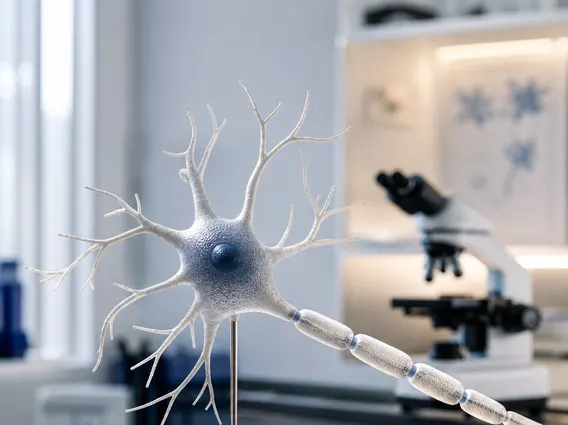
- Neurons consist of a cell body, dendrites, and an axon, each playing a vital role in signal processing.
- There are various types of neurons, including sensory, motor, and interneurons, each with specific functions.
- Neurons communicate through electrochemical signals called action potentials and neurotransmitters at synapses.
- This intricate communication network enables all bodily functions and cognitive processes.
What is a Neuron?
A Neuron refers to a nerve cell, the primary component of the nervous system. These highly specialized cells are designed to transmit information to other nerve cells, muscle cells, or gland cells. They are essential for processing and transmitting electrical and chemical signals, forming the complex communication network that underlies all brain functions and bodily activities. Without neurons, the body would be unable to perceive stimuli, initiate movement, or process thoughts and emotions.
Neuron Structure, Function, and Types
The intricate **neuron function and structure** allow for efficient signal transmission. A typical neuron comprises three main parts: the cell body (soma), dendrites, and an axon.
- Cell Body (Soma): This central part contains the nucleus and other organelles, responsible for maintaining the neuron’s life and producing proteins.
- Dendrites: These tree-like branches extend from the cell body and receive signals from other neurons, acting as the primary input sites.
- Axon: A long, slender projection that transmits electrical signals away from the cell body to other neurons, muscles, or glands. Many axons are covered by a myelin sheath, which insulates the axon and speeds up signal transmission.
The **types of neurons in the brain** are diverse, each specialized for different roles. These classifications are often based on their function or structure:
- Sensory Neurons: These neurons transmit information from sensory receptors (e.g., in the skin, eyes, ears) to the central nervous system (brain and spinal cord). They are responsible for our senses of touch, sight, hearing, taste, and smell.
- Motor Neurons: Carrying signals from the central nervous system to muscles and glands, motor neurons control movement and glandular secretions.
- Interneurons: Found exclusively within the central nervous system, interneurons act as intermediaries, connecting sensory and motor neurons. They play a crucial role in complex brain functions like learning, memory, and decision-making.
How Neurons Transmit Signals
Neurons communicate through a sophisticated electrochemical process. The fundamental mechanism explaining **how do neurons transmit signals** involves the generation and propagation of electrical impulses, known as action potentials, and the release of chemical messengers called neurotransmitters.
When a neuron receives a sufficient stimulus, it generates an action potential, a rapid, transient change in its electrical potential that travels down the axon. Upon reaching the end of the axon, at structures called synaptic terminals, this electrical signal triggers the release of neurotransmitters into a tiny gap called the synapse. These neurotransmitters then bind to specific receptors on the dendrites or cell body of an adjacent neuron, either exciting it to generate its own action potential or inhibiting it from firing. This continuous process of signal transmission across billions of neurons forms the basis of all nervous system functions, allowing for rapid and complex communication throughout the body.