Laser
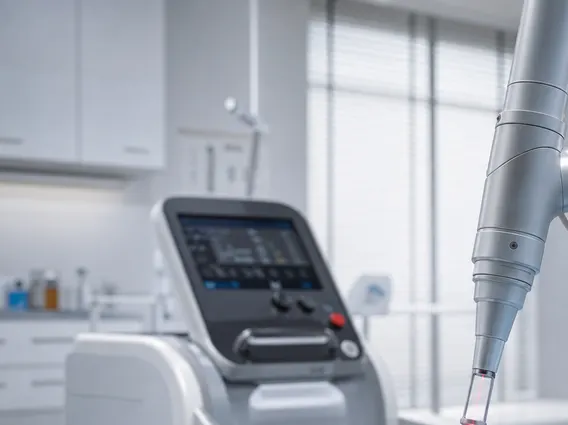
Laser technology has revolutionized various fields of medicine, offering precise and minimally invasive treatment options. Understanding Laser in a clinical context involves appreciating its unique properties and diverse applications in patient care.
Key Takeaways
- Laser stands for Light Amplification by Stimulated Emission of Radiation, producing highly focused, monochromatic light.
- Its mechanism involves stimulating atoms to emit photons, which are then amplified, resulting in a coherent light beam.
- Medical lasers are categorized by their active medium (e.g., CO2, Nd:YAG) and are used in surgery, dermatology, ophthalmology, and oncology.
- Applications of laser technology range from precise tissue cutting and ablation to targeted therapy for various conditions.
- The history and discovery of lasers began with theoretical concepts in the early 20th century, leading to the first working device in 1960 and rapid medical adoption.
What is Laser Technology and How It Works?
Laser (Light Amplification by Stimulated Emission of Radiation) refers to a device that emits light through a process of optical amplification based on the stimulated emission of electromagnetic radiation. In a medical context, this technology provides highly concentrated beams of light, enabling unparalleled precision in various diagnostic and therapeutic procedures. Unlike ordinary light, laser light is monochromatic (single color), coherent (waves are in phase), and collimated (travels in a narrow, parallel beam), making it ideal for targeted interventions.
The fundamental principle behind laser operation involves exciting atoms or molecules in a gain medium to a higher energy state. When these excited particles return to a lower energy state, they emit photons. In a laser, these emitted photons are used to stimulate other excited particles to emit identical photons, leading to an amplification cascade. This process occurs within an optical resonator, typically formed by two mirrors, which reflects the light back and forth through the gain medium, further intensifying the beam. A portion of this amplified light is then allowed to escape through one of the mirrors, forming the powerful and precise laser beam used in clinical settings. This controlled energy delivery allows for precise cutting, coagulation, or vaporization of tissue with minimal damage to surrounding areas.
Types of Lasers and Their Diverse Applications
The medical field utilizes different types of lasers explained, each optimized for specific applications based on their wavelength, power, and interaction with biological tissues. These variations allow clinicians to select the most appropriate laser for a given procedure, ensuring efficacy and patient safety. For instance, some lasers are absorbed well by water, making them suitable for soft tissue ablation, while others target specific pigments like melanin or hemoglobin, useful in dermatological treatments.
| Laser Type | Active Medium/Wavelength | Common Medical Applications |
|---|---|---|
| CO2 Laser | Carbon Dioxide (10,600 nm) | Precise tissue cutting, vaporization, skin resurfacing, general surgery. |
| Nd:YAG Laser | Neodymium-doped Yttrium Aluminum Garnet (1,064 nm) | Deep tissue coagulation, tumor ablation, ophthalmology (posterior capsulotomy), hair removal. |
| Excimer Laser | Argon Fluoride, Xenon Chloride (193 nm, 308 nm) | Corneal reshaping (LASIK), psoriasis treatment, angioplasty. |
| Diode Laser | Semiconductor Diodes (810-980 nm) | Hair removal, vascular lesions, dental procedures, photodynamic therapy. |
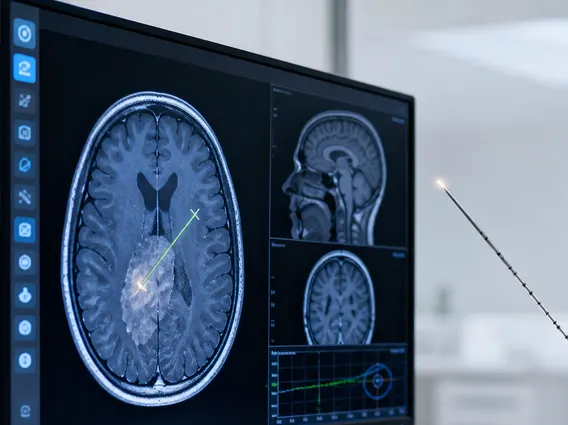
The applications of laser technology are vast and continually expanding across various medical specialties. In ophthalmology, lasers correct vision and treat retinal diseases. Dermatology uses lasers for skin rejuvenation, scar revision, and removal of tattoos or vascular lesions. Surgical applications include highly precise incisions, tumor removal, and minimally invasive procedures, reducing recovery times and improving patient outcomes. Oncology also employs lasers for photodynamic therapy and targeted tumor destruction, often in conjunction with other treatments.
The History and Discovery of Lasers
The history and discovery of lasers is a fascinating journey that began with theoretical physics and culminated in a revolutionary technological advancement. The foundational concept of stimulated emission, which is central to laser operation, was first proposed by Albert Einstein in 1917. He theorized that atoms could be stimulated to emit light, leading to light amplification. However, it took several decades for this theory to be practically realized.
In the 1950s, Charles Townes and his colleagues at Columbia University developed the maser (Microwave Amplification by Stimulated Emission of Radiation), which operated on similar principles but used microwaves instead of visible light. Building upon this work, Theodore Maiman at Hughes Research Laboratories successfully demonstrated the world’s first working laser in 1960, using a synthetic ruby crystal as the gain medium. This groundbreaking invention quickly paved the way for the development of various other laser types and their rapid adoption across scientific, industrial, and medical fields. The precision and unique properties of laser light quickly made it an indispensable tool in medicine, transforming surgical techniques and opening new avenues for treatment.