Laryngoscope
A Laryngoscope is a vital medical instrument used to visualize the larynx, or voice box, and surrounding structures. This device plays a crucial role in various clinical procedures, particularly those involving airway management and intubation.
Key Takeaways
- A Laryngoscope is a medical device designed for direct or indirect visualization of the larynx and vocal cords.
- Its primary purpose is to facilitate endotracheal intubation, aiding in establishing a secure airway for ventilation.
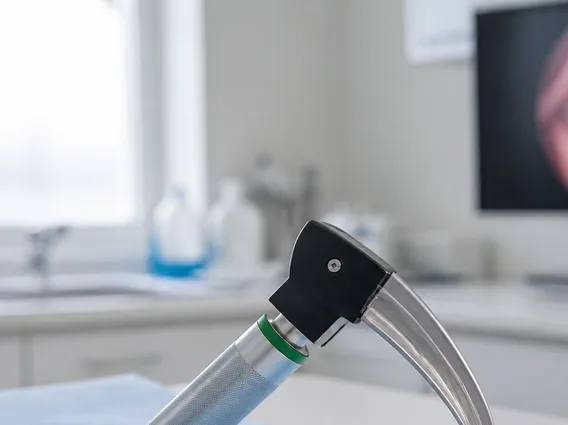
- Laryngoscopes function by incorporating a handle, a blade, and a light source to illuminate the glottic opening.
- There are various types, including direct (Macintosh, Miller) and video laryngoscopes, each suited for different clinical scenarios.
- Proper use of a Laryngoscope is essential for safe and effective airway management in anesthesia, emergency medicine, and critical care.
What is a Laryngoscope? Definition and Purpose
A Laryngoscope is an indispensable medical instrument primarily designed for direct or indirect visualization of the larynx, vocal cords, and surrounding anatomical structures. The laryngoscope definition and purpose center on its utility in facilitating procedures that require access to the trachea, most notably endotracheal intubation.
The primary purpose of a Laryngoscope is to enable healthcare professionals, such as anesthesiologists, emergency physicians, and intensivists, to obtain a clear view of the glottis. This clear view is essential for guiding an endotracheal tube into the trachea, thereby securing an airway for mechanical ventilation, oxygen delivery, or protection against aspiration. Beyond intubation, Laryngoscopes are also used for diagnostic examinations of the larynx, removal of foreign bodies, and minor surgical procedures within the upper airway.
How Laryngoscopes Work
Laryngoscopes operate on a fundamental principle of illumination and mechanical displacement to provide a clear view of the larynx. The core components include a handle, which houses the power source (typically batteries), and a blade, which is inserted into the patient’s mouth. The mechanism of how does a laryngoscope work involves the blade being advanced to gently displace the tongue and epiglottis, thereby exposing the vocal cords and glottic opening.
Modern Laryngoscopes incorporate a light source, either a conventional bulb or fiber optics, located at the distal tip of the blade. This illumination is crucial for visualizing the dark recesses of the pharynx and larynx. Once the glottis is adequately exposed, the operator can guide an endotracheal tube through the vocal cords into the trachea under direct vision or via a monitor in the case of video laryngoscopes. The design ensures that the airway can be safely and efficiently secured, minimizing trauma to surrounding tissues.
Types of Laryngoscopes and Their Clinical Applications
The field of airway management has seen the development of various Laryngoscope types, each designed to address specific clinical needs and anatomical challenges. Understanding the types of laryngoscopes and their uses is crucial for selecting the appropriate device for a given patient scenario. These instruments are broadly categorized into direct and video laryngoscopes.
Direct Laryngoscopes allow the clinician to visualize the larynx by directly looking down the patient’s airway, aligning the oral, pharyngeal, and laryngeal axes. Video Laryngoscopes, on the other hand, employ a small camera at the tip of the blade, transmitting an image to a screen, offering an indirect but often superior view, especially in difficult airway situations. According to a study published in the journal Anesthesiology, video laryngoscopy has been shown to improve glottic visualization and intubation success rates in patients with predicted difficult airways compared to direct laryngoscopy (source: American Society of Anesthesiologists, Anesthesiology, 2019).
Common types of Laryngoscope blades include:
- Macintosh Blade: A curved blade designed to fit into the vallecula (the space between the base of the tongue and the epiglottis), indirectly lifting the epiglottis to expose the vocal cords. It is widely used for adult intubations.
- Miller Blade: A straight blade designed to directly lift the epiglottis to expose the vocal cords. It is often preferred for pediatric patients due to their floppy epiglottis and anterior larynx.
- Video Laryngoscope Blades: These blades come in various shapes (e.g., hyper-angulated, standard geometry) and are integrated with a camera. They are particularly beneficial for patients with difficult airways, limited neck mobility, or obesity, as they provide an enhanced view without requiring direct line-of-sight.
The choice between these types depends on factors such as patient anatomy, clinical urgency, operator experience, and the anticipated difficulty of intubation. For instance, in emergency settings where rapid intubation is critical, a direct Laryngoscope might be utilized initially, while a video Laryngoscope could be reserved for anticipated or encountered difficult airways, offering a significant advantage in challenging scenarios. The continuous evolution of Laryngoscope technology aims to enhance patient safety and improve the success rates of airway management procedures across all medical disciplines.