Mole
A Mole, in its most common medical context, refers to a common type of skin growth. These growths are typically small, dark spots that can appear anywhere on the body, varying in size, shape, and color.
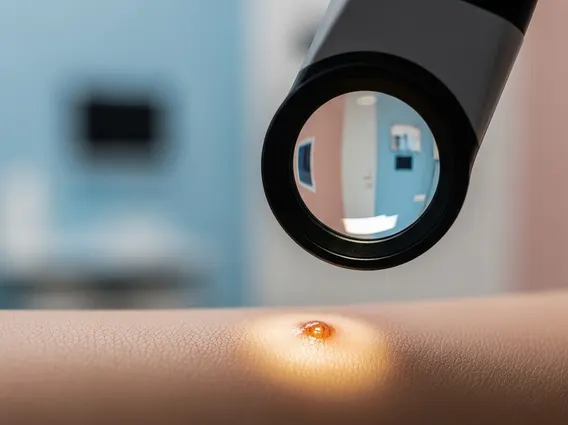
Key Takeaways
- A Mole (nevus) is a common skin lesion, usually harmless, formed by clusters of pigment cells.
- Skin moles come in various types, including common, atypical, and congenital, each with distinct characteristics.
- Regular self-examinations and professional skin checks are crucial for monitoring moles for changes that could indicate melanoma.
- Beyond skin lesions, “mole” has distinct meanings in zoology (a burrowing mammal) and chemistry (a unit of substance).
- Understanding the different contexts of the word “mole” helps avoid confusion across various scientific and everyday discussions.
What is a Mole? Understanding Skin Lesions
A Mole, medically known as a nevus (plural: nevi), is a common, non-cancerous growth on the skin. It develops when pigment-producing cells, called melanocytes, grow in clusters. Moles can be present at birth (congenital nevi) or appear later in life (acquired nevi). They are typically small, dark spots, but their appearance can vary significantly in terms of color, shape, and size. Most adults have between 10 and 40 moles, and while the majority are harmless, it’s important to monitor them for any changes that could signal a more serious condition, such as melanoma, a type of skin cancer.
The formation of moles is influenced by a combination of genetic factors and sun exposure. While some moles are flat, others can be raised, and their color can range from pink, tan, and brown to black. They can appear anywhere on the skin, including the scalp, palms, soles, and even under the nails. Understanding the characteristics of your moles and recognizing potential warning signs is a critical aspect of skin health and early detection of skin cancer.
Types of Skin Moles and Their Characteristics
When considering what are skin moles and types, it’s clear that these common skin growths exhibit a wide range of appearances and classifications. Most moles are benign, but distinguishing between different types is crucial for health monitoring. Here are some common types:
- Common Moles (Acquired Nevi): These are typically small (less than 6 millimeters), round or oval, with a smooth surface and distinct borders. Their color is usually uniform, ranging from tan to dark brown. They can appear anywhere on the body and often develop during childhood and adolescence.
- Congenital Moles (Congenital Nevi): Present at birth, these moles can vary greatly in size, from small to very large. They are often slightly raised and may have hair growing from them. While most are benign, larger congenital moles have a slightly increased risk of developing into melanoma compared to common moles.
- Atypical Moles (Dysplastic Nevi): These moles have irregular features, making them harder to distinguish from melanoma. They are often larger than common moles (over 6 millimeters), have indistinct or fuzzy borders, and may display a variety of colors within a single mole. People with many atypical moles have a higher risk of melanoma.
- Spitz Nevi: These are typically pink, raised, dome-shaped lesions that can sometimes bleed. They often appear suddenly and grow quickly, making them difficult to differentiate from melanoma without a biopsy.
Regular self-examinations and professional skin checks are vital for monitoring moles. The American Academy of Dermatology (AAD) recommends using the ABCDE rule to identify potentially problematic moles:
- Asymmetry: One half of the mole does not match the other.
- Border: The edges are irregular, ragged, notched, or blurred.
- Color: The color is not uniform and may include shades of brown, black, tan, red, white, or blue.
- Diameter: The mole is larger than 6 millimeters (about the size of a pencil eraser).
- Evolving: The mole is changing in size, shape, color, or elevation, or any new symptom such as bleeding, itching, or crusting appears.
If any of these signs are present, it is recommended to consult a dermatologist for further evaluation.
Other Meanings of “Mole”: Beyond the Skin
While the primary medical context of “Mole” refers to a skin lesion, the word is a homonym with distinct meanings across different fields. These other uses are entirely unrelated to dermatology or oncology.
| Context | Meaning | Explanation |
|---|---|---|
| Zoology | Mole animal facts and habitat | A small, burrowing mammal (family Talpidae) known for its cylindrical body, velvety fur, small eyes, and powerful forelimbs adapted for digging. Moles typically inhabit underground tunnels in grasslands, woodlands, and gardens, feeding on insects, larvae, and earthworms. |
| Chemistry | Mole definition in chemistry | A fundamental unit of substance in the International System of Units (SI), representing a specific number of particles. |
| Science | Mole concept in science explained | The Mole concept in science explained refers to Avogadro’s number (approximately 6.022 × 10²³) of constituent particles (atoms, molecules, ions, or electrons) in a substance. It provides a convenient way to express the amount of a substance and relate it to its mass and the number of particles. For example, one mole of carbon-12 atoms has a mass of exactly 12 grams. |
| Espionage | Undercover Agent | Informally, a spy who has infiltrated an organization and works from within for an opposing side, often over a long period. |
These diverse meanings highlight the importance of context when encountering the word “mole” in different discussions, ensuring clarity and avoiding misinterpretation.