Cell Cycle
The Cell Cycle is a fundamental biological process that orchestrates the growth, division, and reproduction of cells. It is a meticulously regulated series of events crucial for the development, maintenance, and repair of all living organisms.
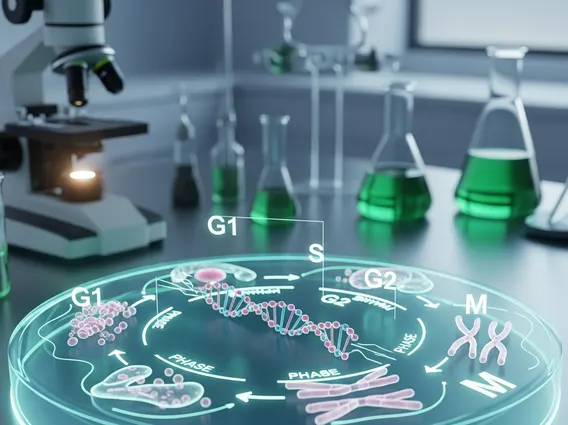
Key Takeaways
- The Cell Cycle is the ordered sequence of events that a cell undergoes to grow and divide.
- It consists primarily of Interphase (G1, S, G2) and the M phase (mitosis/meiosis and cytokinesis).
- During Interphase, the cell grows and replicates its DNA, preparing for division.
- The M phase involves nuclear division and subsequent cytoplasmic division, resulting in two daughter cells.
- Rigorous regulation through checkpoints ensures accurate DNA replication and chromosome segregation, preventing errors that can lead to diseases like cancer.
What is the Cell Cycle?
The Cell Cycle refers to the series of events that take place in a cell leading to its division and duplication. This vital process ensures that organisms can grow, repair damaged tissues, and reproduce. It is a highly organized and tightly controlled sequence, essential for maintaining the health and integrity of an organism.
Every cell in the body, from the moment of its formation until it divides into two daughter cells, passes through a cycle of growth, DNA replication, and division. This continuous process is fundamental to life, enabling the replacement of old cells, the healing of wounds, and the overall development from a single fertilized egg into a complex multicellular organism.
Key Phases and Functions of the Cell Cycle
The Cell Cycle is broadly divided into two main stages: Interphase and the M (Mitotic) phase. Interphase is a period of growth and DNA replication, while the M phase involves nuclear and cytoplasmic division. Understanding the stages of the cell cycle explained reveals the intricate steps cells undertake to ensure proper division.
Here are the primary cell cycle phases and their functions:
| Phase | Description | Key Function |
|---|---|---|
| G1 Phase (Gap 1) | The cell grows, synthesizes proteins, and produces organelles. | Cell growth and normal metabolic roles. |
| S Phase (Synthesis) | DNA replication occurs, resulting in two identical sets of chromosomes. | DNA synthesis and chromosome duplication. |
| G2 Phase (Gap 2) | The cell continues to grow, synthesizes proteins necessary for mitosis, and prepares for division. | Preparation for cell division. |
| M Phase (Mitosis/Meiosis & Cytokinesis) | Nuclear division (mitosis or meiosis) followed by cytoplasmic division. | Cell division into two or four daughter cells. |
Interphase (G1, S, G2) is the longest part of the Cell Cycle, during which the cell grows and copies its DNA before moving into the M phase. Mitosis, a part of the M phase, is the process by which a eukaryotic cell nucleus divides into two identical nuclei, each with an identical set of chromosomes.
Regulation and Importance of the Cell Cycle
The precise control over the Cell Cycle is paramount for maintaining cellular and organismal health. The question of how cell cycle works effectively lies in its sophisticated regulatory mechanisms. These mechanisms involve a series of checkpoints that monitor the cell’s progress and ensure that each phase is completed accurately before the next one begins.
Key regulators include cyclin-dependent kinases (CDKs) and cyclins, which form complexes that drive the cell through different phases. Checkpoints, such as the G1, G2, and M checkpoints, act as internal surveillance systems. For instance, the G1 checkpoint ensures that the cell is ready to commit to division, checking for DNA damage and adequate resources. If errors are detected, the cell cycle can be paused to allow for repair, or the cell may undergo programmed cell death (apoptosis) to prevent the proliferation of damaged cells.
Dysregulation of the Cell Cycle can have severe consequences. Uncontrolled cell division, often due to mutations in genes that regulate the Cell Cycle, is a hallmark of cancer. Therefore, understanding the intricate regulation of the Cell Cycle is not only fundamental to biology but also crucial for developing therapies for various diseases, particularly in oncology.