Cerebellum
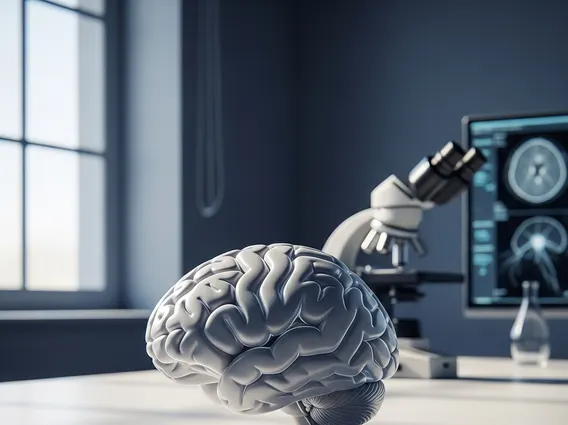
The cerebellum is a vital part of the brain located at the back of the skull, beneath the cerebrum. It plays a crucial role in coordinating voluntary movements, balance, and motor learning, ensuring smooth and precise physical actions.
Key Takeaways
- The Cerebellum is a distinct brain region primarily responsible for motor control and coordination.
- It is anatomically divided into two hemispheres and a central vermis, connected to the brainstem.
- Key functions include maintaining balance, refining movements, and contributing to motor learning.
- Beyond motor tasks, the cerebellum is increasingly recognized for its involvement in cognitive and emotional processes.
What is the Cerebellum?
The Cerebellum, Latin for “little brain,” is a major structure of the hindbrain, situated at the back of the head, nestled under the occipital and temporal lobes of the cerebral cortex. It accounts for only about 10% of the brain’s total volume but contains over 50% of its neurons. This remarkable density of neurons underscores its critical importance in various neurological functions. The primary role of the cerebellum is to integrate sensory information from the spinal cord and other parts of the brain to fine-tune motor activity. This integration allows for precise control of voluntary movements, balance, posture, and motor learning. Understanding what is the cerebellum involves recognizing its complex structure and its indispensable contribution to our ability to move and interact with the world.
Cerebellum Anatomy: Parts and Structure
The cerebellum function and anatomy are intricately linked, with its distinct structure facilitating its diverse roles. Anatomically, the cerebellum is divided into two cerebellar hemispheres, which are connected by a narrow, central region called the vermis. These divisions are further organized into three main lobes: the anterior lobe, posterior lobe, and flocculonodular lobe. Each lobe contributes to specific aspects of cerebellar function.
The cerebellum is connected to the brainstem by three pairs of cerebellar peduncles—superior, middle, and inferior—which are bundles of nerve fibers that carry information to and from the cerebellum. Internally, the cerebellum consists of an outer layer of gray matter, the cerebellar cortex, and an inner core of white matter, which contains deep cerebellar nuclei. These nuclei are crucial for relaying cerebellar output to other brain regions. To fully grasp the parts of the cerebellum explained, it is helpful to visualize its layered structure and its connections:
- Cerebellar Hemispheres: The large lateral portions involved in planning and coordinating voluntary movements, particularly of the limbs.
- Vermis: The central region that primarily regulates trunk and proximal limb movements, maintaining posture and balance.
- Flocculonodular Lobe: The oldest part of the cerebellum, essential for balance and eye movements.
- Cerebellar Peduncles: Fiber tracts connecting the cerebellum to the brainstem, facilitating communication.
- Cerebellar Cortex: The outer gray matter, responsible for processing sensory input and coordinating motor output.
- Deep Cerebellar Nuclei: Clusters of neurons deep within the white matter that serve as the main output centers of the cerebellum.
Functions of the Cerebellum: Motor Control and More
The primary and most well-understood function of the cerebellum is its role of cerebellum in motor control. It acts as a sophisticated error-correction device, comparing intended movements with actual movements and making real-time adjustments. This allows for smooth, coordinated, and precise actions, from walking and running to playing a musical instrument or performing surgery. For instance, if you reach for a cup, the cerebellum ensures your hand moves smoothly and accurately, without overshooting or undershooting the target. It is also vital for maintaining balance and posture, receiving proprioceptive information from muscles and joints to keep the body upright and stable.
Beyond motor functions, recent research has expanded our understanding of cerebellar involvement in non-motor processes. The cerebellum contributes to cognitive functions such as attention, language processing, working memory, and spatial cognition. It also plays a role in emotional regulation and response, with cerebellar dysfunction being linked to certain psychiatric conditions. While motor coordination remains its hallmark, the cerebellum’s influence extends to a wide array of brain functions, highlighting its complex and integrative nature within the central nervous system. According to the National Institute of Neurological Disorders and Stroke (NINDS), cerebellar disorders can manifest as ataxia, characterized by a lack of muscle control or coordination of voluntary movements, emphasizing the critical impact of its proper functioning.