Ductography
Ductography is a specialized medical imaging procedure used to investigate abnormal nipple discharge, a common concern that can indicate various underlying breast conditions. This diagnostic test helps pinpoint the exact location and nature of abnormalities within the breast ducts.
Key Takeaways
- Ductography is a diagnostic imaging technique for evaluating nipple discharge.
- It involves injecting a contrast agent into a milk duct and taking X-rays.
- The procedure helps identify ductal abnormalities like papillomas or cysts.
- It is typically performed when spontaneous, persistent, or bloody nipple discharge occurs.
- The results guide further management and treatment decisions.
What Is Ductography?
Ductography, also known as galactography, is a specialized type of mammogram that uses a contrast agent to visualize the milk ducts in the breast. This Ductography medical imaging technique is primarily employed to investigate the cause of abnormal nipple discharge, which can be a symptom of various benign or, less commonly, malignant conditions within the breast ducts. By highlighting the internal structure of the ducts, it allows radiologists to detect blockages, growths, or other irregularities that might not be visible on a standard mammogram.
The procedure provides detailed images of the ductal system, offering crucial information about the source and characteristics of the discharge. It is particularly useful when the discharge is spontaneous, persistent, bloody, or originates from a single duct, helping to differentiate between benign conditions like intraductal papillomas or duct ectasia and more serious issues such as ductal carcinoma in situ (DCIS).
How Is a Ductogram Performed?
A ductogram is performed as an outpatient procedure, typically taking about 30 to 60 minutes. The process begins with the patient lying comfortably on an examination table. The radiologist or technologist will gently identify the specific duct from which the discharge is originating, often by applying light pressure to the nipple.
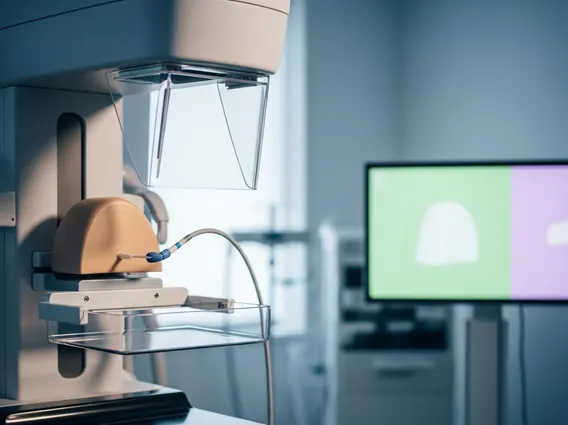
Once the discharging duct is located, a very fine, hair-thin catheter is carefully inserted into the opening of the duct. A small amount of radiopaque contrast material is then slowly injected through the catheter into the ductal system. This contrast agent fills the duct, making it visible on X-ray images. After the injection, the catheter is removed, and several mammographic views of the breast are taken from different angles. These images capture the flow of the contrast material and highlight any abnormalities within the duct. The procedure is generally well-tolerated, with most patients experiencing only mild discomfort or pressure during the catheter insertion and contrast injection.
Purpose and Indications for Ductography
The primary purpose of ductography test is to accurately diagnose the cause of abnormal nipple discharge. Nipple discharge can be a concerning symptom, and ductography helps to determine whether it is due to a benign condition or, in rare cases, a malignancy. This diagnostic tool is typically indicated when a patient experiences spontaneous, persistent, or bloody discharge from a single milk duct, especially if it is not associated with pregnancy or breastfeeding.
Ductography can reveal various conditions, including:
- Intraductal Papillomas: Small, non-cancerous growths within the milk ducts, which are a common cause of bloody or serous (clear, yellowish) nipple discharge.
- Duct Ectasia: A benign condition characterized by widening of the milk ducts, often associated with thick, sticky, or greenish discharge.
- Cysts: Fluid-filled sacs that can sometimes develop within or near the ducts.
- Malignant Lesions: Although less common, ductography can sometimes identify suspicious areas that may indicate ductal carcinoma in situ (DCIS) or invasive ductal carcinoma, prompting further investigation such as biopsy.
By providing clear images of the ductal system, ductography assists healthcare providers in making informed decisions regarding further management, which may include observation, medication, or surgical intervention.