Cytoplasm
The cytoplasm is a fundamental component of eukaryotic and prokaryotic cells, encompassing all the material within the cell membrane, excluding the nucleus in eukaryotic cells. It serves as the site for numerous vital cellular processes, maintaining the cell’s structure and facilitating its metabolic activities.
Key Takeaways
- Cytoplasm is the entire contents within the cell membrane, excluding the nucleus.
- It consists of two main parts: the jelly-like cytosol and various membrane-bound organelles.
- The cytoplasm is crucial for metabolic reactions, protein synthesis, and maintaining cell shape.
- Organelles within the cytoplasm perform specialized functions essential for cell survival and activity.
- Understanding the cytoplasm is key to comprehending overall cellular biology and function.
What is Cytoplasm?
Cytoplasm refers to the entire substance contained within the cell membrane, but outside the nucleus, in eukaryotic cells. In prokaryotic cells, which lack a nucleus, the cytoplasm constitutes all the material enclosed by the cell membrane. This complex cellular environment is a dynamic and essential medium where most cellular activities, including metabolic pathways and protein synthesis, take place. It provides the necessary structural support and chemical environment for organelles to function effectively, acting as the cell’s internal environment.
Cytoplasm: Structure, Components, and Key Functions
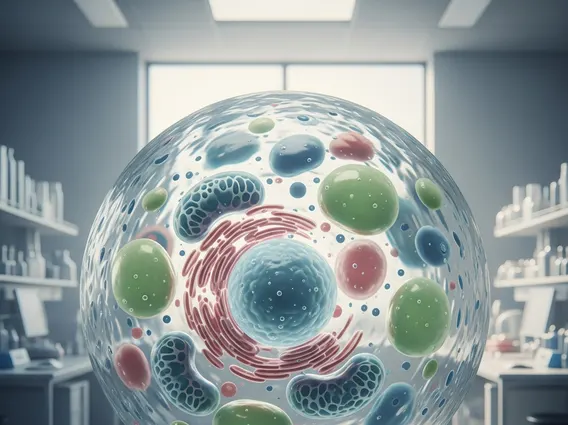
The cytoplasm is a complex and highly organized environment, composed of two primary parts: the cytosol and various organelles. The cytosol is the jelly-like substance that fills the cell, primarily made of water, salts, organic molecules, and proteins. It provides the medium in which organelles are suspended and where many metabolic reactions occur. The organelles, on the other hand, are specialized structures within the cytoplasm that perform specific functions vital for the cell’s survival and operation.
Key components found within the cytoplasm include:
- Mitochondria: Often called the “powerhouses” of the cell, responsible for generating most of the cell’s supply of adenosine triphosphate (ATP), used as a source of chemical energy.
- Endoplasmic Reticulum (ER): A network of membranes involved in protein and lipid synthesis, as well as detoxification. It exists in rough (with ribosomes) and smooth (without ribosomes) forms.
- Golgi Apparatus: Modifies, sorts, and packages proteins and lipids for secretion or delivery to other organelles.
- Ribosomes: Responsible for protein synthesis, translating messenger RNA (mRNA) into proteins.
- Lysosomes: Contain digestive enzymes to break down waste materials and cellular debris.
- Cytoskeleton: A network of protein filaments and tubules in the cytoplasm, giving the cell its shape, providing mechanical support, and enabling cell movement.
The **cytoplasm function in cell** is multifaceted. It serves as the primary site for many metabolic processes, such as glycolysis, which is the initial step in glucose breakdown. It also facilitates the transport of substances within the cell, acting as a medium for the movement of molecules and organelles. Furthermore, the cytoplasm plays a crucial role in maintaining cell shape, providing structural support through the cytoskeleton, and enabling cellular processes like cell division and motility.
Cytoplasm vs. Cytosol: Understanding the Difference
While often used interchangeably in casual conversation, there is a distinct difference between **Cytoplasm** and **cytosol** in biological terms. Understanding this distinction is fundamental to comprehending cellular organization. The cytoplasm encompasses everything within the cell membrane, excluding the nucleus. This broad definition includes both the jelly-like fluid component and all the organelles suspended within it.
In contrast, **cytosol** refers specifically to the fluid portion of the cytoplasm, the intracellular fluid. It is the aqueous component of the cytoplasm of a cell, in which various organelles and particles are suspended. The cytosol itself does not include the organelles. It is primarily water, but also contains dissolved ions, macromolecules, and a variety of small organic molecules. Many metabolic pathways, such as glycolysis and parts of gluconeogenesis, occur within the cytosol.
To clarify the **cytoplasm vs cytosol difference**, consider the following comparison:
| Feature | Cytoplasm | Cytosol |
|---|---|---|
| Definition | All contents within the cell membrane, excluding the nucleus. | The fluid portion of the cytoplasm, excluding organelles. |
| Components | Cytosol + Organelles (e.g., mitochondria, ER, Golgi) | Water, ions, proteins, dissolved molecules |
| Scope | Broader term, includes both fluid and structures | Narrower term, refers only to the fluid matrix |
| Function | Site of most cellular activities, structural support, transport | Site of many metabolic reactions (e.g., glycolysis), suspension medium for organelles |
Essentially, the cytoplasm is the entire cellular “room,” while the cytosol is the “air” within that room, with the “furniture” being the organelles. This distinction is crucial for precise biological discussions and understanding cellular processes.