Chimeric Antigen Receptor
Chimeric Antigen Receptor (CAR) technology represents a groundbreaking advancement in immunotherapy, offering a novel approach to treating certain cancers. This innovative method harnesses the power of the body’s own immune system to specifically target and eliminate malignant cells.
Key Takeaways
- Chimeric Antigen Receptors (CARs) are engineered receptors that enable T-cells to recognize specific cancer markers.
- CAR T-cell therapy involves modifying a patient’s own T-cells to express these CARs.
- The therapy works by directing these enhanced T-cells to identify and destroy cancer cells.
- It has shown significant efficacy primarily in treating specific types of blood cancers.
- The process is complex, involving several steps from cell collection to reinfusion and monitoring.
What is a Chimeric Antigen Receptor (CAR)?
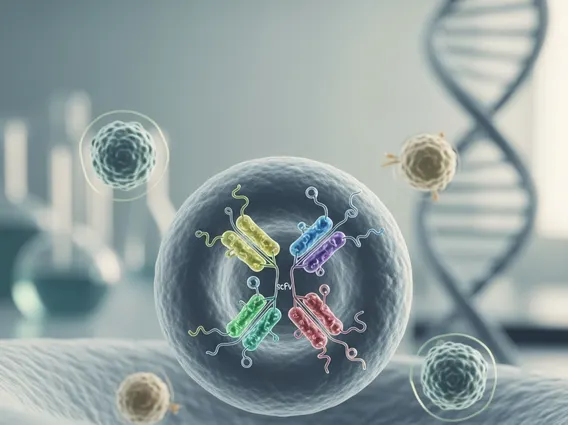
A Chimeric Antigen Receptor (CAR) is a synthetic receptor that scientists engineer to give T-cells the ability to recognize and bind to specific proteins, known as antigens, found on the surface of cancer cells. Unlike natural T-cell receptors, CARs are not restricted by the major histocompatibility complex (MHC), allowing them to directly engage with target antigens. Each CAR typically consists of an extracellular antigen-binding domain, often derived from an antibody fragment, a transmembrane domain, and one or more intracellular signaling domains. These signaling domains are crucial as they activate the T-cell upon antigen binding, leading to the proliferation of CAR T-cells and the destruction of cancer cells.
The development of CARs has revolutionized the field of cellular immunotherapy, providing a highly specific and potent tool against malignancies that have been resistant to conventional treatments. By equipping T-cells with these specialized receptors, the immune system can be reprogrammed to effectively identify and eliminate cancer cells, offering a personalized and targeted therapeutic option.
How Chimeric Antigen Receptor (CAR) T-Cell Therapy Works
The process of chimeric antigen receptor t-cell therapy explained involves several intricate steps, beginning with the patient’s own immune cells. This personalized treatment aims to re-engineer a patient’s T-cells to recognize and attack their cancer. The general workflow for how chimeric antigen receptor therapy works typically includes:
- T-Cell Collection (Leukapheresis): Blood is drawn from the patient to collect their T-cells, a type of white blood cell crucial for immune responses.
- Genetic Engineering: In a specialized laboratory, the collected T-cells are genetically modified using a viral vector (often lentivirus or retrovirus) to insert the gene for the specific CAR. This gene instructs the T-cells to produce the CAR on their surface.
- CAR T-Cell Expansion: The newly engineered CAR T-cells are then grown and multiplied in the lab, creating millions of these specialized cancer-fighting cells.
- Patient Preparation (Lymphodepletion): Before the CAR T-cells are returned to the patient, chemotherapy may be administered to reduce the number of existing lymphocytes. This creates space for the infused CAR T-cells to expand and function effectively.
- Infusion: The expanded CAR T-cells are infused back into the patient, typically through an intravenous line. Once inside the body, these CAR T-cells circulate, locate cancer cells expressing the target antigen, and initiate an immune response to destroy them.
- Monitoring: Patients are closely monitored for efficacy and potential side effects, such as cytokine release syndrome (CRS) or neurotoxicity, which are managed with supportive care.
Chimeric Antigen Receptor (CAR) T-Cell Treatment Applications
Chimeric antigen receptor CAR T-cell treatment has emerged as a highly effective therapy for specific types of hematologic (blood) cancers, particularly those that have relapsed or are refractory to standard treatments. The U.S. Food and Drug Administration (FDA) has approved several CAR T-cell therapies for various indications. For instance, it is approved for certain forms of B-cell acute lymphoblastic leukemia (ALL) in children and young adults, and for specific types of non-Hodgkin lymphoma, including diffuse large B-cell lymphoma (DLBCL) and mantle cell lymphoma (MCL), in adults. While the therapy has shown remarkable success in these areas, with some studies reporting remission rates exceeding 80% in specific patient populations, its application in solid tumors is still under extensive research and development. (Source: National Cancer Institute).
The ongoing research aims to expand the utility of CAR T-cell therapy to a broader range of cancers, improve its safety profile, and enhance its persistence within the body. This includes exploring new target antigens, developing “off-the-shelf” CAR T-cell products, and combining CAR T-cell therapy with other treatment modalities to overcome challenges such as tumor microenvironment suppression and antigen escape.