
Burdock
Burdock refers to a genus of plants known for their distinctive appearance and historical applications. This article explores its botanical characteristics, traditional uses, and potential benefits.
Key Takeaways
- Burdock is a biennial plant recognized by its large leaves and burrs.
- The plant’s root, leaves, and seeds have been traditionally used in various cultures.
- Historically, burdock root benefits have included supporting skin health and digestion.
- Modern research continues to investigate the plant’s active compounds.
- Any use of Burdock for health purposes should be discussed with a healthcare professional.
What is Burdock? Plant Identification and Characteristics
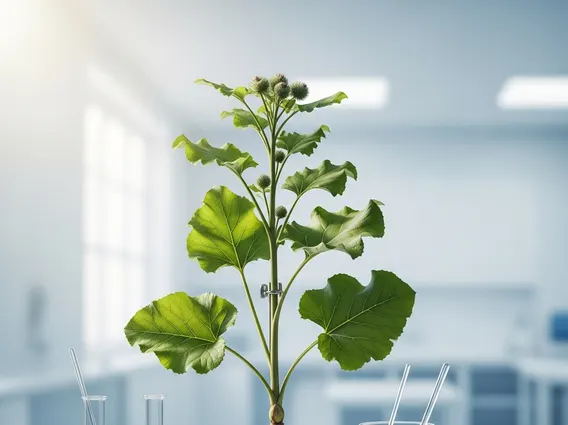
Burdock is a genus of biennial plants (Arctium) belonging to the Asteraceae family, which also includes sunflowers and daisies. Native to Europe and Asia, it has since naturalized across North America. The plant is easily recognized by its large, heart-shaped leaves, often with woolly undersides, and its tall, branching stems that can reach up to 6 feet in height.
A key aspect of burdock plant identification involves its distinctive burrs. These prickly seed heads, which mature in the second year of growth, are well-known for their ability to cling to clothing and animal fur, a mechanism that aids in seed dispersal. In fact, the design of Velcro was inspired by observing how burrs attach. The plant’s taproot is long, fleshy, and dark brown to black on the outside, with a lighter interior, resembling a parsnip, and is the part most commonly harvested for culinary and medicinal purposes.
Burdock thrives in disturbed soils, roadsides, and neglected fields, often indicating nutrient-rich ground. As a biennial, its life cycle spans two years: in the first year, it develops a rosette of large leaves and a deep taproot; in the second year, it sends up a tall flower stalk, produces purple thistle-like flowers, and then forms its characteristic burrs before dying. The leaves can grow quite large, sometimes up to 2 feet in length, forming a dense canopy that can shade out other plants.
Burdock Root Benefits and Traditional Uses
Historically, burdock root benefits have been recognized in traditional medicine systems, particularly in herbalism and traditional Chinese medicine. The root is rich in various compounds, including inulin, mucilage, essential oils, and bitter compounds, which are believed to contribute to its therapeutic properties. It has been traditionally employed as a diuretic, diaphoretic, and a blood purifier.
The uses for burdock herb extend beyond the root to include its leaves and seeds, though the root remains the most prominent part. Traditionally, it has been used to support digestive health, promote healthy skin, and aid in detoxification processes. For instance, it was often applied topically or consumed internally to address various skin conditions. In culinary contexts, young burdock stalks and roots are consumed as vegetables, particularly in Japanese cuisine where it is known as “gobo.”
The inulin content in burdock root acts as a prebiotic fiber, which can support a healthy gut microbiome by feeding beneficial bacteria. Additionally, its antioxidant properties, attributed to compounds like phenolic acids and flavonoids, are being investigated for their potential to protect cells from oxidative stress. Beyond its traditional medicinal applications, the root is a versatile ingredient in various cuisines. It can be stir-fried, pickled, or added to soups and stews, offering an earthy flavor and crunchy texture. Its use as a food highlights its nutritional value, providing dietary fiber and certain minerals.
- Skin health support (e.g., for minor irritations)
- Digestive aid and mild laxative properties
- Diuretic effects, promoting urine flow
- Support for liver and kidney function
While traditional uses are extensive, it is important to note that scientific research into many of these claims is ongoing. Individuals considering using Burdock for health purposes should consult with a healthcare professional, as information on complementary therapies is supportive only and does not replace medical treatment.



















