Catheter
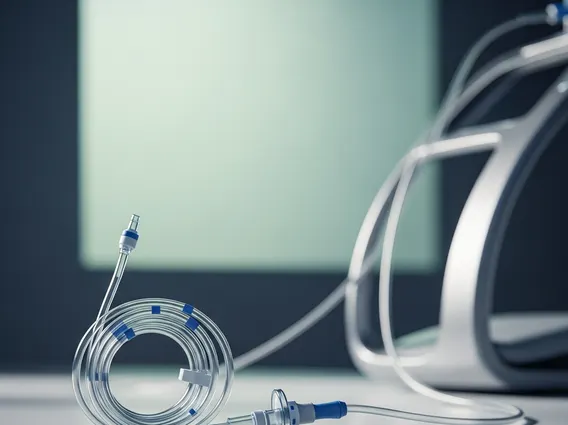
A catheter is a flexible tube used in various medical procedures to introduce or remove fluids, or to access internal body structures. These devices are essential tools in modern medicine, aiding in diagnosis, treatment, and patient care across numerous specialties.
Key Takeaways
- A catheter is a medical tube used for draining fluids, administering substances, or accessing internal body parts.
- They come in various types, including urinary, intravenous, and cardiac catheters, each designed for specific medical applications.
- Catheters function by providing a conduit, allowing medical professionals to perform procedures with minimal invasiveness.
- The insertion process varies by type but generally involves sterile techniques and careful placement by trained personnel.
- Proper care and maintenance are crucial to prevent complications such as infection or dislodgement.
What is a Catheter?
A catheter is a thin, flexible tube made from medical-grade materials such as silicone, latex, or polyurethane. Its primary purpose is to be inserted into a body cavity, duct, or vessel to allow for fluid drainage, administration of fluids or gases, or access by surgical instruments. Catheters are versatile medical devices, playing a critical role in diagnostics, therapeutic interventions, and monitoring in various clinical settings. Their design allows them to navigate complex anatomical pathways, providing a less invasive alternative to traditional surgical methods for many procedures.
The use of catheters dates back centuries, with early versions made from natural materials like reeds or metal. Today, advanced materials and manufacturing techniques have led to highly specialized and biocompatible catheters, significantly improving patient safety and efficacy. According to the World Health Organization (WHO), medical devices, including catheters, are fundamental to health systems, enabling effective diagnosis and treatment for a wide range of conditions globally.
Catheter Types, Function, and Insertion Process
Catheters are indispensable in medicine due to their adaptability and broad range of applications. Their design and material composition are tailored to specific medical needs, ensuring optimal performance and patient comfort. Understanding the different types, how they work, and their insertion methods is crucial for both medical professionals and patients.
The diversity of catheters reflects the varied demands of medical practice. Each type is engineered for a particular function and anatomical location. Here are some common types and their primary uses:
- Urinary Catheters: These are used to drain urine from the bladder. Examples include Foley catheters (indwelling, for continuous drainage) and intermittent catheters (inserted and removed multiple times a day). They are crucial for patients with urinary retention, incontinence, or during surgical recovery.
- Intravenous (IV) Catheters: Inserted into a vein, these are used for administering fluids, medications, nutrients, or for drawing blood samples. Peripheral IVs are common for short-term use, while central venous catheters (e.g., PICC lines, port-a-caths) are for long-term access or specific treatments.
- Cardiac Catheters: These are advanced catheters used in cardiology to diagnose and treat heart conditions. They are threaded through blood vessels into the heart to measure pressures, inject dye for imaging (angiography), or perform procedures like angioplasty or stent placement.
- Drainage Catheters: Used to remove fluid collections from various body cavities, such as pleural effusions (fluid around the lungs) or abscesses. These can be temporary or indwelling, depending on the patient’s needs.
- Dialysis Catheters: Specialized catheters providing access to the bloodstream for hemodialysis in patients with kidney failure.
Catheters primarily function as conduits. Once inserted, they create a pathway that allows for the controlled movement of substances or instruments. For instance, a urinary catheter works by providing a direct channel from the bladder to an external collection bag, bypassing the urethra. IV catheters deliver fluids directly into the bloodstream, ensuring rapid absorption and systemic distribution. Cardiac catheters, on the other hand, allow for precise navigation within the heart’s chambers and vessels, enabling diagnostic measurements or targeted therapeutic interventions like balloon inflation or stent deployment. The flexibility and smooth surface of catheters minimize trauma during insertion and while in situ, while their lumens (internal channels) facilitate the intended flow or access.
The catheter insertion process varies significantly depending on the type of catheter and its intended use, but generally involves several key steps to ensure safety and efficacy. First, the medical professional prepares the insertion site by cleaning it thoroughly with an antiseptic solution to minimize the risk of infection. Local anesthesia may be applied to numb the area, enhancing patient comfort. The catheter is then carefully advanced into the target vessel or cavity, often guided by imaging techniques such as ultrasound or fluoroscopy, especially for deeper or more complex placements like central venous or cardiac catheters. Once correctly positioned, the catheter is secured to the skin to prevent dislodgement, and its function is verified. Throughout the procedure, sterile techniques are rigorously maintained to prevent complications. Post-insertion care involves regular monitoring of the site for signs of infection, proper maintenance of the catheter, and patient education on how to care for the device.