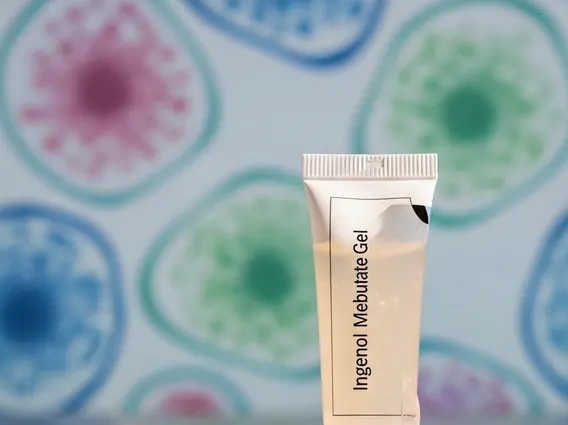
Ingenol Mebutate Gel
Ingenol Mebutate Gel is a topical medication prescribed in dermatology for specific skin conditions. It offers a non-surgical approach to managing certain lesions, working directly on the affected skin.
Key Takeaways
- Ingenol Mebutate Gel is a topical treatment primarily used for actinic keratosis.
- Its mechanism involves inducing rapid cell death in abnormal skin cells.
- The gel is applied for a short, defined period, typically 2-3 consecutive days.
- Common side effects include expected localized skin reactions like redness, scaling, and swelling.
- Adherence to a healthcare professional’s instructions is crucial for safe and effective use.
What is Ingenol Mebutate Gel?
Ingenol Mebutate Gel is a prescription topical medication derived from the plant Euphorbia peplus. It is specifically formulated to treat actinic keratosis, a common precancerous skin condition caused by prolonged sun exposure. The active ingredient, ingenol mebutate, works by inducing rapid cell death (necrosis) in the abnormal, rapidly proliferating cells characteristic of actinic keratosis, while having a minimal effect on healthy surrounding skin. This targeted action helps to clear the affected lesions by disrupting the cell membranes and mitochondria of the abnormal cells, leading to their destruction and subsequent replacement with healthy tissue. This mechanism makes it an effective option for localized treatment.
Ingenol Mebutate Gel: Indications and Application
The primary Ingenol Mebutate Gel uses are centered around the topical treatment of actinic keratosis (AK) lesions on the face, scalp, and trunk. Actinic keratosis is a rough, scaly patch on the skin that develops from years of sun exposure and can potentially progress to squamous cell carcinoma, a type of skin cancer. The Ingenol Mebutate Gel treatment regimen involves applying the gel directly to the affected area for a short, defined period. For lesions on the face and scalp, it is typically applied once daily for two consecutive days. For lesions on the trunk and extremities, it is usually applied once daily for three consecutive days.
Key considerations for application include:
- Applying the gel to a clean, dry affected skin area.
- Using only a small amount, sufficient to cover the lesion.
- Avoiding application to mucous membranes (eyes, lips, nostrils).
- Washing hands thoroughly with soap and water immediately after application.
The exact duration and frequency are determined by a healthcare provider based on the specific condition and location of the lesions. It is crucial to follow these instructions precisely to ensure efficacy and minimize potential irritation.
Ingenol Mebutate Gel Side Effects
Like all medications, Ingenol Mebutate Gel can cause side effects. The most common Ingenol Mebutate Gel side effects are localized skin reactions that occur at the application site. These reactions are generally expected and indicate that the medication is working. They typically resolve within two to four weeks after treatment completion, as the skin heals and regenerates.
Common localized reactions include:
- Redness (erythema)
- Flaking or scaling
- Crusting
- Swelling (edema)
- Itching (pruritus)
- Pain or tenderness
- Pustules or vesicles (small blisters)
Less common but more severe reactions may include ulceration or erosion of the skin, which can be more uncomfortable and may require medical attention. Patients should contact their healthcare provider if they experience severe pain, persistent blistering, signs of infection (such as pus or increasing warmth), or any unexpected adverse reactions at the application site. It is crucial to follow the prescribed application instructions carefully to minimize the risk of adverse reactions and ensure optimal treatment outcomes, including avoiding excessive application or prolonged use beyond the recommended duration.