Squamous Cell Carcinoma Signs & Symptoms
Squamous cell carcinoma (SCC) is a common form of skin cancer that arises from the squamous cells in the outer layer of the skin. Recognizing the squamous cell carcinoma symptoms and early warning signs is crucial for timely diagnosis and effective treatment.
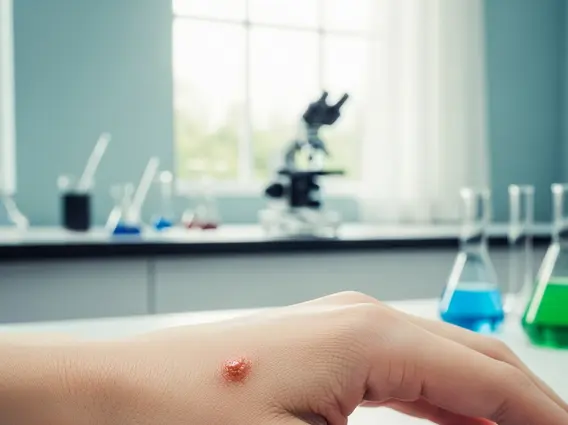
Key Takeaways
- Squamous cell carcinoma symptoms often appear as a scaly, reddish patch or a firm, growing bump with a rough surface that can bleed or crust over.
- An early, flat form of SCC called Bowen disease can look like a scaly, crusted patch larger than an inch across.
- Early signs of squamous cell carcinoma include a sore that will not heal, or an existing wart, mole, or lesion that starts to change.
- SCC most often develops on skin that gets regular sun exposure, such as the face, ears, lips, neck, and hands.
- Any new, changing, or non-healing skin lesion should be evaluated by a doctor promptly, since squamous cell carcinoma is easier to treat when it is caught early.
Understanding Squamous Cell Carcinoma Symptoms
Squamous cell carcinoma ranks as the second most frequently diagnosed skin cancer in the United States, arising from the squamous cells that make up the epidermis, the skin’s outer layer. Because SCC tends to keep growing rather than fade on its own, most cases show up as a change in the skin that lasts for weeks, not days. Learning what these changes usually look like — and where they tend to appear — is the first step toward recognizing squamous cell carcinoma symptoms early.
Persistent Red Patches
One common early presentation is a flat-to-slightly-raised reddish patch on sun-exposed skin. The earliest stage of the disease has its own name — Bowen disease, also called SCC in situ — and it tends to look like this: a scaly, crusted patch that can grow larger than an inch across while still staying confined to the skin’s outer layer, meaning it has not yet grown into deeper tissue. Because a patch like this does not fade the way ordinary irritation does, one that lingers for several weeks is worth having examined.
Scaly, Crusted Growths
Squamous cell carcinoma symptoms frequently include a rough, scaly surface that crusts over, bleeds if it is bumped, and then reappears. A related precancerous change called actinic keratosis — a rough, scaly pink, red, or brown patch — can look similar and sometimes progresses toward SCC, which is one reason a scaly patch that will not clear up deserves a professional look rather than a wait-and-see approach.
Recognizing Early Signs of SCC
Catching squamous cell carcinoma while it is still small and confined to the outer layer of skin generally means simpler treatment, so it helps to know what an early change can look like. Many people first notice a spot that keeps growing, keeps changing, or simply does not behave the way an ordinary cut or blemish would.
New or Changing Skin Lesions
Any lesion that keeps enlarging, or an existing wart, mole, or scaly patch that starts to shift in size, shape, color, or texture, is worth mentioning to a doctor. A fast-growing, dome-shaped bump — sometimes called a keratoacanthoma — is a rapidly growing form of squamous cell cancer and shows how quickly this kind of change can appear. Regular self-skin checks make it easier to notice something new.
Non-Healing Wounds
A sore, wound, or ulcer that does not heal within a few weeks is one of the clearest squamous cell carcinoma warning signs. Unlike an ordinary cut, this type of lesion tends to stay open, bleed on and off, and resist forming a lasting scab. Any spot that changes in appearance, color, size, or texture, or that becomes painful, swollen, or starts to bleed or itch, should prompt a visit to a health care provider — a key way to identify signs of squamous cell carcinoma on skin.
What Squamous Cell Carcinoma Looks Like
SCC does not look identical from person to person, but a handful of visual features come up often enough to be useful for self-checks — namely how a lesion is raised, how it feels, and whether its surface stays intact.
Raised, Firm Nodules
Squamous cell carcinoma on skin can present as a raised area that looks red or reddish-brown and grows larger over time. On touch, these spots often feel firmer than the skin around them. Because the lesion is raised rather than flat, it can sometimes be mistaken for a stubborn pimple or wart, which is why a bump that keeps enlarging instead of resolving deserves attention.
Open Sores or Ulcers
In some cases, squamous cell carcinoma appears as an open sore with a scaly, bleeding, or crusted surface. It may partially heal and then break open again rather than closing for good. Because this pattern signals a break in the skin that is not resolving on its own, it counts among the more urgent squamous cell carcinoma warning signs.
Identifying High-Risk Areas and Warning Signs
Knowing where squamous cell carcinoma tends to show up can make self-exams more focused, since some areas of the body account for a much larger share of cases than others.
Sun-Exposed Body Parts
Most squamous cell carcinomas develop on skin that gets regular, cumulative sun exposure — commonly the face, including the nose, lips, and ears, along with the neck and the hands. SCC can also form in skin that has previously been injured, inflamed, or scarred, and it appears less often elsewhere on the body. Because the lip and ear are both frequent locations, a persistent scaly patch, crack, or sore in either spot is worth a closer look.
Lesions with Irregular Borders
An uneven or poorly defined border is not as consistently linked to squamous cell carcinoma as it is to melanoma, but any lesion whose shape or edge changes over time fits the broader pattern of appearance changes that call for medical evaluation. Combined with scaling, crusting, or a sore that will not heal, a shifting border is one more reason not to wait and see.
Frequently Asked Questions
What are the primary risk factors for Squamous Cell Carcinoma?
The biggest risk factor is long-term exposure to ultraviolet light from sunlight or tanning beds. Fair or light-colored skin, older age, and a weakened immune system also raise the risk of developing SCC.
How is Squamous Cell Carcinoma diagnosed?
If a spot looks suspicious, a health care provider typically performs a skin biopsy, removing a small sample of the lesion so it can be examined under a microscope to confirm whether it is squamous cell carcinoma.
Is Squamous Cell Carcinoma curable?
Squamous cell carcinoma is generally considered highly treatable, especially when it is found and treated early — which is exactly why recognizing the symptoms above and getting a prompt evaluation matters. A doctor can give a more specific outlook based on the individual case.