Palatine Uvula
The palatine uvula is a small, fleshy projection suspended from the soft palate at the back of the throat. While often overlooked, this anatomical structure plays a subtle yet significant role in various physiological processes.
Key Takeaways
- The Palatine Uvula is a small, conical projection extending from the soft palate in the oral cavity.
- It is primarily composed of muscle, connective tissue, and mucous membranes, allowing for its movement.
- Key functions include aiding in speech articulation, particularly for certain sounds found in various languages.
- It also assists in the swallowing reflex by helping to seal off the nasopharynx, preventing food from entering the nasal cavity.
- The uvula contributes to saliva production and may play a role in local immune defense due to its lymphoid tissue content.
What is the Palatine Uvula?
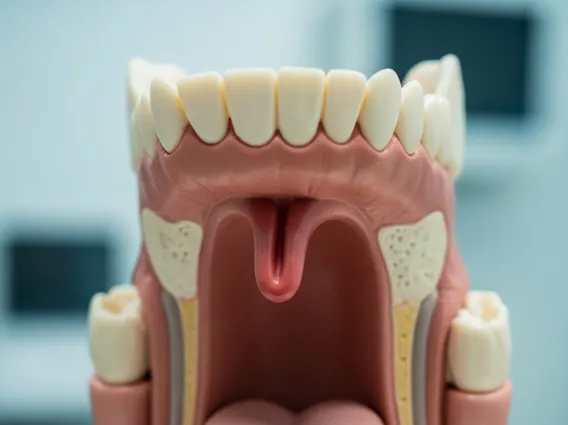
The Palatine Uvula is a small, conical, fleshy projection that hangs from the middle of the posterior border of the soft palate, above the root of the tongue. This anatomical structure is readily visible at the very back of the mouth when it is open. The uvula meaning and location are central to understanding its role; “uvula” is derived from the Latin word for “little grape,” aptly describing its characteristic appearance. It is a unique and prominent feature of the human oral cavity.
The palatine uvula anatomy and purpose are quite specific. It is primarily composed of muscle tissue, specifically the musculus uvulae, which allows for its movement and contractility. This muscular core is enveloped by connective tissue, glandular tissue responsible for saliva production, and a protective mucous membrane covering. Its strategic position allows it to interact dynamically with the back of the tongue and the pharynx during various oral activities. While its exact evolutionary purpose is still a subject of ongoing scientific inquiry, its consistent presence across human populations strongly suggests a significant functional importance. Conditions affecting the uvula, such as inflammation known as uvulitis, can cause discomfort, swelling, and impact its functions, though severe issues requiring intervention are relatively uncommon. For instance, according to a report by the American Academy of Otolaryngology—Head and Neck Surgery, uvulitis, while rare, can sometimes be a symptom of underlying infections or allergic reactions, highlighting the uvula’s involvement in the body’s local responses.
Functions of the Palatine Uvula
The function of the uvula extends to several critical physiological processes, primarily involving speech articulation, the swallowing reflex, and potentially immune response. One of its most recognized roles is in speech. The uvula plays a crucial part in producing certain sounds, particularly those found in some non-English languages, known as uvular consonants. It can vibrate rapidly against the back of the tongue or the pharynx to create these distinct phonetic elements, demonstrating its importance in the diversity of human speech.
Beyond speech, the uvula is an integral component of the complex swallowing reflex, medically termed deglutition. During this process, the soft palate, in conjunction with the uvula, moves upwards and backwards. This coordinated action effectively seals off the nasopharynx, the upper part of the throat behind the nose, preventing food and liquids from inadvertently entering the nasal cavity. This mechanism is vital for ensuring that ingested material is directed safely down the esophagus towards the stomach, thereby preventing aspiration and uncomfortable nasal regurgitation.
The uvula’s contributions can be summarized as follows:
- Speech Articulation: Facilitates the production of certain uvular consonants, vital for phonetic diversity in various languages.
- Swallowing Reflex: Helps seal the nasopharynx during deglutition, preventing food and liquids from entering the nasal passages.
- Saliva Production: Contributes to the moistening of food and the initiation of digestion.
- Immune Defense: Contains lymphoid tissue, suggesting a role in the body’s local immune response against pathogens.
Furthermore, the uvula contributes to the production of saliva, which is essential for moistening food, aiding in its mechanical breakdown, and initiating the chemical digestion process through enzymes. It also contains a significant amount of lymphoid tissue, which is part of the immune system. This suggests a potential role as a first line of defense against pathogens entering the body through the mouth, trapping and neutralizing harmful microorganisms. While this immunological aspect is less extensively studied than its roles in speech and swallowing, it adds another layer to the uvula’s multifaceted contributions to overall health and oral cavity protection.