
Hypospadias
Hypospadias is a congenital condition affecting males, characterized by an abnormal opening of the urethra. This common birth defect varies in severity, influencing both its presentation and the necessary medical intervention.
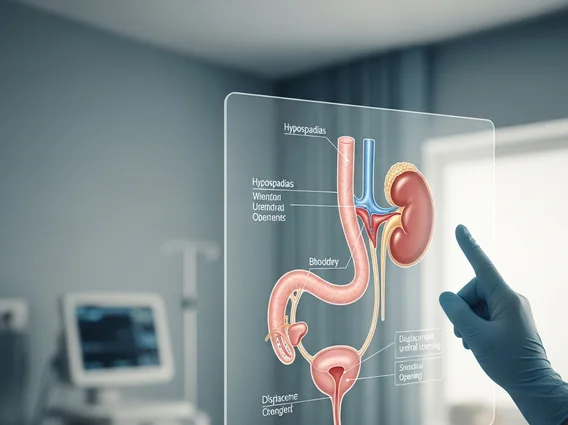
Key Takeaways
- Hypospadias is a birth defect in boys where the urethra’s opening is not at the tip of the penis.
- It is categorized into different types of hypospadias based on the location of the urethral opening.
- The exact hypospadias causes and symptoms are often multifactorial, involving genetic and environmental factors.
- Common symptoms include an abnormal urethral opening, a downward curve of the penis, and an unusual foreskin appearance.
- Hypospadias treatment options primarily involve surgical correction, typically performed in infancy, to reposition the urethra and straighten the penis.
What is Hypospadias and Its Types?
Hypospadias is a congenital anomaly in which the opening of the urethra, the tube that carries urine from the body, is located on the underside of the penis instead of at its tip. This condition develops during fetal development, specifically between weeks 8 and 14 of gestation, when the urethra fails to form completely. It is one of the most common birth defects, affecting approximately 1 in every 200 to 300 boys in the United States, according to the Centers for Disease Control and Prevention (CDC).
The severity of hypospadias depends on the location of the urethral opening. The types of hypospadias are classified based on how far back the opening is located along the underside of the penis:
- Glanular or Coronal: The opening is near the head (glans) of the penis, often considered the mildest form.
- Subcoronal: The opening is just below the head of the penis.
- Penile: The opening is located along the shaft of the penis, which can be further categorized as distal (closer to the head), midshaft, or proximal (closer to the scrotum).
- Penoscrotal: The opening is at the junction of the penis and the scrotum.
- Scrotal or Perineal: The opening is in the scrotum or behind it, near the anus, representing the most severe forms.
The specific type dictates the complexity of the condition and often influences the surgical approach required for correction.
Causes and Symptoms of Hypospadias
The exact hypospadias causes and symptoms are not always clear, but it is believed to result from a combination of genetic and environmental factors. While specific genes have been implicated in some cases, many instances occur without a clear genetic link. Environmental factors, such as exposure to certain hormones or chemicals during pregnancy, have also been studied as potential contributors. Risk factors may include advanced maternal age, maternal obesity, and certain fertility treatments, although more research is needed to establish definitive causal links.
The symptoms of Hypospadias are typically noticeable at birth and can vary depending on the severity of the condition. Key symptoms include:
- The urethral opening is located on the underside of the penis, anywhere from just below the tip to the scrotum.
- A downward curve of the penis, known as chordee, which may be more apparent during erection.
- An abnormal foreskin appearance, often described as a “dorsal hood,” where the foreskin is not fully formed on the underside of the penis.
- Difficulty directing a urine stream while standing, which may lead to spraying.
These symptoms can impact urination, sexual function later in life, and psychological well-being if left uncorrected.
Hypospadias Treatment Options
The primary goal of hypospadias treatment options is to correct the anatomical abnormalities, allowing for normal urination and sexual function, and improving the cosmetic appearance of the penis. Surgical repair is almost always necessary and is typically performed when the child is between 6 and 18 months old. This timing is chosen to minimize psychological impact and allow for proper healing before toilet training.
The specific surgical technique depends on the type and severity of the hypospadias. The main objectives of surgery include:
- Repositioning the urethral opening to the tip of the penis.
- Straightening any curvature (chordee) of the penis.
- Reconstructing the foreskin, if desired, or performing a circumcision.
In some cases, especially with more severe forms, multiple surgical stages may be required. The surgeon may use tissue grafts from other parts of the body, such as the foreskin or mouth lining, to create a new urethra if needed. Post-operative care involves monitoring for complications like infection, urethral fistulas (small holes along the new urethra), or strictures (narrowing of the urethra). Long-term follow-up is essential to ensure proper healing and function as the child grows.



















