Dense Breast
Dense breast refers to a common finding on mammograms where breasts have more glandular and fibrous tissue than fatty tissue. Understanding breast density is crucial as it impacts both breast cancer risk and the effectiveness of mammography screening.
Key Takeaways
- Dense Breast Tissue is identified on mammograms and indicates a higher proportion of glandular and fibrous tissue compared to fat.
- It is not a disease but a normal variation in breast composition, affecting nearly half of all women.
- Having dense breasts and cancer risk are linked, as dense tissue can increase the likelihood of developing breast cancer.
- Dense tissue can also make cancer detection more challenging on standard mammograms due to a “masking” effect.
- Supplemental screening methods, beyond a standard mammogram for dense breasts, may be recommended for women with dense breasts.
What is Dense Breast Tissue?
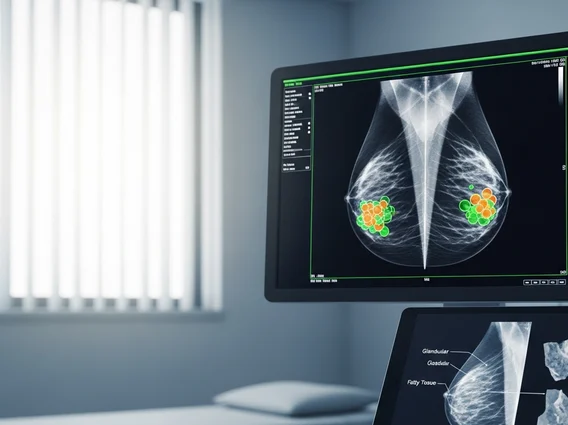
Dense Breast Tissue refers to the appearance of the breast on a mammogram, characterized by a higher proportion of glandular and fibrous connective tissue relative to fatty tissue. It is a common finding, affecting approximately 40-50% of women in the United States, according to the American Cancer Society. Breast density is categorized into four levels, from almost entirely fatty to extremely dense, and is determined solely by a radiologist’s assessment of a mammogram.
Regarding symptoms of dense breast tissue, it is important to understand that dense breasts do not present with any noticeable physical signs or symptoms that a woman can feel. You cannot tell if you have dense breasts by touch or visual inspection. This characteristic is only identifiable through a mammogram, which provides an internal view of the breast composition. Therefore, regular screening is essential for its detection and subsequent management.
The composition of breast tissue typically changes with age, often becoming less dense after menopause. However, some women maintain dense breasts throughout their lives. Factors influencing breast density include age, menopausal status, genetics, and hormone therapy.
Dense Breasts and Cancer Risk
The relationship between dense breasts and cancer risk is a significant concern in breast health. Women with dense breasts have a higher risk of developing breast cancer compared to women with fatty breasts. The exact reasons for this increased risk are still being researched, but it is believed that the dense tissue itself may be more prone to developing cancerous changes or may contain more cells that can become cancerous. Studies have shown that women with extremely dense breasts have a four to six times higher risk of breast cancer than women with fatty breasts (Source: National Cancer Institute).
Beyond increasing the risk, dense breast tissue can also make it more challenging to detect cancer on a standard mammogram. Both dense tissue and cancerous masses appear white on a mammogram, creating a “masking” effect that can obscure tumors. This means that a small cancer might be hidden within the dense tissue, making early detection more difficult and potentially leading to a later diagnosis when the cancer may be more advanced.
Mammogram Screening for Dense Breasts
For women with dense breasts, standard mammography alone may not be sufficient for optimal breast cancer screening. While a mammogram for dense breasts is still the primary screening tool, its sensitivity can be reduced in dense tissue. This is why healthcare providers often recommend supplemental screening methods to improve detection rates.
Additional screening options that may be considered include:
- 3D Mammography (Tomosynthesis): This advanced form of mammography takes multiple images from different angles, creating a 3D reconstruction of the breast. It can help radiologists see through dense tissue layers more effectively, reducing the masking effect and improving cancer detection rates.
- Breast Ultrasound: Often used as a supplemental screening tool, ultrasound can detect cancers that might be hidden in dense tissue and are not visible on a mammogram. It uses sound waves to create images of the breast.
- Breast MRI (Magnetic Resonance Imaging): MRI is a highly sensitive imaging technique that uses magnets and radio waves to create detailed images of the breast. It is typically reserved for women with very dense breasts and other significant risk factors for breast cancer, as it is more expensive and can have a higher rate of false positives.
It is crucial for women to discuss their breast density and individual risk factors with their healthcare provider to determine the most appropriate and personalized screening strategy. Many states in the U.S. have laws requiring women to be informed if they have dense breasts, empowering them to have these important conversations about their health.