Cell To Cell Signaling
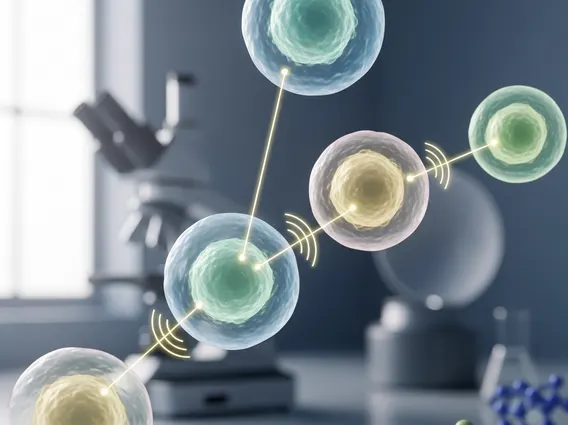
Cell To Cell Signaling is a fundamental biological process that enables cells to communicate and coordinate their activities within multicellular organisms. This intricate system is essential for maintaining life, orchestrating development, and responding to environmental changes.
Key Takeaways
- Cell To Cell Signaling is the vital process by which cells exchange information, crucial for all biological functions.
- It involves the production, transmission, reception, and response to molecular signals.
- Communication mechanisms range from direct cell contact to long-distance endocrine signaling.
- Diverse types of cell communication ensure precise coordination of cellular activities.
- Dysregulation in cell signaling pathways can lead to various diseases, including cancer and autoimmune disorders.
What is Cell To Cell Signaling?
Cell To Cell Signaling refers to the complex system of communication that governs cellular activities and coordinates cell behavior within tissues, organs, and entire organisms. It is the process by which a cell generates a signal that is transmitted to another cell, which then receives and interprets it, leading to a specific cellular response. This communication is indispensable for growth, development, tissue repair, immunity, and maintaining internal balance (homeostasis).
The process of cell signaling typically involves a signaling cell that produces a signal molecule (ligand) and a target cell that possesses specific receptor proteins capable of binding to this ligand. Upon binding, the receptor initiates a series of intracellular events, known as signal transduction, ultimately leading to a change in cell function, gene expression, or metabolism. This intricate interplay ensures that cells act in a coordinated manner to support the organism’s overall health and survival.
Mechanisms of Cell Communication
Understanding how does cell signaling work involves examining the various mechanisms cells employ to transmit and receive information. These mechanisms can be broadly categorized based on the distance over which the signal travels and the method of delivery. All forms of signaling involve a ligand, a receptor, and a cellular response, but the pathways connecting these elements differ significantly.
Cells communicate through several primary mechanisms:
- Direct Contact: Cells can communicate by direct physical contact. This occurs through gap junctions in animal cells and plasmodesmata in plant cells, which allow small signaling molecules to pass directly between adjacent cells. Additionally, cell-surface receptors can interact directly with receptors on neighboring cells, as seen in immune responses.
- Local Signaling: This involves signaling molecules that act over short distances.
- Paracrine Signaling: A signaling cell releases molecules that diffuse locally through the extracellular fluid to target cells in the vicinity. Growth factors, which stimulate cell growth and division, are common examples of paracrine signals.
- Synaptic Signaling: A specialized form of paracrine signaling that occurs in the nervous system. Neurotransmitters are released by neurons into a synapse, a narrow gap between the neuron and its target cell, rapidly transmitting signals.
- Long-Distance Signaling: This mechanism involves signals that travel throughout the entire body to reach distant target cells.
- Endocrine Signaling: Hormones, produced by endocrine cells, are released into the bloodstream and travel to target cells located far away. For instance, insulin, produced by the pancreas, regulates glucose uptake in cells throughout the body.
These diverse mechanisms ensure that cells can communicate effectively, whether they are immediate neighbors or located in distant parts of the body, allowing for precise and timely responses to various physiological needs.
Types and Significance of Cell Signaling
The various types of cell communication are crucial for orchestrating the complex processes necessary for life. Beyond the mechanisms of delivery, cell signaling can also be classified by the nature of the signal and the cellular context. For example, autocrine signaling occurs when a cell releases a signal that binds to receptors on its own surface, affecting its own behavior. This is often observed in immune cells and cancer cells, where it can promote uncontrolled growth.
The importance of cell signaling cannot be overstated, as it underpins virtually every biological process. It ensures the coordinated development of an embryo from a single cell, guides the differentiation of cells into specialized tissues, and maintains the proper functioning of all organ systems. For instance, cell signaling pathways are critical for the immune system to recognize and fight pathogens, for the nervous system to process information and control movement, and for the endocrine system to regulate metabolism and reproduction.
Disruptions in cell signaling pathways are implicated in a wide range of diseases. For example, uncontrolled cell growth in cancer often results from mutations in genes that regulate cell cycle signaling. Similarly, conditions like diabetes arise from defects in insulin signaling, affecting glucose metabolism. Understanding these intricate pathways is therefore vital for developing new therapeutic strategies. According to the National Cancer Institute, aberrant cell signaling pathways are a hallmark of cancer, with many targeted therapies focusing on restoring normal signaling processes.