
Buttock
The buttock is a prominent anatomical region of the human body, crucial for movement, posture, and support. Understanding its structure and common ailments is essential for overall health and well-being.
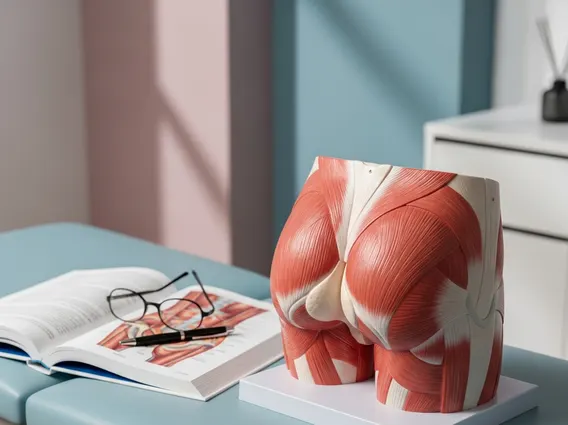
Key Takeaways
- The Buttock is a complex anatomical region primarily composed of the gluteal muscles, fat, and connective tissue.
- Its main functions include hip extension, abduction, rotation, and maintaining upright posture.
- Key muscles like the gluteus maximus, medius, and minimus are vital for lower body movement.
- Buttock pain can stem from various causes, including musculoskeletal issues, nerve compression, and referred pain from other areas.
- Common causes of buttock pain range from muscle strains and sciatica to piriformis syndrome and sacroiliac joint dysfunction.
What is the Buttock? Anatomy and Key Functions
The Buttock refers to the rounded anatomical area located on the posterior aspect of the pelvis, extending from the iliac crests superiorly to the gluteal fold inferiorly. It is primarily composed of a thick layer of subcutaneous fat and a robust group of muscles known as the gluteal muscles. This region is critical for human locomotion and stability, forming a significant part of the hip and pelvic girdle.
The primary components that define the buttock’s structure and function are the muscles of the human buttock. These include the gluteus maximus, gluteus medius, and gluteus minimus, along with several smaller, deeper muscles like the piriformis, obturator internus, gemelli, and quadratus femoris. The gluteus maximus is the largest and most superficial, responsible for powerful hip extension (e.g., climbing stairs, standing up from a seated position) and external rotation. The gluteus medius and minimus, located deeper, are crucial for hip abduction (moving the leg away from the body) and stabilizing the pelvis during walking and running, preventing the opposite side of the pelvis from dropping.
Beyond muscle action, buttock facts and information highlight its role in protecting the ischial tuberosities (sit bones) during sitting and providing cushioning. The rich innervation of the area, including branches of the sciatic nerve, also makes it susceptible to various pain conditions. The overall function of the buttock is to facilitate a wide range of hip movements, maintain an upright posture, and absorb shock during activities like walking and running, making it indispensable for daily mobility.
Common Causes of Buttock Pain
Buttock pain is a prevalent complaint that can significantly impact an individual’s quality of life, ranging from a dull ache to sharp, debilitating discomfort. The diverse anatomical structures within the region mean that pain can arise from various sources, including muscles, nerves, bones, and joints. Identifying the specific cause is crucial for effective treatment.
Several conditions commonly lead to buttock pain. Musculoskeletal issues are frequent culprits, often resulting from overuse, injury, or poor biomechanics. Nerve-related problems, particularly those involving the sciatic nerve, are also significant contributors. According to a study published in the journal Pain, chronic buttock pain affects a substantial portion of the population, with a significant percentage linked to conditions like piriformis syndrome and sacroiliac joint dysfunction.
Common causes of buttock pain include:
- Sciatica: Compression or irritation of the sciatic nerve, often due to a herniated disc in the lower back, leading to pain that radiates from the lower back through the buttock and down the leg.
- Piriformis Syndrome: Spasm or tightness of the piriformis muscle, which can compress the sciatic nerve as it passes through or beneath the muscle, causing buttock pain and sometimes leg symptoms.
- Gluteal Tendinopathy: Inflammation or degeneration of the tendons of the gluteus medius or minimus muscles, typically causing pain on the side of the buttock and hip, especially with activity.
- Sacroiliac (SI) Joint Dysfunction: Inflammation or abnormal movement of the joint connecting the sacrum to the ilium, resulting in pain in the lower back and buttock, often on one side.
- Hamstring Strain or Tendinopathy: Injury or inflammation of the hamstring muscles or their tendons, particularly near their attachment point at the ischial tuberosity, causing pain in the lower buttock.
- Bursitis: Inflammation of the bursae (fluid-filled sacs) around the hip, such as trochanteric bursitis, which can cause pain on the outer buttock and hip.
Understanding these potential origins is the first step toward diagnosis and management, which often involves a combination of rest, physical therapy, medication, and, in some cases, injections or surgery.



















