Backbone
The backbone, also known as the vertebral column or spine, is a fundamental anatomical structure in humans, providing essential support, flexibility, and protection for the nervous system.
Key Takeaways
- The Backbone is the central support structure of the body, composed of 33 vertebrae.
- It protects the delicate spinal cord, facilitates movement, and bears the body’s weight.
- Key components include vertebrae, intervertebral discs, ligaments, and muscles.
- Common conditions affecting the spine range from herniated discs to scoliosis and osteoarthritis.
- Maintaining spinal health is crucial for overall well-being and mobility.
What is the Backbone: Anatomy and Function
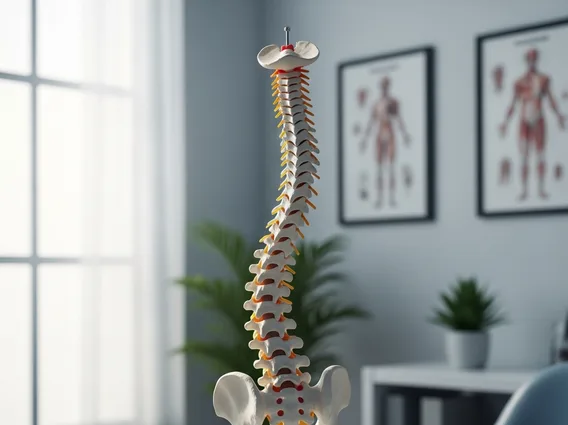
The Backbone, or vertebral column, is a complex and vital structure forming the central axis of the human skeleton. It is a flexible column of 33 bones, called vertebrae, stacked one upon another and separated by intervertebral discs. This intricate arrangement allows for a wide range of motion while providing crucial support for the head and torso.
The primary functions of the backbone are multifaceted. It serves as the main support for the body, enabling upright posture and bearing the weight of the upper body. Furthermore, it facilitates movement, allowing for bending, twisting, and extending the trunk. Most critically, the backbone encases and protects the delicate spinal cord, which transmits nerve signals between the brain and the rest of the body. Understanding the human backbone anatomy reveals its division into five distinct regions:
- Cervical Spine (C1-C7): Located in the neck, supporting the head and allowing for head movement.
- Thoracic Spine (T1-T12): In the upper back, attaching to the ribs and providing stability.
- Lumbar Spine (L1-L5): In the lower back, bearing the most body weight and allowing for significant flexibility.
- Sacrum (S1-S5, fused): A triangular bone at the base of the spine, connecting to the pelvis.
- Coccyx (3-5 fused): Commonly known as the tailbone, providing minor support.
This backbone definition and types highlight its adaptability and critical role in both structural integrity and neurological protection.
Key Components and Common Conditions of the Spine
Beyond the vertebrae, several other components contribute to the backbone’s functionality and stability. Intervertebral discs, located between each vertebra, act as shock absorbers and allow for spinal flexibility. These discs consist of a tough outer fibrous ring (annulus fibrosus) and a soft, gel-like center (nucleus pulposus). A network of strong ligaments connects the vertebrae and discs, providing stability, while numerous muscles surround the spine, enabling movement and offering additional support.
Despite its robust design, the backbone is susceptible to various conditions that can cause pain, limit mobility, and impact quality of life. Common conditions include:
| Condition | Description | Prevalence/Impact |
|---|---|---|
| Herniated Disc | Occurs when the soft inner material of an intervertebral disc pushes through its outer layer, often compressing nearby nerves. | A common cause of back and leg pain; affects millions globally, with an estimated lifetime prevalence of 1-3% for lumbar disc herniation. |
| Scoliosis | An abnormal lateral curvature of the spine, often diagnosed in adolescence. | Affects 2-3% of the population, with varying degrees of severity. |
| Osteoarthritis | Degeneration of the cartilage in the spinal joints, leading to pain and stiffness. | A leading cause of disability worldwide; spinal osteoarthritis increases with age. |
| Spinal Stenosis | Narrowing of the spinal canal, which can compress the spinal cord and nerves. | More common in older adults, affecting approximately 8-11% of individuals over 65. |
According to the World Health Organization (WHO), low back pain, often related to spinal conditions, is a leading cause of disability globally, affecting an estimated 619 million people worldwide in 2020. Early diagnosis and appropriate management are crucial for maintaining spinal health and preventing long-term complications.