Co Culture
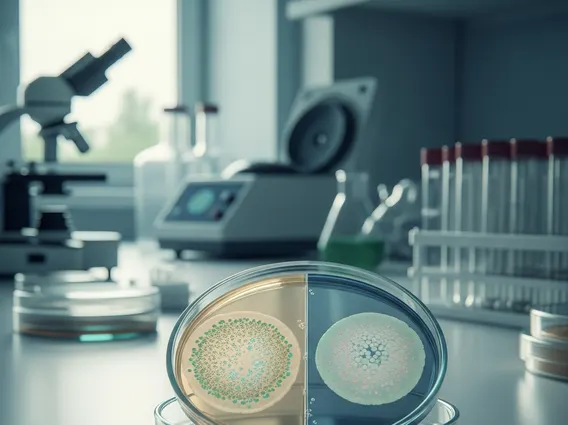
Co Culture refers to a laboratory technique where two or more different types of cells are grown together in the same environment. This method is crucial in biological and medical research for studying complex cellular interactions that mimic physiological conditions more closely than isolated cell cultures.
Key Takeaways
- Co Culture involves growing multiple cell types together to simulate natural biological environments.
- It provides a more accurate model for studying cell-to-cell communication and tissue-specific functions.
- Various systems exist, including direct contact, indirect contact via membranes, and 3D matrices.
- Benefits include enhanced physiological relevance, improved drug screening, and advanced disease modeling.
- This technique is vital for understanding complex biological processes and developing new therapies.
What is Co Culture?
Co Culture is a fundamental technique in cell biology that involves cultivating two or more distinct cell populations in close proximity within a controlled laboratory setting. This approach allows researchers to investigate the intricate communication and interactions between different cell types, which are essential for tissue development, organ function, and disease progression. Unlike monoculture, where cells are grown in isolation, co-culture systems provide a more physiologically relevant environment, enabling cells to influence each other through direct contact, secreted factors, or extracellular matrix components.
The primary goal of co culture is to create a microenvironment that closely resembles the in vivo conditions found within living organisms. For instance, studying the interaction between cancer cells and immune cells, or between neurons and glial cells, provides insights that cannot be obtained from culturing these cells separately. This technique is particularly valuable for understanding complex biological processes and disease mechanisms, offering a robust platform for drug discovery and regenerative medicine. The co-culture definition and examples highlight its versatility, ranging from simple two-cell systems to more complex multicellular arrangements that mimic organoids or tissue structures.
Types of Co Culture Systems
Various configurations of Co Culture systems have been developed to accommodate different research objectives and cell types. These systems are broadly categorized based on the nature of interaction between the cells:
- Direct Co Culture: In this system, different cell types are grown together in the same culture vessel, allowing for direct cell-to-cell contact. This method is ideal for studying interactions that require physical contact, such as cell adhesion, synapse formation, or immune cell-target cell recognition.
- Indirect Co Culture: This approach separates cell populations by a porous membrane or a shared medium, preventing direct physical contact while allowing for the exchange of soluble factors. Transwell inserts are a common tool for indirect co culture, where one cell type is cultured on the membrane and another in the well below, facilitating paracrine signaling studies.
- 3D Co Culture: Moving beyond traditional 2D monolayers, 3D co culture systems involve embedding cells within hydrogels, scaffolds, or forming spheroids/organoids. These systems provide a more realistic extracellular matrix environment, enhancing cell morphology, differentiation, and function, and are particularly useful for modeling tissues and tumors.
Each type of co culture system offers unique advantages, enabling researchers to tailor their experimental design to specific biological questions. The choice of system depends on the specific cellular interactions being investigated and the desired level of physiological complexity.
Benefits of Co Culture in Research
The adoption of Co Culture in research has significantly advanced our understanding of cellular biology and disease. One of the most significant benefits of co-culture in research is its ability to provide a more physiologically relevant model compared to traditional monocultures. By allowing different cell types to interact, co culture systems can recapitulate the complex microenvironments found in vivo, leading to more accurate and predictive experimental outcomes.
Specifically, co culture can:
- Enhance Cell Function and Viability: Cells often thrive and maintain their specialized functions better when co-cultured with supportive cell types, such as fibroblasts providing growth factors to epithelial cells.
- Improve Disease Modeling: Co culture systems are invaluable for modeling diseases like cancer, neurodegenerative disorders, and infectious diseases, as they allow for the study of host-pathogen interactions or tumor-stroma crosstalk in a more realistic context.
- Advance Drug Discovery and Screening: By mimicking the in vivo environment, co culture can provide a more accurate platform for drug efficacy and toxicity testing, potentially reducing the failure rate of drugs in clinical trials.
- Facilitate Regenerative Medicine: Understanding how different cell types interact is crucial for tissue engineering and regenerative medicine, where the goal is to create functional tissues or organs.
These advantages underscore the critical role of co culture in bridging the gap between in vitro studies and in vivo complexities, accelerating scientific discovery and therapeutic development.