
Radiosurgery
Radiosurgery is a highly precise form of radiation therapy that delivers intensely focused radiation doses to targeted areas, primarily used to treat tumors and other lesions in the brain and spine. This non-invasive approach aims to destroy abnormal cells while minimizing damage to surrounding healthy tissue.
Key Takeaways
- Radiosurgery is a non-surgical radiation therapy using highly focused beams to treat specific targets.
- It delivers high doses of radiation with extreme precision, often in one to five sessions.
- Common types include Gamma Knife, CyberKnife, and linear accelerator-based radiosurgery.
- Benefits include non-invasiveness, minimal recovery time, and effectiveness for hard-to-reach lesions.
- Potential risks involve temporary side effects like fatigue or swelling, and rarely, long-term tissue damage.
What is Radiosurgery?
Radiosurgery is a sophisticated medical procedure that uses highly concentrated beams of radiation to treat various conditions, most notably tumors, without making an incision. Despite its name, it is not surgery in the traditional sense, as it does not involve cutting or removing tissue. Instead, it precisely targets and destroys abnormal cells or lesions by delivering a very high dose of radiation, often in a single session or a few fractions over several days. This technique is particularly valuable for treating targets that are difficult to reach surgically or for patients who are not candidates for conventional surgery due to age or other health conditions.
The primary goal of Radiosurgery is to deliver a destructive dose of radiation to the target while sparing adjacent healthy tissue as much as possible. This precision is achieved through advanced imaging and computer-guided systems that accurately map the target and direct the radiation beams. It is a well-established treatment option for a range of neurological conditions, including brain tumors, arteriovenous malformations (AVMs), and trigeminal neuralgia, and is increasingly used for lesions in other parts of the body.
How Radiosurgery Works and Its Types
Radiosurgery works by delivering multiple, finely focused beams of high-energy radiation that converge on a specific target. Individually, each beam is too weak to significantly harm the healthy tissue it passes through. However, at the point where all beams intersect, the cumulative dose of radiation is intense enough to damage the DNA of the target cells, causing them to lose their ability to grow and divide. Over time, these damaged cells shrink and eventually die, leading to the regression or elimination of the lesion.
The process typically involves several steps: precise imaging (MRI, CT scans) to locate the target, treatment planning using specialized software to determine the optimal radiation dose and beam paths, and then the actual delivery of radiation. Patient immobilization is crucial to ensure accuracy, often using a custom-fitted frame or mask. There are several distinct types of radiosurgery treatment, each utilizing different technologies to achieve the same goal of highly focused radiation delivery:
- Gamma Knife Radiosurgery: This system uses up to 192 cobalt-60 sources to deliver gamma rays to intracranial targets. Patients wear a rigid head frame to ensure pinpoint accuracy, making it ideal for treating small to medium-sized brain lesions.
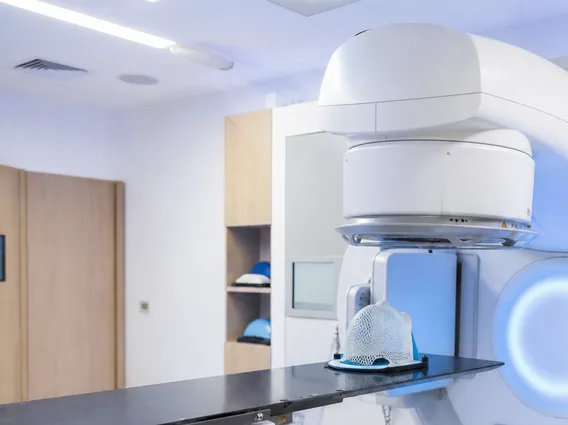
- Linear Accelerator (LINAC)-based Radiosurgery: Systems like CyberKnife, TrueBeam, and Novalis use a linear accelerator to generate high-energy X-rays. These machines can rotate around the patient, delivering radiation from various angles. They are versatile and can treat lesions not only in the brain but also in the spine, lung, liver, and prostate.
- Proton Beam Radiosurgery: While less common for single-fraction radiosurgery, proton therapy offers unique dose distribution characteristics, potentially reducing radiation exposure to healthy tissues even further due to the Bragg peak effect.
Benefits and Risks of Radiosurgery
Radiosurgery offers several significant advantages over traditional surgery for suitable patients and conditions. One of the primary benefits is its non-invasiveness, which means no surgical incision, reduced risk of infection, and typically a shorter recovery period. Patients often experience minimal discomfort and can return to their normal activities quickly. It is also effective for treating lesions that are deep within the brain or spine, making them difficult or impossible to reach with conventional surgery, and can be an option for patients who cannot tolerate general anesthesia.
However, like all medical treatments, radiosurgery also carries potential risks and side effects. Most side effects are temporary and mild, often related to the inflammation or swelling that occurs as the treated tissue reacts to the radiation. These can include:
- Headache
- Nausea or vomiting
- Fatigue
- Swelling around the treated area, which may temporarily worsen neurological symptoms
More serious, though rare, risks can include radiation necrosis (damage to healthy brain tissue), nerve damage, or hemorrhage. The likelihood and severity of these risks depend on factors such as the size and location of the lesion, the total radiation dose, and the patient’s overall health. Long-term follow-up is essential to monitor the effectiveness of the treatment and manage any potential delayed side effects. According to the American Association of Neurological Surgeons (AANS), radiosurgery has proven to be a highly effective treatment for many conditions, with high rates of tumor control and symptom improvement, often exceeding 80-90% for specific indications.



















