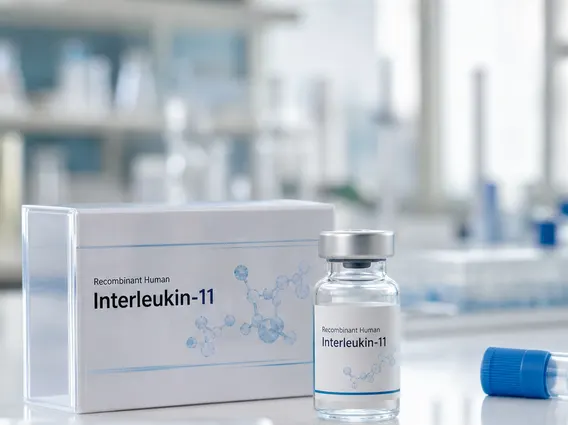
Recombinant Human Interleukin 11
Recombinant Human Interleukin 11 is a crucial therapeutic protein that mimics a naturally occurring cytokine, playing a significant role in various biological processes, particularly in hematopoiesis and immune regulation. This article explores its nature, functions, and diverse applications in medical research and treatment.
Key Takeaways
- Recombinant Human Interleukin 11 (rhIL-11) is a synthetic version of a natural cytokine, vital for cell communication.
- Its primary function involves stimulating the production of platelets, making it valuable in treating thrombocytopenia.
- rhIL-11 also exhibits broader immunomodulatory effects, influencing various immune cell types.
- Historically, it has been used clinically to prevent and treat severe chemotherapy-induced thrombocytopenia.
- Ongoing research explores its potential in other hematological conditions, inflammatory diseases, and cancer therapies.
What is Recombinant Human Interleukin 11 (rhIL-11)?
Recombinant Human Interleukin 11 (rhIL-11) is a synthetic version of the naturally occurring human interleukin-11, a pleiotropic cytokine belonging to the gp130 family. Interleukin-11 (IL-11) is produced by various cell types, including stromal cells, fibroblasts, and macrophages, and acts on a wide range of target cells through specific receptors. The recombinant form is produced using genetic engineering techniques, typically in bacterial or mammalian cell systems, to create a protein identical or highly similar to the endogenous human IL-11. This allows for its production in quantities sufficient for therapeutic and research purposes, mimicking the natural protein’s biological activities, particularly its role in stimulating the proliferation and differentiation of hematopoietic stem cells and megakaryocyte progenitors.
As a cytokine, rhIL-11 plays a critical role in intercellular communication within the immune system and bone marrow. It is involved in regulating hematopoiesis, the process of blood cell formation, and also exhibits anti-inflammatory properties. Its ability to influence cell growth and differentiation makes it a subject of extensive study in various medical fields, from oncology to immunology.
Function and Therapeutic Uses of rhIL-11
The primary recombinant human interleukin 11 function is its potent stimulatory effect on megakaryopoiesis, the process by which megakaryocytes mature and produce platelets. By binding to its receptor complex, rhIL-11 activates intracellular signaling pathways that promote the proliferation and differentiation of megakaryocyte progenitor cells, ultimately leading to an increase in platelet count. This crucial function made it a valuable therapeutic agent for conditions characterized by low platelet levels.
Historically, the main interleukin 11 recombinant protein uses have been in the treatment and prevention of severe chemotherapy-induced thrombocytopenia, a common and dose-limiting side effect of many cancer treatments. By accelerating platelet recovery, rhIL-11 helped reduce the need for platelet transfusions and allowed patients to maintain their chemotherapy schedules. Beyond its role in platelet production, rhIL-11 also possesses broader immunomodulatory effects, influencing the activity of various immune cells and exhibiting anti-inflammatory properties, which has opened avenues for its investigation in other disease contexts. For instance, it has been observed to protect mucosal barriers and reduce inflammation in certain models.
Key therapeutic applications have included:
- Prevention of severe thrombocytopenia following myelosuppressive chemotherapy.
- Treatment of existing chemotherapy-induced thrombocytopenia to elevate platelet counts.
- Reduction in the requirement for platelet transfusions in eligible patients.
Research and Applications of Recombinant Human Interleukin 11
The scope of rhil-11 research and applications extends beyond its established role in managing chemotherapy-induced thrombocytopenia. Scientists continue to investigate its potential in a variety of other medical conditions, leveraging its diverse biological activities. For example, its anti-inflammatory properties have led to studies exploring its utility in inflammatory bowel disease and other inflammatory disorders. The cytokine’s ability to promote cell survival and tissue repair also suggests potential applications in wound healing and organ protection, particularly in contexts of injury or disease where tissue regeneration is critical.
Furthermore, research is ongoing into rhIL-11’s role in cancer biology itself, both as a potential therapeutic agent and as a factor influencing tumor progression. While its primary clinical use has been supportive care in oncology, emerging studies are exploring its direct effects on tumor cells or its ability to modulate the tumor microenvironment. These investigations aim to uncover new therapeutic strategies or better understand the complex interplay between cytokines and disease pathology, potentially leading to novel uses for this versatile recombinant protein in the future.