Radiolabeled
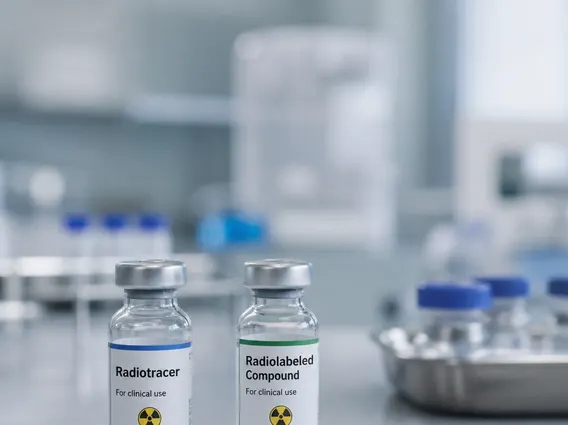
Radiolabeled refers to a process where a radioactive isotope is chemically attached to a molecule, creating a tracer that can be detected and tracked within the body. These compounds are invaluable tools in medicine, enabling advanced diagnostic imaging and targeted therapeutic interventions.
Key Takeaways
- Radiolabeled compounds are molecules tagged with radioactive isotopes for medical use.
- They are primarily used for diagnostic imaging, such as PET and SPECT scans, to visualize physiological processes.
- These substances also play a crucial role in targeted therapies, delivering radiation directly to diseased cells.
- The process involves various techniques to ensure the stable attachment of the radioisotope to the carrier molecule.
- Their applications span oncology, cardiology, neurology, and other medical specialties.
What is Radiolabeled?
Radiolabeled refers to the state of a chemical compound or substance that has been tagged with a radioactive isotope. This tagging allows the compound to be traced or detected within a biological system, such as the human body, using specialized imaging equipment. The concept of radiolabeled compounds explained involves understanding that these substances retain their original biological activity while emitting detectable radiation.
The radioactive isotope, or radionuclide, acts as a beacon, emitting gamma rays, positrons, or other particles that can be captured by external detectors. This unique property makes radiolabeled compounds indispensable in nuclear medicine for both diagnostic purposes, where they help visualize organs and diseases, and therapeutic applications, where they deliver targeted radiation to treat conditions like cancer.
Radiolabeling Techniques and Methods
Radiolabeling techniques and applications encompass a range of sophisticated methods used to attach a radioactive atom to a biologically active molecule. The choice of technique depends on the specific radioisotope, the carrier molecule, and the intended medical application. Common radioisotopes include Technetium-99m (99mTc), Fluorine-18 (18F), Iodine-131 (131I), and Gallium-68 (68Ga), each selected for its specific decay characteristics and half-life.
The primary goal of radiolabeling is to create a stable bond between the radioisotope and the molecule without altering the molecule’s biological function. Methods often involve direct chemical synthesis, chelation, or enzymatic reactions. For instance, 18F is frequently incorporated into glucose analogues to create fluorodeoxyglucose (FDG) for PET imaging, while 99mTc is often chelated to various pharmaceutical agents for SPECT imaging. These techniques ensure that the radiolabeled compound can travel to and accumulate in specific tissues or organs, providing valuable diagnostic information or delivering therapeutic doses of radiation.
Key considerations in radiolabeling include:
- Isotope Selection: Choosing an isotope with appropriate half-life and emission type for the specific application (e.g., short half-life for diagnostics, longer for therapy).
- Chemical Stability: Ensuring the radioactive tag remains attached to the molecule in vivo.
- Biological Specificity: Maintaining the original molecule’s ability to target specific cells or pathways.
- Radiochemical Purity: Minimizing impurities that could lead to non-specific uptake or toxicity.
Clinical Applications of Radiolabeled Compounds
The uses of radiolabeled substances are extensive and transformative across various medical disciplines, particularly in oncology, cardiology, and neurology. In diagnostics, they are fundamental to imaging modalities such as Positron Emission Tomography (PET) and Single-Photon Emission Computed Tomography (SPECT).
For example, in oncology, radiolabeled glucose (18F-FDG) is widely used in PET scans to detect cancerous tumors, stage the disease, and monitor treatment response, as cancer cells often exhibit increased glucose metabolism. According to the World Health Organization (WHO), cancer is a leading cause of death worldwide, and early, accurate diagnosis facilitated by radiolabeled compounds significantly improves patient outcomes. In cardiology, radiolabeled tracers help assess blood flow to the heart muscle, identify areas of damage, and evaluate cardiac function. Neurological applications include diagnosing Alzheimer’s disease, Parkinson’s disease, and epilepsy by visualizing neurotransmitter activity or amyloid plaque accumulation.
Beyond diagnostics, radiolabeled compounds are crucial in targeted radionuclide therapy (TRT). This involves using radiolabeled molecules that specifically bind to cancer cells, delivering a high dose of radiation directly to the tumor while sparing healthy tissue. Examples include radioiodine therapy for thyroid cancer and radiolabeled antibodies or peptides for neuroendocrine tumors and prostate cancer. These therapeutic applications harness the destructive power of radiation in a highly localized manner, offering personalized treatment options for patients with specific types of malignancies.