Radiologist
A Radiologist is a medical doctor specializing in diagnosing and treating diseases and injuries using medical imaging techniques. These highly trained professionals play a crucial role in patient care by interpreting complex images to guide clinical decisions.
Key Takeaways
- Radiologists are medical doctors who specialize in interpreting medical images like X-rays, CT scans, and MRIs.
- Their primary role involves diagnosing illnesses and injuries, performing image-guided procedures, and consulting with other physicians.
- Becoming a Radiologist requires extensive education, including medical school, a residency, and often a fellowship.
- They are essential members of the healthcare team, providing critical diagnostic information that informs patient treatment plans.
What is a Radiologist?
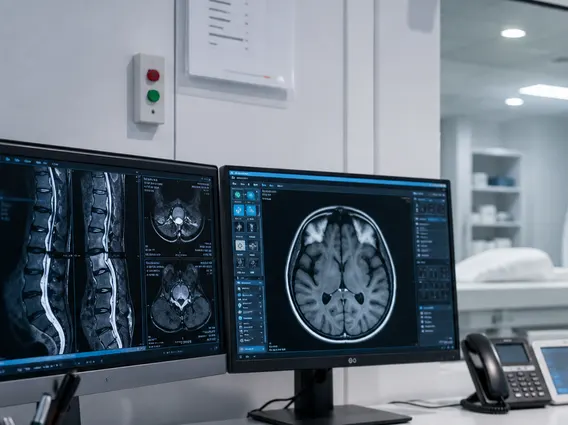
A Radiologist is a physician who has completed specialized training in obtaining and interpreting medical images. These images, which include X-rays, computed tomography (CT) scans, magnetic resonance imaging (MRI), ultrasound, and nuclear medicine, are vital tools for diagnosing a wide range of conditions, from broken bones and infections to cancer and heart disease. They work closely with other medical specialists, providing expert opinions that guide treatment decisions and improve patient outcomes. Their expertise extends beyond mere image interpretation; they understand the physics behind imaging modalities, the biological effects of radiation, and the appropriate use of contrast agents.
Radiologists are integral to modern healthcare, often working behind the scenes but providing critical insights. They are responsible for ensuring the quality and safety of imaging procedures, minimizing radiation exposure while maximizing diagnostic accuracy. According to the American College of Radiology, there are over 30,000 practicing radiologists in the United States, highlighting their significant presence and importance in the medical field.
Key Responsibilities of a Radiologist
The radiologist job duties are diverse and demanding, requiring a keen eye for detail and extensive medical knowledge. Their primary responsibility is to accurately interpret diagnostic images to identify abnormalities, diseases, or injuries. This involves analyzing complex visual data and correlating findings with a patient’s clinical history and symptoms. Beyond interpretation, radiologists also perform various image-guided procedures, which can range from biopsies to drainages, using real-time imaging to ensure precision and minimize invasiveness. They also play a vital role in interdisciplinary collaboration, consulting with referring physicians (such as oncologists, surgeons, and primary care doctors) to discuss findings, recommend further imaging, or suggest appropriate treatment pathways.
Key responsibilities include:
- Interpreting X-rays, CT scans, MRIs, ultrasounds, and other imaging studies.
- Performing image-guided procedures like biopsies, aspirations, and catheter placements.
- Consulting with other physicians on appropriate imaging protocols and results.
- Monitoring and ensuring patient safety during imaging procedures, especially regarding radiation exposure and contrast agent reactions.
- Participating in multidisciplinary team meetings to contribute to patient management plans.
- Conducting research and staying updated with advancements in imaging technology and diagnostic techniques.
Radiologist Education and Career Path
To understand how to become a radiologist, one must recognize the rigorous and extensive educational journey involved. The path typically begins with a bachelor’s degree, often in a science-related field, followed by four years of medical school, leading to an M.D. or D.O. degree. After medical school, aspiring radiologists must complete a one-year internship, which provides foundational clinical experience. This is then followed by a four-year residency program specifically in diagnostic radiology. During residency, physicians receive intensive training in all imaging modalities, pathology, radiation physics, and clinical decision-making.
The radiologist education requirements are among the most demanding in medicine. Many radiologists choose to pursue further specialization by completing a one- or two-year fellowship after residency. Fellowships allow for deep expertise in areas such as neuroradiology, musculoskeletal radiology, pediatric radiology, interventional radiology, or breast imaging. Finally, all radiologists must pass board certification exams administered by the American Board of Radiology (ABR) or the American Osteopathic Board of Radiology (AOBR) to practice independently. This extensive training ensures that radiologists possess the comprehensive knowledge and skills necessary to provide high-quality diagnostic and interventional services.