Epididymis
The epididymis is a crucial component of the male reproductive system, playing a vital role in the maturation and storage of sperm. This highly coiled tube is essential for male fertility, ensuring sperm develop the necessary capabilities for fertilization.
Key Takeaways
- The epididymis is a long, coiled tube located on the posterior side of each testicle.
- It is divided into three main regions: the head (caput), body (corpus), and tail (cauda).
- Its primary function is the maturation of sperm, where they gain motility and the ability to fertilize an egg.
- The epididymis also serves as a storage site for mature sperm until ejaculation.
- Sperm transit through the epididymis can take several days, undergoing significant physiological changes.
What is the Epididymis?
The Epididymis is a C-shaped, comma-shaped organ that lies along the posterior border of each testis. It is a single, tightly coiled tube that, if uncoiled, would measure approximately 6 meters (about 20 feet) in length. This structure is integral to the male reproductive system, serving as a conduit and processing center for sperm after they are produced in the testes.
Its primary role extends beyond simple transport; it provides the necessary environment for sperm to undergo a series of biochemical and morphological changes. These changes are critical for sperm to acquire full motility and the capacity to fertilize an ovum, a process known as capacitation, which begins here and continues in the female reproductive tract.
Epididymis Anatomy and Location
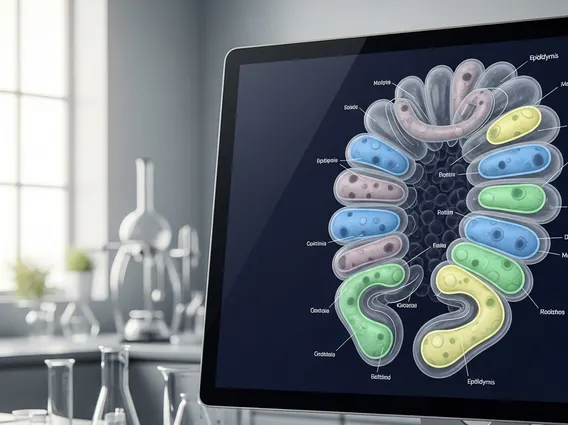
The epididymis anatomy is characterized by its distinct regions, each contributing to its overall function. It is typically divided into three main parts: the head (caput), body (corpus), and tail (cauda). The head is the widest part, located superiorly, and receives immature sperm from the efferent ductules of the testis. The body is the intermediate section, where sperm continue their maturation process. The tail is the narrowest and most inferior part, connecting to the vas deferens, and serves as the primary storage site for mature sperm.
Regarding where is the epididymis located, it is situated along the posterior aspect of the testis, extending from its superior pole to its inferior pole. It is firmly attached to the testis by connective tissue and a serous membrane. This strategic placement allows for efficient collection of sperm from the seminiferous tubules of the testis and their subsequent passage through the epididymis before entering the vas deferens for transport during ejaculation.
Function of the Epididymis
The primary epididymis function revolves around two critical processes: sperm maturation and sperm storage. As sperm traverse the length of the epididymis, they undergo significant physiological changes that are essential for their fertilizing capability. This journey can take approximately 2 to 12 days, depending on the species, during which sperm acquire progressive motility and the ability to recognize and bind to an egg.
Key aspects of epididymal function include:
- Sperm Maturation: Sperm gain forward motility, develop the ability to undergo the acrosome reaction, and acquire surface proteins necessary for fertilization.
- Sperm Concentration: Fluid reabsorption in the epididymis concentrates the sperm, increasing their density.
- Sperm Storage: The tail of the epididymis acts as a reservoir where millions of mature sperm are stored, maintaining their viability for several weeks.
- Protection: The epididymal epithelium secretes various substances that protect sperm from oxidative damage and provide an optimal environment for their survival.
Without the epididymis, sperm would remain immature and incapable of fertilization, highlighting its indispensable role in male reproductive health and fertility.