Cutaneous Squamous Cell Carcinoma
Cutaneous squamous cell carcinoma (cSCC) is a common form of skin cancer that originates in the squamous cells, which are flat cells found in the outer layer of the skin. It typically develops on sun-exposed areas of the body and can be effectively treated, especially when detected early.
Key Takeaways
- Cutaneous squamous cell carcinoma (cSCC) is the second most common type of skin cancer.
- It primarily affects areas of the skin frequently exposed to ultraviolet (UV) radiation.
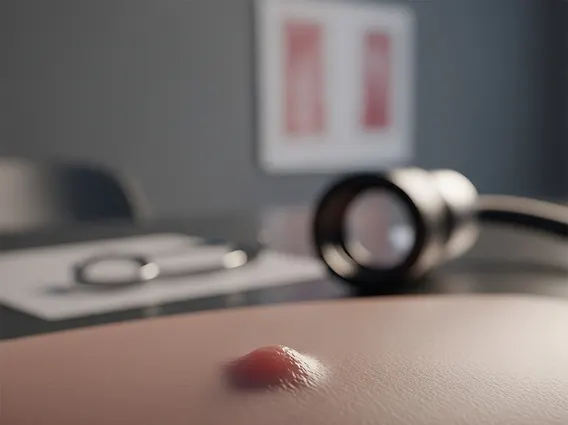
- Symptoms often include persistent scaly red patches, open sores, or wart-like growths.
- Chronic sun exposure is the leading cause, alongside other risk factors like fair skin and a weakened immune system.
- Treatment typically involves surgical removal, with other options available for more advanced cases.
What is Cutaneous Squamous Cell Carcinoma (cSCC)?
Cutaneous squamous cell carcinoma (cSCC) is a prevalent type of non-melanoma skin cancer that arises from the uncontrolled growth of abnormal squamous cells. These cells are located in the epidermis, the outermost layer of the skin. cSCC is the second most common form of skin cancer, with over 1 million cases diagnosed annually in the United States, according to the Skin Cancer Foundation. While it can develop anywhere on the body, it most frequently appears on areas regularly exposed to the sun, such as the face, ears, neck, hands, and arms. Understanding what is cutaneous squamous cell carcinoma involves recognizing it as a potentially aggressive cancer if left untreated, though it is highly curable when caught early.
Unlike basal cell carcinoma, cSCC has a higher potential to spread to other parts of the body, though this is rare in its early stages. The risk of metastasis increases with the size, depth, and location of the tumor, as well as in individuals with compromised immune systems. Early detection and prompt treatment are crucial for preventing potential complications and ensuring a favorable prognosis.
Recognizing cSCC: Symptoms and Causes
Recognizing the signs of cSCC is vital for early diagnosis and effective treatment. The cutaneous squamous cell carcinoma symptoms can vary, but they often manifest as persistent skin lesions that do not heal. These may include a firm, red nodule; a flat lesion with a scaly, crusted surface; an open sore that bleeds, crusts, or heals and then reopens; or a wart-like growth. These lesions are typically found on sun-exposed skin but can appear anywhere. Any new or changing skin growth should be evaluated by a dermatologist.
The primary among the causes of cutaneous squamous cell carcinoma is prolonged and excessive exposure to ultraviolet (UV) radiation from sunlight or tanning beds. UV radiation damages the DNA in skin cells, leading to uncontrolled growth. Other significant risk factors include:
- Fair Skin: Individuals with light-colored skin, blue or green eyes, and blond or red hair are more susceptible.
- History of Sunburns: A history of severe, blistering sunburns, especially during childhood, increases risk.
- Weakened Immune System: People with suppressed immune systems, such as organ transplant recipients or those with HIV/AIDS, have a significantly higher risk.
- Chronic Skin Inflammation: Long-standing wounds, burns, or inflammatory skin conditions can predispose individuals to cSCC.
- Previous Skin Cancer: A history of any type of skin cancer, including basal cell carcinoma, increases the likelihood of developing cSCC.
Understanding these risk factors and symptoms is key to prevention and early detection.
Treatment Approaches for cSCC
Effective cutaneous squamous cell carcinoma treatment depends on several factors, including the size, location, and aggressiveness of the tumor, as well as the patient’s overall health. The primary goal of treatment is to completely remove the cancer while preserving as much healthy tissue as possible. Surgical removal is the most common and often curative approach for cSCC.
Here are common treatment options for cSCC:
| Treatment Method | Description | Application |
|---|---|---|
| Surgical Excision | The tumor and a margin of surrounding healthy tissue are cut out with a scalpel. | Standard for most cSCCs. |
| Mohs Micrographic Surgery | Layers of cancer-containing skin are progressively removed and examined until only cancer-free tissue remains. | Recommended for cSCCs on the face, ears, or other sensitive areas, or for recurrent tumors. |
| Curettage and Electrodesiccation (C&E) | The cancer is scraped off with a curette, and the base is burned with an electric needle. | Suitable for small, superficial cSCCs. |
| Radiation Therapy | High-energy beams are used to kill cancer cells. | Option for patients who cannot undergo surgery, or for tumors that are difficult to remove completely. |
| Topical Medications | Creams containing chemotherapy drugs (e.g., 5-fluorouracil) or immune-modifying agents (e.g., imiquimod). | Used for very superficial cSCCs or precancerous lesions. |
For advanced or metastatic cSCC, systemic therapies such as chemotherapy, targeted therapy, or immunotherapy may be employed. Regular follow-up examinations are crucial after treatment to monitor for recurrence and detect any new lesions early. Prevention through sun protection, including wearing protective clothing, seeking shade, and using broad-spectrum sunscreen, remains the most effective strategy against cSCC.