
Exocrine Pancreas Cell
The exocrine pancreas cell is a specialized cell type found within the pancreas, playing a crucial role in the digestive system. These cells are responsible for producing and secreting a variety of digestive enzymes and bicarbonate, which are essential for breaking down food in the small intestine.
Key Takeaways
- Exocrine pancreas cells are vital for digestion, producing enzymes and bicarbonate.
- The primary type, acinar cells, synthesize and secrete powerful digestive enzymes.
- Duct cells contribute by secreting bicarbonate, neutralizing stomach acid.
- The intricate exocrine pancreas cell structure, rich in organelles, supports high-volume protein synthesis and secretion.
- Proper exocrine pancreas cell function is critical for nutrient absorption and overall digestive health.
What is an Exocrine Pancreas Cell?
An exocrine pancreas cell is a highly specialized epithelial cell located in the exocrine portion of the pancreas. These cells are organized into clusters called acini, which are connected to a system of ducts. Their primary role is to synthesize and secrete digestive enzymes and an alkaline fluid into the small intestine, facilitating the breakdown of carbohydrates, proteins, and fats. This process is fundamental to nutrient absorption and overall digestive health.
Exocrine Pancreas Cell Structure & Function
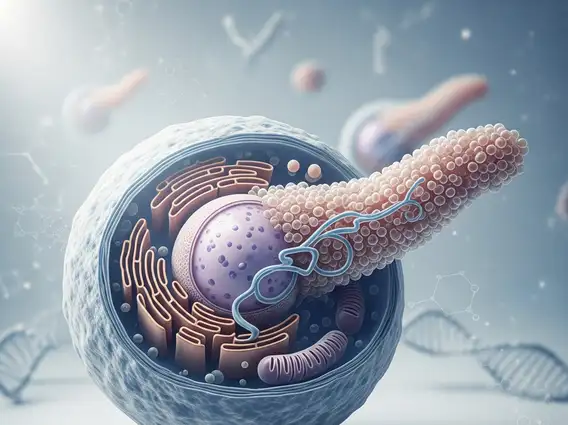
The exocrine pancreas cell structure is highly adapted for its secretory role. Acinar cells, the predominant type of exocrine pancreas cell, are characterized by a prominent rough endoplasmic reticulum, extensive Golgi apparatus, and numerous zymogen granules. The rough endoplasmic reticulum is where digestive enzymes, which are proteins, are synthesized. From there, they move to the Golgi apparatus for processing, packaging, and sorting into zymogen granules.
The core exocrine pancreas cell function revolves around the production and release of these enzymes. When stimulated, zymogen granules fuse with the cell membrane, releasing their contents into the pancreatic ducts, a process known as exocytosis. These enzymes, including amylase (for carbohydrates), lipase (for fats), and proteases like trypsin and chymotrypsin (for proteins), are crucial for breaking down complex food molecules into simpler forms that can be absorbed by the body. In essence, what do exocrine pancreas cells do is orchestrate the chemical digestion of food, ensuring efficient nutrient extraction.
Types of Exocrine Pancreas Cells
There are primarily two main types of exocrine pancreas cells that work in concert to support digestion:
- Acinar Cells: These are the most abundant exocrine cells, forming the acini. Their primary role is the synthesis, storage, and secretion of digestive enzymes. These enzymes are released in an inactive form (zymogens) to prevent self-digestion of the pancreas and are activated once they reach the small intestine.
- Duct Cells: Lining the pancreatic ducts, these cells are responsible for secreting a bicarbonate-rich fluid. This fluid serves to neutralize the acidic chyme entering the small intestine from the stomach, creating an optimal pH environment for the pancreatic digestive enzymes to function effectively.
The coordinated activity of these cell types ensures that food is efficiently digested and nutrients are made available for absorption. Disruptions in the function of these cells can lead to various digestive disorders, highlighting their critical importance in maintaining gastrointestinal health.



















