Cubic Centimeter
The Cubic Centimeter is a fundamental unit of volume extensively utilized across various medical, clinical, and oncology disciplines. Its precise application is critical for accurate diagnostics, treatment planning, and patient care.
Key Takeaways
- A Cubic Centimeter (cc) is a metric unit of volume, equivalent to one milliliter (mL).
- It is indispensable in medicine for measuring liquids, gases, and solid masses like tumors.
- Calculating volume in cubic centimeters typically involves multiplying length, width, and height for regular shapes.
- Key medical applications include medication dosage, fluid balance monitoring, and assessing tumor size.
- Accurate use of cubic centimeters ensures patient safety and effective treatment outcomes.
What is a Cubic Centimeter (cc)?
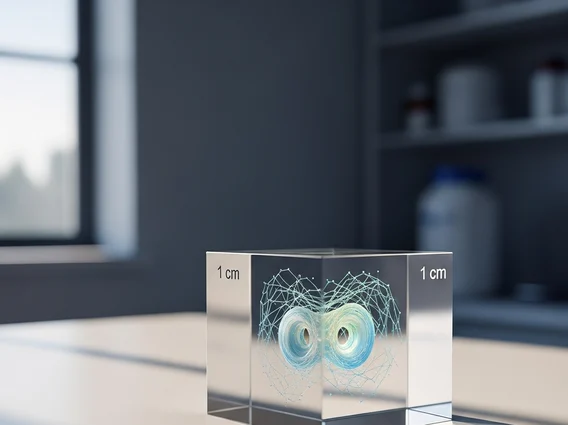
A Cubic Centimeter (cc) refers to a standard unit of volume within the metric system, precisely equivalent to one milliliter (mL). In medical and clinical contexts, understanding the cubic centimeter definition and meaning is paramount. It represents the volume occupied by a cube with sides each measuring one centimeter in length. This unit is universally recognized and applied in healthcare settings to quantify various substances and structures, from the precise dosage of medications to the volume of bodily fluids or the size of anatomical features and pathological growths.
The use of cubic centimeters provides a consistent and accurate method for clinicians to communicate and record measurements, ensuring clarity and reducing the potential for errors in patient management. Its direct equivalence to milliliters means that these terms are often used interchangeably in medical practice, particularly when administering liquid medications or measuring fluid intake and output.
Calculating Volume in Cubic Centimeters
Explaining how to calculate cubic centimeters is essential for many medical applications. For objects with regular geometric shapes, the calculation is straightforward. The most common method involves multiplying the object’s length, width, and height. For instance, if a lesion or an organ segment can be approximated as a rectangular prism, its volume in cubic centimeters is derived from the product of these three dimensions, each measured in centimeters.
For more complex or irregular shapes, such as tumors or specific organ volumes, advanced imaging techniques like CT scans or MRIs are often employed. These technologies can generate detailed three-dimensional models, allowing for highly accurate volumetric measurements that are crucial for monitoring disease progression or treatment response. While the basic principle remains the same (measuring dimensions to derive volume), the tools and complexity vary significantly depending on the object’s form.
Here are common formulas for calculating volume in cubic centimeters:
- Rectangular Prism (e.g., a simple tumor approximation): Length (cm) × Width (cm) × Height (cm)
- Cylinder (e.g., a blood vessel segment): π × Radius² (cm²) × Height (cm)
- Sphere (e.g., a spherical cyst): (4/3) × π × Radius³ (cm³)
Medical and Practical Uses of Cubic Centimeters
The uses of cubic centimeters are extensive and critical across numerous medical and practical scenarios. In pharmacology, it is the standard unit for measuring and administering liquid medications, ensuring patients receive the correct dosage. For example, a physician might prescribe 5 cc of a particular syrup or inject 10 cc of a vaccine. This precision is vital for therapeutic efficacy and patient safety.
Beyond medication, cubic centimeters are fundamental in monitoring fluid balance within the body. Clinicians track fluid intake and output (e.g., urine volume, intravenous fluid administration) in cubic centimeters to assess kidney function, hydration status, and potential fluid overload or dehydration. In oncology, the unit is indispensable for quantifying tumor volume, which helps in staging cancer, planning radiation therapy, and evaluating the effectiveness of chemotherapy. Changes in tumor size, often measured in cubic centimeters, provide critical insights into disease progression or regression.
Other significant applications include:
- Blood Volume Measurement: Estimating blood loss during surgery or trauma.
- Organ Sizing: Assessing the size of organs like the liver, spleen, or kidneys, which can indicate various medical conditions.
- Syringe and Infusion Pump Calibration: Ensuring accurate delivery of fluids and medications.
- Pathology: Measuring tissue samples or lesions removed for biopsy.
The consistent application of the Cubic Centimeter as a unit of measure underpins many diagnostic and therapeutic processes, directly contributing to the quality and safety of patient care.