
Cell Cell Signaling
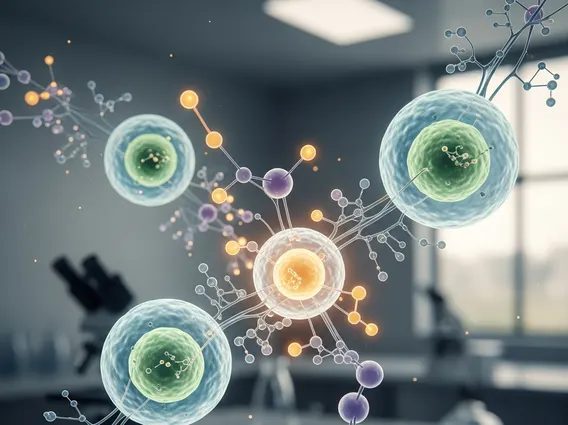
Cell Cell Signaling is a fundamental biological process that enables cells to communicate and coordinate their actions within multicellular organisms. This intricate system is essential for maintaining life, guiding development, and responding to environmental changes.
Key Takeaways
- Cell Cell Signaling is the process by which cells exchange information, crucial for coordinating biological functions.
- Communication involves a sender cell, signaling molecules (ligands), receptor proteins on target cells, and a series of intracellular responses.
- Cells communicate through various modes, including direct contact, paracrine, endocrine, and synaptic signaling.
- There are diverse types of cell signaling pathways, such as G protein-coupled receptors and receptor tyrosine kinases, each mediating specific cellular responses.
- The importance of cell signaling in biology spans embryonic development, immune responses, tissue repair, and the regulation of metabolism.
What is Cell Cell Signaling?
Cell Cell Signaling refers to the complex system of communication that governs the activities of cells and coordinates their behavior. It is the process by which cells perceive and respond to signals from their microenvironment, as well as from other cells. This communication is vital for the proper functioning of all living organisms, from simple bacteria to complex humans, ensuring that cells work together harmoniously.
This biological mechanism allows cells to grow, divide, differentiate, migrate, and even undergo programmed cell death in a controlled manner. Without effective Cell Cell Signaling, multicellular organisms would be unable to develop, maintain homeostasis, or mount appropriate responses to internal and external stimuli, such as infections or injuries.
How Cell Cell Communication Works
Cell cell communication typically involves a series of steps: signal reception, signal transduction, and cellular response. A signaling cell releases a signaling molecule, also known as a ligand, which then travels to a target cell. The target cell possesses specific receptor proteins, usually located on its surface or within its cytoplasm, that can bind to the ligand.
Upon binding, the receptor undergoes a conformational change, initiating a cascade of intracellular events known as signal transduction. This process often involves a series of molecular relays, where signaling molecules within the cell activate other molecules, ultimately leading to a specific cellular response. The response can range from changes in gene expression, metabolism, cell shape, or movement.
Cells employ several modes of communication to transmit signals:
- Direct Contact: Cells communicate through direct physical contact, often via gap junctions in animal cells or plasmodesmata in plant cells, allowing small molecules to pass directly between adjacent cells.
- Paracrine Signaling: Signaling molecules are released into the extracellular fluid and act on nearby target cells. This type of signaling is localized and short-lived.
- Synaptic Signaling: A specialized form of paracrine signaling occurring in the nervous system, where neurotransmitters are released across a synapse to rapidly transmit signals to target neurons or muscle cells.
- Endocrine Signaling: Hormones are released into the bloodstream and travel long distances to reach target cells throughout the body, mediating widespread and long-lasting effects.
Types of Cell Signaling Pathways and Their Biological Importance
The cellular machinery for interpreting signals is incredibly diverse, leading to various types of cell signaling pathways. These pathways are categorized primarily by the nature of their receptors and the intracellular mechanisms they activate. Common types include G protein-coupled receptors (GPCRs), receptor tyrosine kinases (RTKs), ion channel receptors, and intracellular receptors.
GPCRs are a large family of cell surface receptors that, upon ligand binding, activate G proteins, which then trigger various intracellular responses. RTKs, on the other hand, become enzymatically active upon ligand binding, phosphorylating specific tyrosine residues on target proteins, often leading to cell growth, differentiation, and survival. Ion channel receptors open or close in response to ligand binding, altering ion flow across the membrane and changing the cell’s electrical potential.
The importance of cell signaling in biology cannot be overstated. It is critical for almost every physiological process. For instance, during embryonic development, precise signaling pathways guide cell differentiation and tissue formation, ensuring the correct development of organs and body structures. In the immune system, cell signaling enables immune cells to detect pathogens, coordinate defense mechanisms, and eliminate infected cells. Furthermore, cell signaling regulates metabolic processes, maintains tissue homeostasis, and facilitates wound healing. Dysregulation of these pathways can lead to various diseases, including cancer, diabetes, and neurodegenerative disorders, highlighting their crucial role in health and disease.



















