Infrared Coagulation
Infrared Coagulation is a widely used medical procedure, primarily for treating internal hemorrhoids. This minimally invasive technique offers an effective alternative to more invasive surgical options for certain conditions.
Key Takeaways
- Infrared Coagulation is a non-surgical treatment primarily used for internal hemorrhoids.
- The procedure utilizes a focused beam of infrared light to create localized heat, causing tissue coagulation.
- It is generally quick, performed in an outpatient setting, and requires no anesthesia.
- Patients often experience minimal discomfort and a relatively fast recovery compared to surgical interventions.
- Benefits include reduced bleeding, pain relief, and a lower risk of complications.
What is Infrared Coagulation?
Infrared Coagulation (IRC) is a common office-based medical procedure that uses a specialized device to deliver short bursts of infrared light to specific tissues. This light generates heat, which causes the tissue to coagulate, or essentially “scab over.” The primary application of IRC is in the treatment of internal hemorrhoids, particularly those that are bleeding or prolapsing but are not severe enough to require surgery. It is considered a safe and effective option for first and second-degree hemorrhoids, and sometimes for third-degree hemorrhoids, offering a less invasive approach to symptom relief.
Mechanism and Procedure of Infrared Coagulation
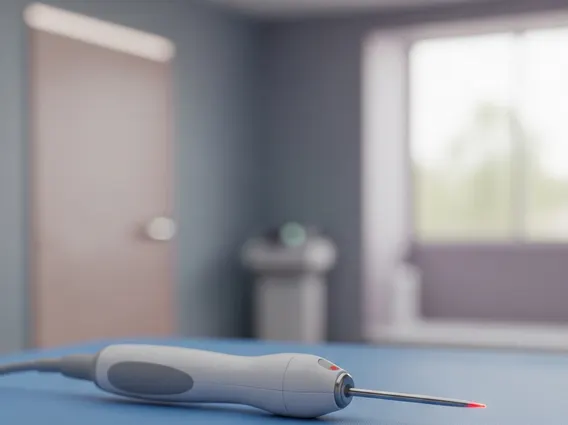
The effectiveness of Infrared Coagulation stems from its precise application of thermal energy. The device used for IRC contains a halogen lamp that emits a narrow beam of infrared light. When this light is directed at the base of an internal hemorrhoid, the hemoglobin in the tissue absorbs the infrared energy, converting it into heat. This localized heat causes the proteins within the tissue to denature and coagulate, leading to inflammation and scarring. Over time, this scar tissue cuts off the blood supply to the hemorrhoid, causing it to shrink and eventually wither away.
The procedure itself is typically quick and performed in an outpatient setting, often without the need for anesthesia. Here is a general overview of how infrared coagulation works:
- Preparation: The patient is positioned comfortably, usually on their side. No special preparation, such as fasting or bowel cleansing, is typically required.
- Examination: A physician uses an anoscope to visualize the internal hemorrhoids.
- Application: The IRC probe is gently placed against the base of the hemorrhoid. A short burst of infrared light, usually lasting 1-2 seconds, is delivered. This process is repeated for a few spots around the hemorrhoid.
- Completion: The entire process usually takes only a few minutes. Patients may feel a sensation of warmth or mild pressure, but significant pain is uncommon due to the absence of pain receptors in the area where the treatment is applied.
The treated area forms a small ulcer that heals over several weeks, forming scar tissue that anchors the remaining tissue and prevents future prolapse and bleeding. Multiple treatment sessions may be required depending on the number and size of the hemorrhoids.
Benefits of Infrared Coagulation Treatment
Infrared Coagulation treatment offers several advantages, making it a preferred choice for many patients seeking relief from hemorrhoidal symptoms. One of the most significant benefits is its minimally invasive nature, which translates to less discomfort and a quicker recovery period compared to surgical options like hemorrhoidectomy. Patients can typically resume their normal activities almost immediately after the procedure.
Other key benefits include:
- Reduced Bleeding: IRC effectively stops bleeding from internal hemorrhoids by coagulating the blood vessels that supply them.
- Pain Relief: By shrinking the hemorrhoids and reducing inflammation, IRC alleviates associated pain and discomfort.
- Outpatient Procedure: The treatment is performed in a doctor’s office, eliminating the need for hospital stays.
- No Anesthesia Required: Most patients tolerate the procedure well without general or local anesthesia.
- Low Risk of Complications: Compared to surgery, IRC carries a lower risk of complications such as infection, anal stricture, or fecal incontinence.
While effective, it’s important to note that IRC is best suited for internal hemorrhoids and may not be appropriate for all cases. A healthcare provider can determine if this treatment is the right option based on an individual’s specific condition.