
Exocervix
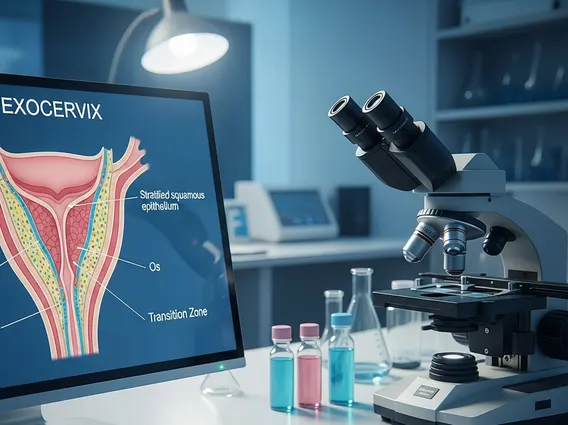
The Exocervix is a vital component of the female reproductive system, representing the visible, outer portion of the cervix that projects into the vagina. Understanding its structure and role is crucial for comprehending reproductive health and various gynecological conditions.
Key Takeaways
- The Exocervix is the external, visible part of the cervix, lined by stratified squamous epithelium.
- Its primary functions include providing a protective barrier and facilitating sperm entry into the uterus.
- It is distinct from the endocervix, which is the canal leading to the uterus, lined by glandular epithelium.
- The junction between the exocervix and endocervix, known as the squamocolumnar junction, is a critical site for gynecological screenings like Pap tests.
What is the Exocervix?
The Exocervix refers to the vaginal portion of the cervix, which is the lower, narrow part of the uterus that forms a canal connecting the uterus to the vagina. From a medical perspective, the exocervix definition medical describes it as the ectocervix, covered by non-keratinizing stratified squamous epithelium. This external part of the cervix is visible during a speculum examination and features the external os, which is the opening into the cervical canal. Its robust epithelial lining provides a protective barrier against pathogens from the vaginal environment.
Exocervix Anatomy and Function
The exocervix anatomy and function are intricately linked to its role in both protection and reproduction. Anatomically, the exocervix is characterized by its smooth, pink appearance due to the stratified squamous epithelium that covers its surface. This type of epithelium is tough and resistant to friction and chemical exposure, similar to the lining of the vagina. At its center is the external os, a small, round opening in nulliparous women (those who have not given birth) and often a slit-like opening in multiparous women (those who have given birth).
Functionally, the exocervix serves several critical purposes:
- Protective Barrier: Its thick squamous epithelium acts as a physical barrier, protecting the upper reproductive tract from infections ascending from the vagina.
- Sperm Transport: During ovulation, the external os dilates slightly, and cervical mucus produced by the endocervix changes consistency to facilitate the passage of sperm into the uterus.
- Childbirth: The exocervix, along with the rest of the cervix, thins and dilates significantly during labor to allow for the passage of the baby.
A crucial area on the exocervix is the squamocolumnar junction (SCJ), also known as the transformation zone. This is where the squamous epithelium of the exocervix meets the columnar epithelium of the endocervix. The SCJ is highly susceptible to cellular changes and is the primary site where cervical cancer often originates, making it a key focus during Pap smear screenings. According to the World Health Organization (WHO), cervical cancer is the fourth most common cancer among women globally, with most cases linked to persistent human papillomavirus (HPV) infection affecting cells in this transformation zone.
Exocervix vs. Endocervix: Key Differences
Understanding the distinction between the exocervix vs endocervix is fundamental for gynecological health and diagnosis. While both are parts of the cervix, they differ significantly in their location, histological structure, and primary functions. The exocervix is the outer, visible portion, whereas the endocervix is the inner canal leading to the uterus. These differences are summarized in the table below:
| Feature | Exocervix | Endocervix |
|---|---|---|
| Location | Vaginal portion of the cervix, external to the external os. | Cervical canal, internal to the external os, leading to the uterus. |
| Epithelium Type | Stratified squamous epithelium (non-keratinizing). | Simple columnar glandular epithelium. |
| Appearance | Smooth, pink, visible during speculum exam. | Reddish, velvety, not typically visible externally. |
| Primary Function | Protective barrier, sperm entry point. | Mucus production (cervical mucus plug), sperm reservoir. |
| Clinical Significance | Site of most cervical cancers (at the SCJ), sampled during Pap tests. | Source of cervical mucus, less common site for cancer (adenocarcinoma). |
The distinct epithelial linings and functions of the exocervix and endocervix necessitate different approaches in diagnosis and treatment of conditions affecting these areas. Regular screenings are vital for detecting abnormalities early in either region.



















