Respirator
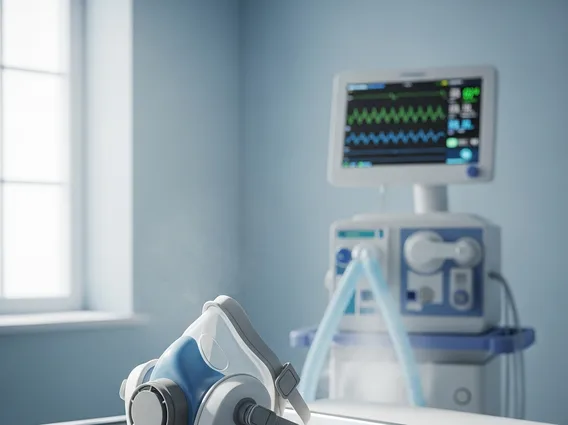
A respirator is a specialized personal protective device designed to protect the wearer from inhaling hazardous airborne particles, gases, or vapors. These devices are critical in various settings, from healthcare to industrial environments, where air quality poses a risk to health.
Key Takeaways
- A respirator is a personal protective device that filters airborne contaminants, providing a higher level of protection than standard face masks.
- They are designed to form a tight seal around the face, preventing the inhalation of hazardous particles, gases, or vapors.
- Different types, such as N95s, elastomeric respirators, and Powered Air-Purifying Respirators (PAPRs), offer varying levels of protection and are suited for specific uses.
- Unlike face masks, respirators undergo rigorous testing and certification to ensure filtration efficiency and proper fit.
- Proper fit testing and training are essential for a respirator to provide its intended protection.
What is a Respirator?
A Respirator is a form of personal protective equipment (PPE) engineered to safeguard the wearer from inhaling hazardous substances present in the air. These substances can include airborne particles like dust, mist, fumes, biological aerosols (e.g., viruses, bacteria), and even certain gases or vapors. Unlike simple barriers, respirators function by creating a tight seal around the wearer’s face, preventing unfiltered air from being inhaled. The air then passes through specialized filter media or cartridges designed to capture or neutralize contaminants.
The effectiveness of a respirator hinges on two primary factors: its filtration efficiency and its ability to form an adequate seal with the wearer’s face. For instance, N95 respirators, a common type, are certified to filter at least 95% of airborne particles larger than 0.3 microns, according to standards set by the National Institute for Occupational Safety and Health (NIOSH) in the United States. This high level of filtration, combined with a proper fit, significantly reduces the wearer’s exposure to harmful airborne agents, making them indispensable in environments where respiratory hazards are present.
Types of Respirators and Their Uses
The selection of a respirator depends heavily on the specific hazard and the environment in which it will be used. There are several types of respirators and uses, each designed to offer distinct levels of protection and comfort. Understanding these variations is crucial for ensuring adequate safety.
- Filtering Facepiece Respirators (e.g., N95): These are disposable respirators that cover the nose and mouth, filtering out particles from the air. They are commonly used in healthcare settings to protect against airborne infectious diseases and in industrial environments for protection against dust and non-oil-based particles.
- Elastomeric Respirators: These are reusable respirators made of rubber or silicone, featuring replaceable cartridges or filters. They come in half-face or full-face designs and offer protection against a wider range of hazards, including gases, vapors, and particles, depending on the cartridge used. They are prevalent in construction, manufacturing, and chemical industries.
- Powered Air-Purifying Respirators (PAPRs): PAPRs use a battery-powered fan to draw air through a filter, cartridge, or canister, then supply purified air to a hood, helmet, or facepiece. They provide a continuous flow of air, which can be more comfortable, and often offer a higher assigned protection factor (APF) than other types. They are frequently used in healthcare, pharmaceutical manufacturing, and hazardous material handling.
- Supplied-Air Respirators (SARs): These respirators provide breathing air from a source independent of the ambient atmosphere, such as a compressed air tank or compressor. They are essential for environments that are immediately dangerous to life or health (IDLH) or where oxygen levels are low.
Each type requires specific training and fit testing to ensure maximum protection, as a poor seal can compromise the respirator’s effectiveness.
Respirator vs. Face Mask: Key Differences
While both respirators and face masks cover the mouth and nose, there are significant respirator vs face mask differences that dictate their purpose and level of protection. Understanding these distinctions is vital for making informed choices about personal protective equipment.
A primary difference lies in their intended purpose and design. Respirators are designed to protect the wearer from inhaling specific airborne hazards by forming a tight seal and filtering the air. Face masks, such as surgical masks or cloth masks, are primarily designed to prevent the wearer from expelling respiratory droplets into the environment, thereby protecting others. They offer a barrier against splashes and large droplets but do not provide reliable protection against inhaling small airborne particles due to their loose fit and lower filtration efficiency.
| Feature | Respirator | Face Mask (Surgical/Cloth) |
|---|---|---|
| Purpose | Protects the wearer from inhaling airborne hazards (particles, gases, vapors). | Primarily protects others from the wearer’s respiratory droplets; offers barrier against splashes. |
| Fit | Designed to create a tight seal around the face to prevent leakage of unfiltered air. Requires fit testing. | Loose-fitting, creates gaps around the face, allowing unfiltered air to enter/exit. |
| Filtration Efficiency | High (e.g., N95 filters ≥95% of airborne particles). Certified by regulatory bodies (e.g., NIOSH). | Variable and generally lower. Not designed to filter small airborne particles effectively. |
| Regulation/Standards | Regulated as personal protective equipment (PPE) by agencies like NIOSH (US) or EN standards (Europe). | Regulated as medical devices (surgical masks) or consumer products (cloth masks). |
| Use Case | Hazardous environments (healthcare, industrial, chemical), airborne disease prevention. | General public use, source control in healthcare, protection from large droplets. |
The stringent testing and certification processes for respirators ensure their efficacy in protecting against specific hazards, a level of assurance not typically associated with standard face masks. For example, the Centers for Disease Control and Prevention (CDC) consistently emphasizes that respirators provide superior respiratory protection compared to face masks when used correctly in environments with airborne contaminants.