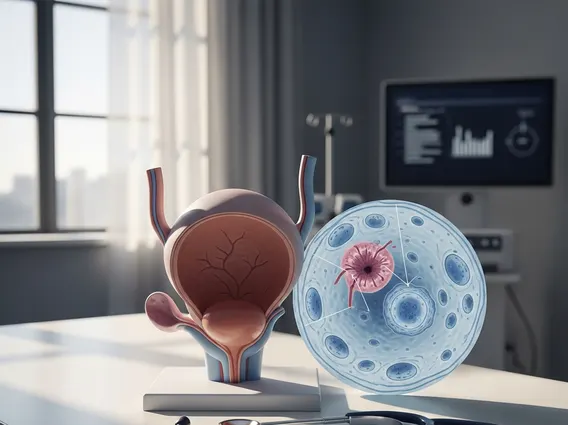
Prevention Tips for Merkel Cell Carcinoma
Merkel cell carcinoma (MCC) is a rare, fast-growing skin cancer that forms in cells near the skin’s nerve endings — a different cell origin from more common skin cancers such as basal cell or squamous cell carcinoma. No single measure guarantees prevention, but understanding and managing key risk factors, especially ultraviolet (UV) exposure and immune system health, supports Merkel cell carcinoma prevention. This article outlines practical, evidence-based strategies to help reduce risk of Merkel cell carcinoma and support overall skin health.

Key Takeaways
- UV exposure — from sunlight and from artificial sources such as tanning beds or PUVA therapy — is a well-documented MCC risk factor, so routine sun protection (sunscreen, shade, protective clothing) is a reasonable precaution.
- A weakened immune system — from organ transplant medication, HIV infection, chronic lymphocytic leukemia, or similar conditions — raises Merkel cell carcinoma risk factors; the increase is well documented even though NCI does not report one exact multiplier.
- General immune-supporting habits, such as a balanced diet, regular activity, adequate sleep, and not smoking, support overall health, though no specific diet or supplement has been proven to prevent MCC.
- Regular skin checks, including watching for a fast-growing, painless, firm nodule (the “AEIOU” pattern), support earlier evaluation, which is linked to more treatment options, even though no formal study has proven that routine screening lowers skin cancer deaths.
Understanding Merkel Cell Carcinoma Risk Factors
Effective Merkel cell carcinoma prevention starts with understanding what raises a person’s chances of developing this rare, fast-growing skin cancer. MCC begins in a type of touch-sensing cell deep in the skin, so clinicians sometimes use the alternate name neuroendocrine skin carcinoma — a different cell origin than more familiar skin cancers. Identifying the risk factors below allows for more targeted precautions.
Key Environmental Triggers
Ultraviolet (UV) exposure is the main documented environmental risk factor for MCC, from natural sunlight as well as from artificial sources such as tanning beds or PUVA (psoralen plus UVA) therapy used for psoriasis. The cancer develops most often on sun-exposed skin, particularly the head, neck, arms, legs, and trunk, and UV radiation is understood to damage skin-cell DNA over time. Limiting cumulative UV exposure, including avoiding tanning beds, is a reasonable step given this link, even though no dedicated trial has measured whether reducing UV exposure lowers MCC risk specifically — the cancer is too rare for that kind of study.
Immune System Considerations
A weakened immune system is a significant risk factor for MCC. This applies to people on transplant-related immunosuppressive drugs, people living with HIV, and people whose immune function is lowered by a blood cancer such as chronic lymphocytic leukemia. A majority of MCC tumors in the United States — roughly 70% to 80% — are associated with Merkel cell polyomavirus (MCPyV), a common virus that is usually harmless in people with a healthy immune system. Researchers believe MCC may develop along two overlapping paths: one driven mainly by this virus, the other mainly by cumulative sun damage; exactly how immune suppression allows the virus to contribute to abnormal cell growth is still being studied. Age is also a factor — MCC is uncommon before age 50, and incidence rises with age.
Sun Protection for Merkel Cell Carcinoma Prevention
Because UV exposure is a documented MCC risk factor, general sun-safety habits are a reasonable part of Merkel cell cancer prevention tips, even though no MCC-specific trial has tested whether these habits lower MCC risk on their own. They are the same practical measures recommended for skin health more broadly.
Effective UV Ray Blocking
Federal sun-safety guidance points to a few practical habits: picking a sunscreen labeled broad-spectrum with SPF 15 or above (a higher number offers some added margin outdoors), covering arms and legs with clothing, and shading the face, ears, and neck with a wide-brimmed hat. Wrap-around sunglasses that filter both UVA and UVB light add a further layer of protection. Because no sunscreen formula keeps working indefinitely once wet, renewing the application roughly every two hours — and sooner after swimming or heavy sweating — helps maintain coverage.
Limiting Peak Sun Exposure
Across the continental U.S., the CDC notes that midday sun delivers the most intense UV dose, roughly from 10 a.m. through 4 p.m. when clocks are on daylight saving time, or an hour earlier each way (9 a.m. to 3 p.m.) on standard time. Seeking shade during that window, or shifting outdoor plans to early morning or later afternoon, cuts exposure before it starts. Because clouds don’t block UV effectively, this still matters on overcast days.
Lifestyle Choices to Reduce MCC Risk
Alongside sun protection, some general lifestyle habits may support the body’s defenses, though none has been proven to prevent MCC specifically.
Boosting Immune Health
No specific diet or supplement has been shown to prevent MCC. General immune-supporting habits — a balanced diet, regular physical activity, adequate sleep, stress management, not smoking, and limiting alcohol — support overall health and may help the body respond to abnormal cell growth, though this reflects general health guidance rather than an MCC-specific finding.
Regular Skin Self-Examinations
Checking your skin regularly makes it easier to notice a new or changing growth. This means looking over your entire body, including areas that get little sun, using a mirror for hard-to-see spots, and watching for new moles, growths, or sores that don’t heal, as well as existing moles that change in size, shape, color, or texture. Knowing what your skin normally looks like makes changes easier to spot.
Early Detection: A Crucial Prevention Step
Even with preventive habits, staying alert to new or changing skin lesions matters. MCC tends to grow and spread quickly, and finding it at an earlier stage is generally linked to more treatment options, so knowing the warning signs and following up promptly is worthwhile.
Recognizing Suspicious Skin Changes
MCC usually appears as a single, fast-growing, painless lump that is firm and dome-shaped, and red, violet, or skin-colored; it tends to turn up on skin that gets frequent sun, most often the head, neck, or an arm. A mnemonic used in the medical literature, “AEIOU,” summarizes common features:
- Asymptomatic: often painless and non-tender.
- Expanding rapidly: grows quickly over weeks to months.
- Immune suppressed: more common in people with a weakened immune system.
- Older than 50: most MCC is diagnosed after age 50.
- UV-exposed skin: often found on sun-damaged skin.
Not every MCC fits all five features, but a new, fast-growing, or changing skin lesion — especially one matching several of them — is worth having a doctor evaluate promptly.
Importance of Professional Skin Checks
A dermatologist can examine a lesion more closely than a self-exam allows, including with a dermoscope, and is particularly useful for people with a higher-risk profile — such as a weakened immune system, extensive sun exposure, or a history of other cancer. Formal studies have not shown that routine skin screening lowers skin cancer deaths, but a professional check remains a reasonable, low-risk step; discussing the right check-up frequency for your situation with a doctor is more reliable than following a fixed schedule.
Frequently Asked Questions
Here are answers to some common questions about preventing Merkel cell carcinoma.
What is the primary cause of Merkel cell carcinoma?
MCC doesn’t have one single cause. Two well-documented risk factors are extensive UV exposure — from sunlight or from artificial sources — and Merkel cell polyomavirus, a virus detected in the majority of U.S. MCC tumors, roughly seven to eight in ten. This common virus rarely causes harm in people with a healthy immune system, but a weakened immune system, whether from disease or immune-suppressing medication, appears to let it contribute more easily to abnormal cell growth.
How often should I perform a skin self-examination?
There’s no single fixed schedule; what matters is checking your skin often enough to notice something new. Pay attention to sun-exposed areas as well as less obvious spots, and if you notice a rapidly growing lump, a sore that doesn’t heal, or a lesion matching the AEIOU pattern, contact a dermatologist promptly rather than waiting for a routine visit.
Are there specific groups at higher risk for Merkel cell carcinoma?
Yes. A higher risk applies to people whose immune defenses are lowered — by transplant medication, by HIV, or by chronic lymphocytic leukemia — along with people older than 50 and people with a history of other cancer. MCC diagnoses skew slightly toward men over women, and NCI data show a notably higher incidence among White people compared with Black people. These are risk factors, not certainties: many people with one or more of them never develop MCC, and it can also occur in people with no known risk factors.
Sources
- National Cancer Institute – Merkel Cell Carcinoma Treatment (PDQ) – Patient Version
- National Cancer Institute – Merkel Cell Carcinoma Treatment (PDQ) – Health Professional Version
- Centers for Disease Control and Prevention – Skin Cancer Prevention
- U.S. Food and Drug Administration – Sunscreen: How to Help Protect Your Skin from the Sun