Isosulfan Blue
Isosulfan Blue is a synthetic, sterile dye widely utilized in various medical and surgical procedures. Its distinct blue color allows for visual identification of specific tissues and structures, playing a vital role in diagnostic and staging processes.
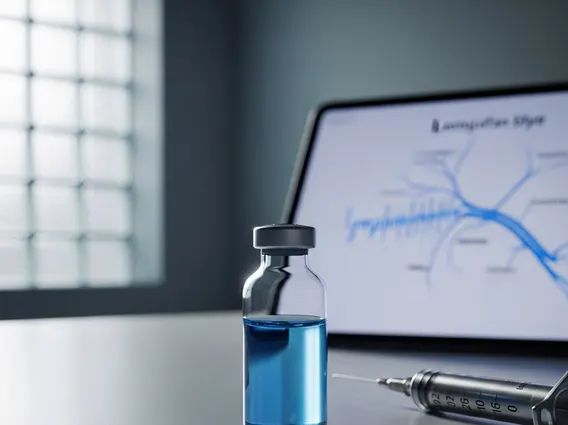
Key Takeaways
- Isosulfan Blue is a blue dye primarily used to visualize lymphatic vessels and lymph nodes.
- Its main application is in lymphatic mapping for sentinel lymph node biopsy, particularly in breast cancer and melanoma.
- The dye helps surgeons identify the first lymph nodes to which cancer cells are likely to spread, guiding surgical removal.
- Potential adverse effects include allergic reactions, temporary skin discoloration, and interference with pulse oximetry.
- Careful patient assessment and monitoring are crucial to ensure the safe administration of Isosulfan Blue.
What is Isosulfan Blue?
Isosulfan Blue is a triphenylmethane dye, specifically a diaminotriphenylmethane, that appears as a dark blue, sterile solution. It is administered via injection and is designed to be absorbed by lymphatic vessels. Once injected, the dye travels through the lymphatic system, staining the lymphatic channels and the lymph nodes to which they drain a distinct blue color. This visual marker allows medical professionals to identify these structures with greater ease during surgical procedures. The dye is typically eliminated from the body primarily through renal excretion, with most of it cleared within 24 hours, though some discoloration may persist longer.
Uses of Isosulfan Blue Dye in Medical Procedures
The primary application of isosulfan blue uses is in lymphatic mapping, a technique crucial for sentinel lymph node biopsy (SLNB). This procedure is frequently performed in the staging and treatment of various cancers, most notably breast cancer and melanoma. During an SLNB, Isosulfan Blue is injected near the tumor site. The dye then travels through the lymphatic system to the first lymph nodes that drain the tumor area—these are known as the sentinel lymph nodes. Surgeons can visually identify these blue-stained nodes and selectively remove them for pathological examination.
The ability to accurately identify and biopsy the sentinel lymph node is critical because it helps determine whether cancer cells have spread beyond the primary tumor. If the sentinel nodes are free of cancer, it often indicates that the cancer has not spread to other lymph nodes, potentially allowing for less extensive surgery and avoiding the need for a complete lymph node dissection. This approach can significantly reduce the risk of complications such as lymphedema. The use of isosulfan blue dye, often in conjunction with a radiotracer, enhances the precision and success rate of this important staging procedure.
Potential Side Effects and Precautions with Isosulfan Blue
While generally safe, isosulfan blue side effects can occur, ranging from mild to severe. The most common side effect is a temporary blue discoloration of the skin, urine, or surgical site, which typically resolves within 24 to 48 hours. Patients should be informed about this expected discoloration. More serious, though less frequent, adverse reactions include allergic or hypersensitivity responses. These can manifest as skin rashes, hives, itching, or, in rare cases, severe anaphylactic reactions characterized by difficulty breathing, low blood pressure, and swelling of the face or throat. Medical staff are trained to monitor for these reactions and have emergency protocols in place.
Additionally, Isosulfan Blue can interfere with certain medical devices. For instance, the dye’s presence in the bloodstream can temporarily affect pulse oximetry readings, leading to falsely low oxygen saturation measurements. Healthcare providers must be aware of this potential interference and rely on other methods for assessing oxygen levels if necessary. Patients with a known history of allergy to triphenylmethane dyes or other components of Isosulfan Blue should not receive the dye. Careful patient history taking and vigilant monitoring during and after administration are essential to ensure patient safety.