Gonadoblastoma
Gonadoblastoma is a rare and unique type of germ cell tumor that typically arises in individuals with dysgenetic gonads, meaning gonads that have not developed normally. It is characterized by a mixture of germ cells and sex cord-stromal cells, often posing a risk for malignant transformation.

Gonadoblastoma
- Gonadoblastoma is a rare tumor found in abnormal gonads, primarily in individuals with sex chromosome disorders.
- It is composed of both germ cells and sex cord-stromal cells, often forming a distinct histological pattern.
- A significant concern with gonadoblastoma is its high potential to transform into more aggressive malignant germ cell tumors, such as dysgerminoma or seminoma.
- Diagnosis typically involves imaging, tumor markers, and histological examination of the gonad.
- Treatment almost always involves surgical removal of the affected gonad(s) to prevent malignant progression.
What is Gonadoblastoma?
Gonadoblastoma is a rare gonadal tumor composed of an intimate mixture of immature germ cells and sex cord-stromal cells, resembling Sertoli and granulosa cells. It predominantly occurs in individuals with dysgenetic gonads, such as those with Turner syndrome (45,X), Swyer syndrome (46,XY complete gonadal dysgenesis), or mixed gonadal dysgenesis (45,X/46,XY mosaicism). This tumor is considered an in situ lesion with a high propensity for malignant transformation into more aggressive germ cell tumors, most commonly dysgerminoma or seminoma.
The presence of dysgenetic gonads, particularly streak gonads in individuals with a Y chromosome, significantly increases the risk of developing this tumor. While rare, its importance lies in its premalignant nature, necessitating careful monitoring and often prophylactic gonadectomy in at-risk individuals. According to studies, approximately 60-80% of gonadoblastomas contain a Y chromosome, highlighting its strong association with male-determining genetic material in an abnormal gonadal environment.
Causes, Symptoms, and Pathology of Gonadoblastoma
The primary root of gonadoblastoma causes and symptoms is abnormal gonadal development, often linked to chromosomal anomalies involving the Y chromosome. Genetic factors, particularly the presence of the SRY gene (sex-determining region Y) in an abnormal gonadal environment, are strongly implicated. Conditions associated with dysgenetic gonads and an increased risk include:
- Swyer syndrome (46,XY complete gonadal dysgenesis)
- Mixed gonadal dysgenesis (45,X/46,XY mosaicism)
- Partial gonadal dysgenesis
- Androgen insensitivity syndrome (AIS)
Symptoms of gonadoblastoma are often subtle or absent, as the tumor itself is usually small and non-invasive. Often, it is discovered incidentally during evaluation for delayed puberty, primary amenorrhea, or ambiguous genitalia. When symptoms do occur, they are typically related to hormonal imbalances caused by the dysgenetic gonads or the presence of a larger, malignant tumor that has developed from the gonadoblastoma. These can include virilization in a phenotypic female or abdominal pain if the tumor grows significantly.
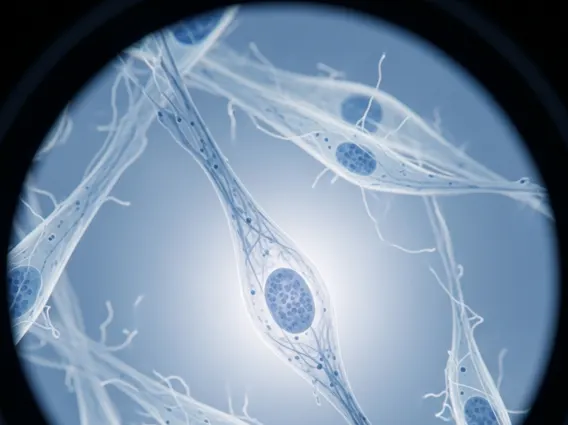
The gonadoblastoma pathology and prognosis are distinctive. Histologically, gonadoblastoma is characterized by nests of germ cells intimately mixed with sex cord-stromal cells, often surrounding hyaline bodies. These nests are typically confined within the gonadal stroma. The germ cells resemble those of dysgerminoma or seminoma, while the sex cord-stromal cells resemble immature Sertoli or granulosa cells. Calcification is a common feature, often visible on imaging. The critical aspect of its pathology is its high potential for malignant transformation; approximately 50-60% of gonadoblastomas are found alongside an invasive germ cell tumor, most commonly dysgerminoma or seminoma, at the time of diagnosis. (Source: Clinical studies indicate)
Gonadoblastoma Diagnosis, Treatment, and Prognosis
The gonadoblastoma diagnosis and treatment options typically begin with a thorough clinical evaluation, especially in individuals presenting with features of gonadal dysgenesis or delayed puberty. Diagnostic approaches often include:
- Hormone level assessment: To check for endocrine imbalances.
- Chromosomal analysis (karyotyping): To identify sex chromosome abnormalities (e.g., 45,X/46,XY mosaicism, 46,XY gonadal dysgenesis).
- Imaging studies: Ultrasound, CT, or MRI are crucial for visualizing the gonads and detecting any masses or calcifications. Streak gonads or dysgenetic gonads with suspicious lesions are key findings.
- Tumor markers: While not specific for gonadoblastoma itself, elevated levels of alpha-fetoprotein (AFP) or human chorionic gonadotropin (hCG) can indicate malignant transformation into other germ cell tumors.
The definitive diagnosis is made through histological examination of the gonad, usually after surgical removal. Given the high risk of malignant transformation, the standard treatment for gonadoblastoma is prophylactic bilateral gonadectomy (surgical removal of both gonads), particularly in individuals with a Y chromosome in their karyotype, even if the tumor is unilateral. This approach effectively prevents the development of invasive germ cell tumors. For individuals who have already developed an invasive germ cell tumor alongside gonadoblastoma, further treatment may involve chemotherapy or radiation, depending on the type and stage of the malignancy.
The prognosis for individuals with gonadoblastoma is generally excellent if the tumor is identified and removed before malignant transformation occurs. Once an invasive germ cell tumor has developed, the prognosis depends on the specific type of malignancy, its stage, and the effectiveness of subsequent treatments. Regular follow-up is essential for all individuals with gonadal dysgenesis, even after gonadectomy, to monitor for any potential recurrence or development of other issues. Early detection and intervention are key to a favorable outcome.