Epiglottis
The epiglottis is a crucial flap of cartilage located in the throat, playing a vital role in preventing food and liquids from entering the windpipe during swallowing. Its precise function ensures the safe passage of substances into the esophagus while allowing air to flow freely into the lungs.
Key Takeaways
- The epiglottis is a leaf-shaped cartilaginous flap situated at the base of the tongue.
- Its primary function is to cover the trachea (windpipe) during swallowing, directing food and liquids into the esophagus.
- This mechanism is essential for preventing choking and aspiration into the lungs.
- It is part of the larynx (voice box) and is crucial for both respiration and digestion.
- Proper functioning of the epiglottis is vital for overall respiratory and digestive health.
What is the Epiglottis?
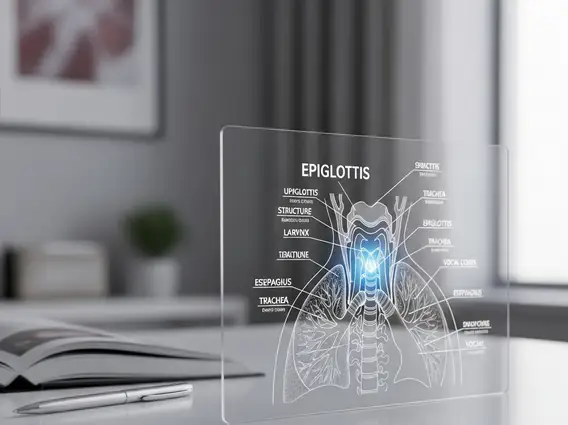
The Epiglottis is a flexible, leaf-shaped flap of cartilage located at the root of the tongue, behind the thyroid cartilage and in front of the entrance to the larynx. It is a vital component of the human respiratory and digestive systems, acting as a gatekeeper during the process of swallowing. The epiglottis purpose in human body is primarily to ensure that ingested food and liquids are directed into the esophagus and not into the trachea (windpipe), which leads to the lungs. This protective mechanism is involuntary and occurs reflexively each time a person swallows, safeguarding the respiratory tract from foreign material.
Composed mainly of elastic cartilage, the epiglottis is covered with mucous membrane and is highly sensitive. Its strategic position allows it to respond rapidly to the act of swallowing, ensuring a seamless transition between breathing and eating. Without a properly functioning epiglottis, the risk of aspiration—where food or liquid enters the lungs—would be significantly higher, potentially leading to serious respiratory complications such as pneumonia.
Anatomy, Location, and Function of the Epiglottis
The anatomy of the epiglottis reveals it as a distinct structure within the pharynx, specifically positioned superior to the larynx. Its broad, upper part is free and projects upwards behind the tongue, while its narrow, lower part, known as the petiolus, is attached to the thyroid cartilage. This attachment allows for its pivotal movement during swallowing. The epiglottis function and location are intricately linked to its role in protecting the airway.
During normal breathing, the epiglottis remains upright, allowing air to pass freely into the larynx and down into the trachea. However, when an individual swallows, a complex series of coordinated muscle movements occurs:
- The larynx moves upward and forward.
- The base of the tongue pushes backward.
- The epiglottis folds downward, effectively covering the glottis (the opening between the vocal folds and the upper part of the larynx).
This downward movement creates a physical barrier, diverting food and liquids away from the trachea and into the esophagus, which lies directly behind the trachea. Once swallowing is complete, the epiglottis returns to its upright position, reopening the airway for respiration. This rapid and efficient action is critical for preventing choking and ensuring the safe passage of substances through the throat.
Disclaimer: The information provided in this article is for general knowledge and informational purposes only, and does not constitute medical advice. It is essential to consult with a qualified healthcare professional for any health concerns or before making any decisions related to your health or treatment.