
Carbon C 11 Acetate
Carbon C 11 Acetate is a radiopharmaceutical agent utilized in positron emission tomography (PET) imaging. It plays a crucial role in medical diagnostics by providing insights into cellular metabolism and perfusion in various tissues.
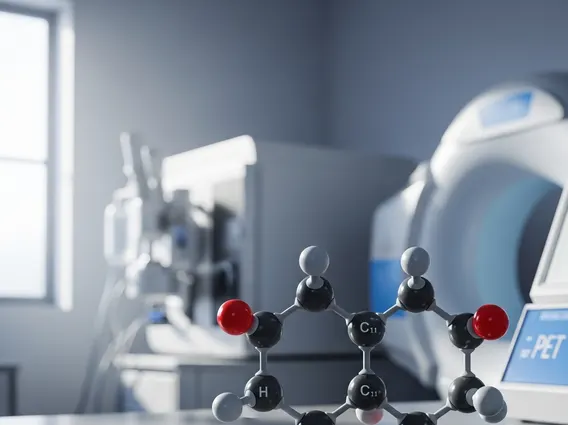
Key Takeaways
- Carbon C 11 Acetate is a radioactive tracer used in PET scans for diagnostic purposes.
- It helps visualize metabolic activity, particularly in oncology and cardiology.
- Primary applications include imaging prostate cancer and assessing myocardial perfusion.
- Its short half-life necessitates on-site cyclotron production and rapid administration.
- The agent’s properties allow for non-invasive assessment of disease progression and treatment response.
What is Carbon C 11 Acetate?
Carbon C 11 Acetate is a radioactive diagnostic agent administered intravenously for use with positron emission tomography (PET) imaging. It consists of an acetate molecule labeled with carbon-11, a positron-emitting radionuclide. This radiotracer is designed to be taken up by cells, where it participates in metabolic pathways, allowing clinicians to visualize and quantify metabolic activity in specific tissues or organs. Its utility stems from its ability to reflect cellular energy metabolism, particularly fatty acid synthesis and oxidation.
The carbon-11 isotope has a very short half-life of approximately 20.4 minutes, which means it decays rapidly. This characteristic necessitates its production in a cyclotron facility located in close proximity to the imaging center, ensuring that the tracer is synthesized and administered to the patient within a short timeframe to maintain sufficient radioactivity for diagnostic quality images. This rapid decay also minimizes patient exposure to radiation.
What is Carbon C 11 Acetate Used For in Medical Imaging?
Carbon C 11 Acetate medical imaging is primarily employed in oncology and cardiology to assess metabolic activity and perfusion. In oncology, it is particularly valuable for detecting and staging prostate cancer, a disease that represents a significant public health concern globally. Carbon C 11 Acetate helps in identifying metastatic lesions that might be missed by conventional imaging techniques, especially in cases of biochemical recurrence after initial treatment.
In cardiology, Carbon C 11 Acetate is used to evaluate myocardial perfusion and viability. It helps clinicians assess blood flow to the heart muscle and identify areas of ischemia or infarction. By measuring the myocardial uptake and retention of the tracer, physicians can gain insights into the metabolic health of the heart, which is critical for guiding treatment decisions in patients with coronary artery disease. The agent’s ability to reflect oxidative metabolism makes it a unique tool for assessing cardiac function.
Key applications for Carbon C 11 Acetate include:
- Detection and localization of recurrent prostate cancer.
- Staging of prostate cancer, including identification of lymph node and distant metastases.
- Assessment of myocardial perfusion and viability in ischemic heart disease.
- Evaluation of tumor response to therapy in certain cancers.
Properties, Structure, and Synthesis of Carbon C 11 Acetate
The unique diagnostic capabilities of Carbon C 11 Acetate properties and structure are rooted in its chemical composition and the characteristics of its radioactive label. Structurally, it is a simple acetate molecule (CH₃COO⁻) where one of the carbon atoms is replaced by the radioactive isotope carbon-11 (¹¹C). This substitution does not significantly alter the molecule’s biochemical behavior, allowing it to participate in metabolic processes similar to non-radioactive acetate. The positron emission from carbon-11 is what enables its detection by PET scanners, providing high-resolution images of its distribution in the body.
The Carbon C 11 Acetate synthesis and production process is a complex, multi-step procedure that must be performed rapidly due to the short half-life of carbon-11. It typically begins with the production of ¹¹C-carbon dioxide (¹¹CO₂) via a cyclotron, where nitrogen gas is bombarded with protons. The ¹¹CO₂ is then converted into ¹¹C-methyl iodide (¹¹CH₃I), which is subsequently reacted with a suitable precursor, such as sodium acetate, in a radiochemical synthesis module. This automated process ensures high purity and sterility, crucial for intravenous administration. Quality control measures are stringent, verifying the radiochemical purity and absence of contaminants before the product is released for clinical use. The entire synthesis, purification, and quality control must be completed within a short window, often less than an hour, to maximize the available radioactivity for patient imaging.



















