Key Takeaways
- There are three main types of skin cancer: Basal Cell Carcinoma, Squamous Cell Carcinoma, and Melanoma, each with distinct characteristics.
- Excessive exposure to ultraviolet (UV) radiation is the primary cause, alongside genetic factors and other environmental risks.
- Early detection signs of skin cancer are crucial for successful treatment, often identified through self-exams and professional screenings.
- Effective prevention strategies include consistent sun protection and regular checks for changes in skin lesions.
- Treatment options vary by type and stage, ranging from surgical removal to advanced therapies, with prognosis often favorable for early-stage cases.
Types of Skin Cancer
Understanding what are the different types of skin cancer is fundamental for effective diagnosis and treatment. The three primary forms originate from different cells within the skin and vary in their aggressiveness and potential for spread.
Basal Cell Carcinoma
Basal Cell Carcinoma (BCC) is the most common type of skin cancer, accounting for about 80% of all cases. It arises from the basal cells in the outermost layer of the skin (epidermis). BCCs typically appear as pearly or waxy bumps, often on sun-exposed areas like the face, neck, and hands. While rarely spreading to other parts of the body, they can be locally destructive if left untreated, invading surrounding tissues.
Squamous Cell Carcinoma
Squamous Cell Carcinoma (SCC) is the second most common type, making up about 15-20% of skin cancers. It develops in the squamous cells, which are flat cells in the outer part of the epidermis. SCCs often present as firm, red nodules, scaly patches, or open sores that may bleed or crust. They commonly occur on sun-exposed skin but can also form in scars or chronic wounds. SCCs have a higher risk of spreading than BCCs, especially if large or deep, though this is still relatively uncommon.
Melanoma
Melanoma is the least common but most dangerous type of skin cancer, originating from melanocytes, the cells that produce pigment. It accounts for less than 5% of skin cancer cases but causes the vast majority of skin cancer deaths. Melanoma can develop in an existing mole or appear as a new, unusual-looking growth. Its ability to metastasize rapidly to other organs makes early detection critically important.
Causes and Risk Factors
Identifying the causes and risk factors of skin cancer is essential for prevention and risk assessment. While a combination of factors contributes to its development, exposure to ultraviolet radiation remains the most significant.
UV Radiation Exposure
The primary cause of most skin cancers is exposure to harmful ultraviolet (UV) radiation from sunlight or artificial sources like tanning beds. UV radiation damages the DNA in skin cells, leading to uncontrolled growth. Both UVA and UVB rays contribute to this damage. Cumulative sun exposure over a lifetime increases the risk, as do intense, intermittent exposures that result in sunburns, especially during childhood. According to the World Health Organization (WHO), up to 90% of skin cancers are attributable to UV radiation exposure.
Genetic Predisposition & Other Risks
Beyond UV exposure, several other factors can increase an individual’s risk of developing skin cancer. Genetic predisposition plays a role; people with a family history of melanoma, fair skin, light-colored eyes, red or blonde hair, and a tendency to freckle or burn easily are at higher risk. A large number of moles (over 50) or the presence of atypical moles (dysplastic nevi) also increases melanoma risk. Other risk factors include a weakened immune system, previous history of skin cancer, exposure to certain chemicals (e.g., arsenic), and specific inherited conditions like xeroderma pigmentosum.
Recognizing Early Signs
Knowing the early detection signs of skin cancer is vital for timely intervention and improved outcomes. Regular self-examinations and professional skin checks are key to identifying suspicious changes.
ABCDEs of Melanoma
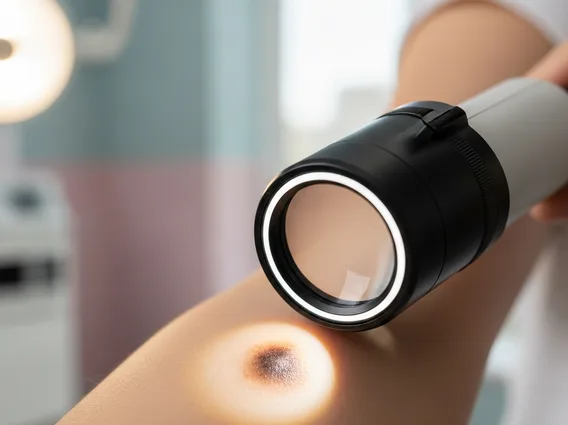
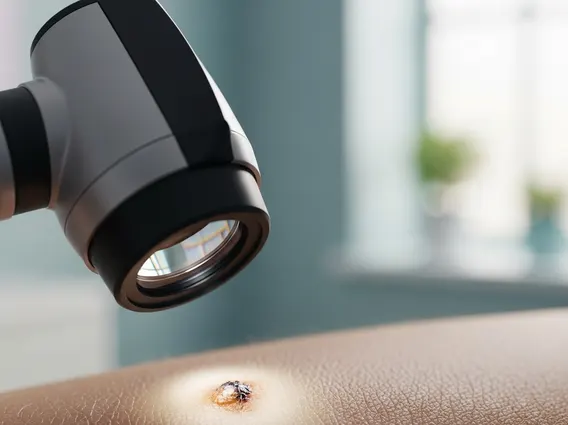
The ABCDEs of melanoma provide a simple guide for identifying potentially cancerous moles or lesions. These characteristics help distinguish normal moles from those that may be melanoma. If you notice any of these changes, it is advisable to consult a dermatologist:
- Asymmetry: One half of the mole does not match the other half.
- Border irregularity: The edges are ragged, notched, or blurred.
- Color variation: The mole has uneven color, with shades of brown, black, tan, white, red, or blue.
- Diameter: The mole is larger than 6 millimeters (about the size of a pencil eraser), though melanomas can be smaller.
- Evolving: The mole is changing in size, shape, color, or elevation, or any new symptom like bleeding, itching, or crusting appears.
Other Warning Signs
While the ABCDEs are specific to melanoma, there are also common symptoms of skin cancer that apply to BCCs and SCCs. These often manifest as new growths or changes in existing skin lesions. For Basal Cell Carcinoma, look for a pearly or waxy bump, a flat, flesh-colored or brown scar-like lesion, or a bleeding or scabbing sore that heals and returns. Squamous Cell Carcinoma may appear as a firm, red nodule, a flat lesion with a scaly, crusted surface, or a persistent sore. Any new, unusual growth, a sore that doesn’t heal, or a change in an existing mole or lesion warrants medical evaluation.
Preventing Skin Cancer
Learning how to prevent skin cancer effectively involves adopting consistent sun protection habits and regularly monitoring your skin. These proactive measures can significantly reduce your risk.
Sun Protection Habits
Minimizing exposure to harmful UV radiation is the cornerstone of skin cancer prevention. This includes several practical steps:
- Seek Shade: Especially between 10 a.m. and 4 p.m., when the sun’s rays are strongest.
- Wear Protective Clothing: Long-sleeved shirts, pants, wide-brimmed hats, and UV-blocking sunglasses offer physical barriers against UV radiation.
- Use Sunscreen: Apply a broad-spectrum sunscreen with an SPF of 30 or higher liberally to all exposed skin, even on cloudy days. Reapply every two hours, or more often if swimming or sweating.
- Avoid Tanning Beds: Tanning beds emit UV radiation that significantly increases the risk of skin cancer, including melanoma.
Consistent adherence to these habits can substantially lower the incidence of all types of skin cancer.
Regular Skin Self-Exams
Performing regular skin self-exams is a crucial component of prevention and early detection. By becoming familiar with your skin, you can more easily spot new or changing lesions. The American Academy of Dermatology recommends performing a full-body skin self-exam monthly. This involves checking all areas of your body, including your scalp, palms, soles of your feet, and between your toes, using a mirror for hard-to-see areas. Additionally, annual professional skin exams by a dermatologist are recommended, especially for individuals at higher risk, as they can identify suspicious lesions that might be missed during self-exams.
Treatment and Outlook
Understanding skin cancer treatment options is crucial for patients and their families. The approach varies significantly based on the type of cancer, its stage, location, and the patient’s overall health.
Common Treatment Approaches
Treatment for skin cancer aims to remove cancerous cells and prevent recurrence or spread. For Basal Cell Carcinoma and Squamous Cell Carcinoma, common treatments include:
- Surgical Excision: The tumor and a margin of healthy tissue are cut out.
- Mohs Surgery: A specialized procedure where thin layers of cancer-containing skin are progressively removed and examined until only cancer-free tissue remains. This is often used for cancers on the face or other sensitive areas.
- Curettage and Electrodesiccation: The cancer is scraped off, and remaining cancer cells are destroyed with an electric needle.
- Radiation Therapy: Uses high-energy rays to kill cancer cells, often for tumors that cannot be surgically removed or in conjunction with surgery.
- Topical Medications: Creams containing chemotherapy drugs or immune-modulating agents for superficial cancers.
Melanoma treatment is often more aggressive due to its potential for spread. It typically involves surgical removal of the tumor and a wider margin of healthy tissue. Depending on the stage, additional treatments may include lymph node dissection, immunotherapy, targeted therapy, chemotherapy, or radiation therapy to prevent recurrence or treat metastatic disease.
Skin Cancer Statistics & Prognosis
Reviewing skin cancer facts and statistics highlights the importance of early detection and effective treatment. According to the American Cancer Society, approximately 5.4 million cases of basal and squamous cell skin cancers are diagnosed annually in the U.S., affecting about 3.3 million people. While these types are highly curable, melanoma, though less common, is more deadly. The incidence of melanoma has been rising for the past few decades. For localized melanoma (not spread beyond the skin), the 5-year survival rate is very high, around 99%. However, if melanoma spreads to distant parts of the body, the 5-year survival rate drops significantly to about 32%. This stark contrast underscores why early detection and prompt treatment are critical for improving prognosis across all types of skin cancer.
Skin Cancer FAQs
Yes, skin cancer, especially Basal Cell Carcinoma and Squamous Cell Carcinoma, is highly curable when detected and treated early. Melanoma also has an excellent prognosis if caught in its localized stages. The success rate largely depends on the type of cancer, its stage at diagnosis, and the effectiveness of the chosen treatment. Regular follow-up appointments are crucial to monitor for recurrence or the development of new lesions, ensuring any potential issues are addressed promptly for the best possible long-term outcome.
Yes, several non-surgical treatments are available, particularly for superficial or early-stage skin cancers, and for patients who are not candidates for surgery. These include topical chemotherapy creams (e.g., 5-fluorouracil), immune-modulating creams (e.g., imiquimod), photodynamic therapy (PDT), and radiation therapy. For advanced melanoma, targeted therapies and immunotherapies have revolutionized treatment, offering systemic options to combat cancer cells throughout the body without traditional surgery. The choice of non-surgical treatment depends on the cancer type, size, location, and patient-specific factors.
The frequency of professional skin checks depends on your individual risk factors. For the general population with no significant risk factors, an annual skin check by a dermatologist is often recommended. However, if you have a history of skin cancer, numerous moles, atypical moles, a strong family history of melanoma, or significant sun exposure, your doctor may recommend more frequent examinations, such as every three to six months. Discuss your personal risk profile with your healthcare provider to determine the most appropriate screening schedule for you.