Key Takeaways
- Bleeding and bruising in cancer patients are often complications of the disease itself or its treatments, such as chemotherapy.
- Easy bruising and bleeding can stem from common issues like certain medications, aging, or more serious conditions like inherited types of bleeding disorders.
- Recognize symptoms of internal bleeding and know when to worry about bruising, as some signs warrant immediate medical attention.
- Effective home care for bruises involves the R.I.C.E. method, while first aid for severe bleeding focuses on direct pressure and emergency contact.
- Understanding the difference between bruise and hematoma helps in assessing the severity of blood collection under the skin.
Bleeding and Bruising in Cancer Patients
For individuals undergoing cancer treatment, the experience of bleeding and bruising in cancer can be a significant concern. These symptoms are often directly linked to the disease process itself or the aggressive therapies used to combat it, necessitating careful monitoring and management by the oncology team.
Causes Related to Cancer and Treatment
Cancer and its treatments can profoundly impact the body’s ability to clot blood effectively. Certain cancers, such as leukemias and lymphomas, can directly affect the bone marrow, where platelets (essential for clotting) are produced, leading to a reduction in their numbers or function. Additionally, the cancer cells themselves can sometimes interfere with clotting factors.
Chemotherapy and radiation therapy are major contributors to increased bleeding risk. These treatments can suppress bone marrow activity, resulting in thrombocytopenia (low platelet count). According to clinical studies, chemotherapy-induced thrombocytopenia can affect up to 25% of patients undergoing myelosuppressive chemotherapy, and even higher rates are observed in specific cancers like leukemia. Other medications, including targeted therapies, can also interfere with platelet function or blood vessel integrity, further exacerbating the risk of easy bruising and bleeding.
Managing Bleeding Risk in Cancer Care
Managing bleeding risk in cancer patients involves a multi-faceted approach. Regular blood tests, particularly complete blood counts, are essential to monitor platelet levels. When platelet counts drop significantly, interventions such as platelet transfusions may be necessary to prevent or treat bleeding. Patients are often advised to avoid activities that could lead to injury, such as contact sports, and to use soft-bristled toothbrushes and electric razors to minimize trauma.
It is critical for cancer patients to communicate any new or worsening bleeding or bruising symptoms to their oncology team promptly. This allows for timely assessment, adjustment of treatment plans, and implementation of supportive care measures to ensure patient safety and well-being.
Common Causes of Easy Bruising and Bleeding
While minor bumps and scrapes are common culprits, causes of easy bleeding and bruising can range from benign factors to more serious underlying medical conditions. Understanding these causes is the first step toward appropriate management and treatment.
Understanding Bleeding Disorders
Inherited conditions known as types of bleeding disorders can significantly increase a person’s susceptibility to easy bruising and prolonged bleeding. These disorders occur when the blood lacks certain proteins (clotting factors) or has dysfunctional platelets necessary for proper blood clot formation. Key examples include:
- Hemophilia: A rare genetic disorder where the blood lacks sufficient clotting factors, typically Factor VIII or IX, leading to spontaneous bleeding or severe bleeding after injury.
- Von Willebrand Disease (VWD): The most common inherited bleeding disorder, affecting the Von Willebrand factor, which helps platelets stick together and protects Factor VIII. The Centers for Disease Control and Prevention (CDC) states that VWD affects an estimated 1% of the U.S. population, though many cases are mild and undiagnosed.
- Platelet Function Disorders: Conditions where platelets are present in sufficient numbers but do not function correctly, impairing their ability to form a plug at the site of injury.
Individuals with these disorders may experience frequent nosebleeds, heavy menstrual periods, prolonged bleeding after minor cuts, or large bruises from minimal trauma.
Medications and Lifestyle Factors
Several medications can interfere with the blood clotting process, leading to increased bruising and bleeding. These include:
- Anticoagulants: Such as warfarin, rivaroxaban, and dabigatran, which are prescribed to prevent blood clots but increase the risk of bleeding.
- Antiplatelet Drugs: Like aspirin and clopidogrel, which prevent platelets from clumping together.
- Nonsteroidal Anti-inflammatory Drugs (NSAIDs): Ibuprofen and naproxen can inhibit platelet function, especially with prolonged use.
- Corticosteroids: Oral or topical steroids can thin the skin and make capillaries more fragile, leading to easier bruising.
Beyond medications, certain lifestyle factors and physiological changes contribute to easy bruising. Aging skin becomes thinner, loses protective fatty layers, and has more fragile blood vessels, making older adults more prone to bruising. Nutritional deficiencies, particularly a lack of Vitamin C (essential for collagen production and blood vessel integrity) or Vitamin K (vital for synthesizing clotting factors), can also impair clotting. Excessive alcohol consumption can damage the liver, which produces many clotting factors, further increasing bleeding risk.
Recognizing Symptoms and When to Worry
While most bruises are harmless and resolve on their own, certain symptoms and circumstances surrounding bleeding and bruising warrant medical attention. Recognizing these signs is crucial for preventing potential complications.
Signs of Internal Bleeding
Symptoms of internal bleeding can vary widely depending on the location and severity of the bleed. Unlike external bleeding, internal bleeding is not visible, making it potentially more dangerous if not recognized promptly. Common signs include:
- Localized Symptoms: Severe pain, swelling, tenderness, or a firm lump in the affected area, which may indicate a significant collection of blood.
- Systemic Symptoms: Dizziness, lightheadedness, weakness, pale skin, rapid heart rate, low blood pressure, confusion, or loss of consciousness, all of which can indicate significant blood loss.
- Specific Organ Symptoms: Blood in urine (hematuria), blood in stool (melena or hematochezia), vomiting blood (hematemesis), or severe abdominal pain can indicate bleeding in the urinary tract, gastrointestinal tract, or abdominal cavity, respectively.
Any suspicion of internal bleeding requires immediate medical evaluation, as it can be life-threatening.
When to Seek Medical Attention
It is important to know when to worry about bruising and when to consult a healthcare professional. While minor bruises are typically harmless, certain characteristics or accompanying symptoms should prompt a medical visit:
- Unexplained or Frequent Bruising: If bruises appear without a clear injury, are unusually large, or occur frequently.
- Persistent or Worsening Bruises: Bruises that do not fade or seem to worsen over time, or those accompanied by increasing pain or swelling.
- Bruising with Other Symptoms: If bruising is accompanied by fever, unexplained weight loss, joint pain, excessive nosebleeds, or bleeding from the gums.
- Head Injury: Any head injury followed by confusion, severe headache, vision changes, or loss of consciousness, as this could indicate an intracranial bleed.
- Bruising in Infants or Children: Unexplained bruising in young children should always be evaluated by a doctor to rule out abuse or an underlying medical condition.
- New Medication: If you start a new medication and develop easy bruising or bleeding, consult your doctor.
Prompt medical evaluation can help identify the cause and ensure appropriate treatment.
Treating Bruises and Managing Bleeding
Effective management of bleeding and bruising depends on the severity and underlying cause. While many bruises can be treated at home, severe bleeding requires immediate emergency intervention.
Home Care for Bruises
For most minor bruises, effective how to treat a bruise at home typically involves the R.I.C.E. protocol, especially within the first 24-48 hours after injury:
- Rest: Limit activity of the bruised area to prevent further injury or swelling.
- Ice: Apply a cold compress or ice pack wrapped in a cloth to the bruise for 15-20 minutes at a time, several times a day. This helps reduce swelling and constrict blood vessels, minimizing blood leakage.
- Compression: Gently wrap the bruised area with an elastic bandage, if appropriate, to help reduce swelling. Ensure it’s not too tight to avoid cutting off circulation.
- Elevation: If possible, raise the bruised limb above the level of the heart to help reduce blood flow to the area and minimize swelling.
After 48 hours, applying a warm compress can help increase blood flow to the area, promoting the reabsorption of pooled blood and accelerating the healing process. Over-the-counter pain relievers like acetaminophen can help manage discomfort, but NSAIDs should be avoided if there’s a risk of increased bleeding.
Emergency First Aid for Severe Bleeding
In cases of severe bleeding, immediate action is critical. Knowing first aid for severe bleeding can be life-saving:
- Call for Emergency Help: Immediately call your local emergency number (e.g., 911 in the U.S.).
- Apply Direct Pressure: Use a clean cloth, gauze, or even your bare hand to apply firm, continuous pressure directly to the wound. Maintain pressure until emergency responders arrive.
- Elevate the Injury: If the bleeding is on a limb, elevate it above the level of the heart while maintaining direct pressure, if possible.
- Do Not Remove Embedded Objects: If an object is embedded in the wound, do not attempt to remove it. Instead, apply pressure around the object to control bleeding.
- Use a Tourniquet (Last Resort): For life-threatening bleeding from a limb that cannot be controlled with direct pressure, a tourniquet may be applied. This should only be done if you are trained or instructed by emergency services, as improper use can cause severe complications.
The primary goal is to stop or slow blood loss until professional medical help can be provided.
Bruise vs. Hematoma: Understanding the Difference
While often used interchangeably, there is a distinct difference between bruise and hematoma. Both involve blood leaking out of blood vessels into surrounding tissues, but they differ in severity and presentation.
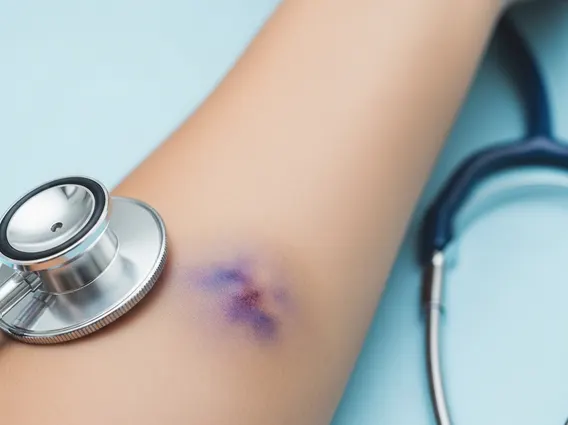
A bruise, medically known as ecchymosis, occurs when small blood vessels (capillaries) near the skin’s surface break, allowing a small amount of blood to seep into the surrounding tissue. This typically results in a flat or slightly raised discolored patch on the skin, which changes color over several days or weeks as the body reabsorbs the blood. Bruises are generally minor and resolve without intervention.
A hematoma, on the other hand, involves a more significant collection of blood outside the blood vessels, often forming a palpable lump or swelling. It occurs when larger blood vessels are damaged, leading to a greater volume of blood pooling in a specific area. Hematomas can be more painful, larger, and deeper than typical bruises. Depending on their size and location, hematomas may require medical attention, such as drainage, especially if they are large, cause significant pain, or compress nerves or other structures. While a bruise is essentially a superficial form of a hematoma, the term “hematoma” typically implies a more substantial and often more concerning collection of blood.
Bleeding and Bruising FAQs
While stress itself doesn’t directly cause easy bruising, chronic stress can indirectly contribute by affecting overall health. Prolonged stress can lead to poor diet, inadequate sleep, and increased inflammation, which might weaken blood vessels or impair the body’s healing processes. Additionally, stress can exacerbate existing conditions that cause bruising, such as certain autoimmune disorders or nutritional deficiencies. It’s more likely that an underlying issue, potentially worsened by stress, is responsible for easy bruising.
The healing time for a bruise varies depending on its size, severity, and location, as well as individual factors like age and overall health. Generally, a minor bruise can take anywhere from 2 to 4 weeks to fully resolve. During this time, the bruise will typically change colors, progressing from red or purple to black, then green, yellow, and finally brown before fading completely. Larger or deeper bruises, or those in areas with poor circulation, may take longer to heal.
While no food can entirely prevent bruises, a diet rich in certain nutrients can support healthy blood vessels and clotting function, potentially reducing susceptibility. Foods high in Vitamin C, such as citrus fruits, berries, and leafy greens, are essential for collagen production, which strengthens blood vessel walls. Vitamin K, found in kale, spinach, and broccoli, is crucial for synthesizing clotting factors. While these nutrients are vital for overall health, they won’t prevent all bruises, especially those from significant trauma or underlying medical conditions.