
Brain
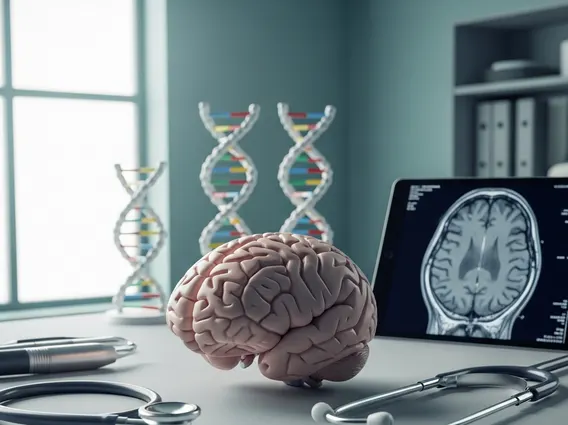
The Brain is an extraordinarily complex organ that serves as the control center for the entire nervous system, orchestrating every thought, emotion, movement, and sensation. It enables us to interpret and respond to the world around us, learn, remember, and create.
Key Takeaways
- The Brain is the central organ of the nervous system, responsible for all bodily functions, thoughts, and emotions.
- It is primarily composed of the cerebrum, cerebellum, and brainstem, each with distinct and vital roles.
- The human brain operates through intricate networks of neurons, communicating via electrical and chemical signals.
- Its remarkable capacity for learning and adaptation, known as plasticity, allows for continuous development and change.
- Understanding the brain’s structure and function is crucial for comprehending human behavior and health.
What is the Brain?
The human brain is the most complex organ in the body, weighing approximately 3 pounds in an adult and containing billions of neurons. It is encased within the skull, protected by layers of tissue called meninges and cushioned by cerebrospinal fluid. This intricate organ is the seat of intelligence, interpreter of the senses, initiator of body movement, and controller of behavior. It is responsible for processing sensory information, regulating involuntary bodily functions like breathing and heart rate, and enabling higher cognitive functions such as memory, learning, and decision-making.
Functioning as a biological supercomputer, the brain continuously receives, processes, and sends information throughout the body. Its incredible capacity allows for the integration of vast amounts of data, enabling us to perceive, understand, and interact with our environment. The brain’s health and proper functioning are paramount to overall well-being, influencing everything from our physical movements to our deepest thoughts and feelings.
Anatomy and Key Functions of the Brain
The brain is broadly divided into three main parts, each with specialized roles that contribute to its overall function. Understanding the parts of the brain and their functions provides insight into how this organ manages such diverse tasks.
- Cerebrum: The largest part of the brain, divided into two hemispheres and four lobes (frontal, parietal, temporal, and occipital). It is responsible for voluntary actions, thought, language, reasoning, memory, and sensory processing. The frontal lobe, for instance, is crucial for planning and decision-making, while the occipital lobe processes visual information.
- Cerebellum: Located at the back of the brain, beneath the cerebrum. Its primary role is to coordinate voluntary movements, maintain posture, balance, and equilibrium. It also plays a role in motor learning and fine-tuning movements.
- Brainstem: Situated at the base of the brain, connecting the cerebrum and cerebellum to the spinal cord. It controls vital involuntary functions essential for survival, including breathing, heart rate, blood pressure, consciousness, and sleep. It also acts as a relay station, transmitting signals between the brain and the rest of the body.
Beyond these major divisions, the brain also contains other critical structures like the thalamus (a sensory relay station), hypothalamus (regulating hormones and basic drives), and the limbic system (involved in emotion and memory). Each component works in concert, forming a highly integrated system that supports all aspects of human life.
How the Human Brain Works
The fundamental unit of the brain is the neuron, a specialized cell that transmits electrical and chemical signals. This intricate network of billions of neurons is central to how the brain works. Neurons communicate with each other across tiny gaps called synapses, using chemical messengers known as neurotransmitters. These signals allow the brain to process information, generate thoughts, and send commands to different parts of the body.
The brain’s ability to adapt and reorganize itself, known as neuroplasticity, is one of its most remarkable features. This allows for learning and memory formation, as neural pathways can strengthen or weaken over time based on experience. For example, when learning a new skill, new connections between neurons are formed and existing ones are reinforced. This adaptability is vital for development, recovery from injury, and continuous learning throughout life.
Here are some fascinating brain facts for students that highlight its incredible capabilities:
| Fact Category | Detail |
|---|---|
| Energy Consumption | Despite being only about 2% of the body’s weight, the brain uses roughly 20% of the body’s oxygen and calories. |
| Information Processing | The brain can generate between 10 to 23 watts of power when awake, enough to light a small bulb. |
| Neural Connections | There are an estimated 86 billion neurons in the human brain, forming trillions of connections. |
| Memory Capacity | The brain’s storage capacity is estimated to be equivalent to 2.5 petabytes of digital memory, or about three million hours of TV shows. |
These facts underscore the brain’s immense power and efficiency, constantly working to maintain bodily functions, process sensory input, and facilitate complex cognitive tasks, making it the most vital organ in the human body.



















