
Bmd Scan
A Bmd Scan, also known as a Bone Mineral Density Scan, is a crucial diagnostic tool used to assess bone health. This non-invasive procedure provides valuable insights into the strength and density of bones, playing a vital role in the early detection and management of bone-related conditions.
Key Takeaways
- A Bmd Scan (Bone Mineral Density Scan) measures bone density to detect osteoporosis and assess fracture risk.
- The procedure is quick, non-invasive, and uses a low dose of X-rays, typically focusing on the hip, spine, and forearm.
- Preparation usually involves avoiding calcium supplements and certain medications on the day of the scan.
- Results are interpreted using T-scores and Z-scores, classifying bone density as normal, osteopenia, or osteoporosis.
- Understanding your Bmd Scan results helps healthcare providers recommend appropriate lifestyle changes or treatments.
What is a Bmd Scan and Its Purpose?
A Bmd Scan, or Bone Mineral Density Scan, is a specialized X-ray test that measures the amount of calcium and other minerals in a segment of bone. This measurement helps determine the strength and density of your bones. The most common type of Bmd Scan is dual-energy X-ray absorptiometry (DXA or DEXA), which uses two different X-ray beams to estimate bone density in the spine, hip, or forearm.
The primary purpose of a Bmd Scan is to diagnose osteoporosis, a condition characterized by weak and brittle bones, and to assess an individual’s risk of future bone fractures. According to the World Health Organization (WHO), osteoporosis affects millions worldwide, making early detection through Bmd Scans critical for timely intervention. It is also used to monitor the effectiveness of osteoporosis treatments and to track bone density changes over time. Healthcare providers often recommend this scan for individuals with risk factors such as advanced age, a family history of osteoporosis, certain medical conditions, or long-term use of specific medications.
Bmd Scan Procedure: What to Expect
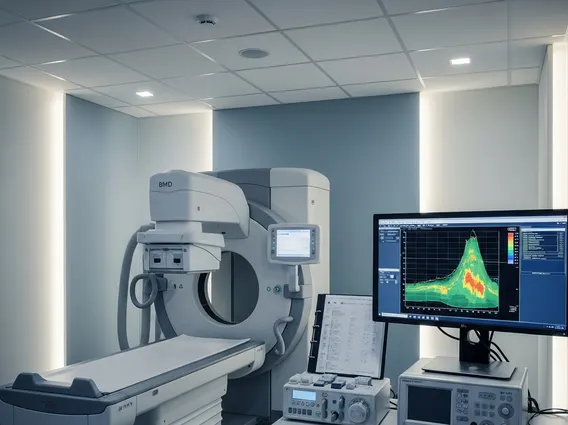
The Bmd Scan procedure is straightforward and generally takes about 10 to 30 minutes, depending on the areas being scanned. Patients typically lie on a padded table while a mechanical arm passes over their body, emitting low-dose X-rays. The X-ray detector then measures the amount of radiation absorbed by the bones, which correlates with bone density.
Before undergoing a Bmd Scan, patients usually receive specific instructions to ensure accurate results. These may include:
- Avoiding calcium supplements or multivitamins containing calcium for at least 24 hours prior to the scan.
- Informing the technician about any recent barium studies or contrast injections, as these can interfere with the scan.
- Wearing loose, comfortable clothing and removing any metal objects like jewelry, belts, or zippers, which could obstruct the X-ray path.
During the scan, you will be asked to lie still to ensure clear images. The process is painless and non-invasive, and the radiation exposure is minimal, comparable to a chest X-ray. The technician will guide you through each step, ensuring your comfort and the accuracy of the readings.
Interpreting Your Bmd Scan Results
Interpreting your Bmd Scan results involves understanding two key scores: the T-score and the Z-score. These scores are crucial for assessing bone health and determining the presence of osteoporosis or osteopenia (low bone mass).
- T-score: This score compares your bone density to that of a healthy young adult of the same sex. A T-score of -1.0 or above is considered normal. A score between -1.0 and -2.5 indicates osteopenia, while a score of -2.5 or lower signifies osteoporosis.
- Z-score: This score compares your bone density to that of people of your same age, sex, and ethnic background. A Z-score below -2.0 may suggest that factors other than aging are contributing to bone loss, such as an underlying medical condition or medication.
Your healthcare provider will analyze these scores in conjunction with your medical history, age, lifestyle, and other risk factors to provide a comprehensive assessment of your bone health. Based on this interpretation, they can recommend appropriate interventions, which may include dietary changes, exercise programs, vitamin D and calcium supplementation, or prescription medications to slow bone loss and reduce fracture risk. Regular follow-up scans may also be advised to monitor bone density changes and the effectiveness of any treatment plan.



















